Shelf-Stable Milk Chocolate Ganache: A 1 kg Bonbon Formula
A 1 kg milk chocolate bonbon filling calculated at about 45 days at 20 °C and a water activity of 0.730: the formula, the method, and why milk chocolate needs extra cocoa butter and invert sugar.
Ingredient weights and method below; a free account lets you save and adapt the recipe.
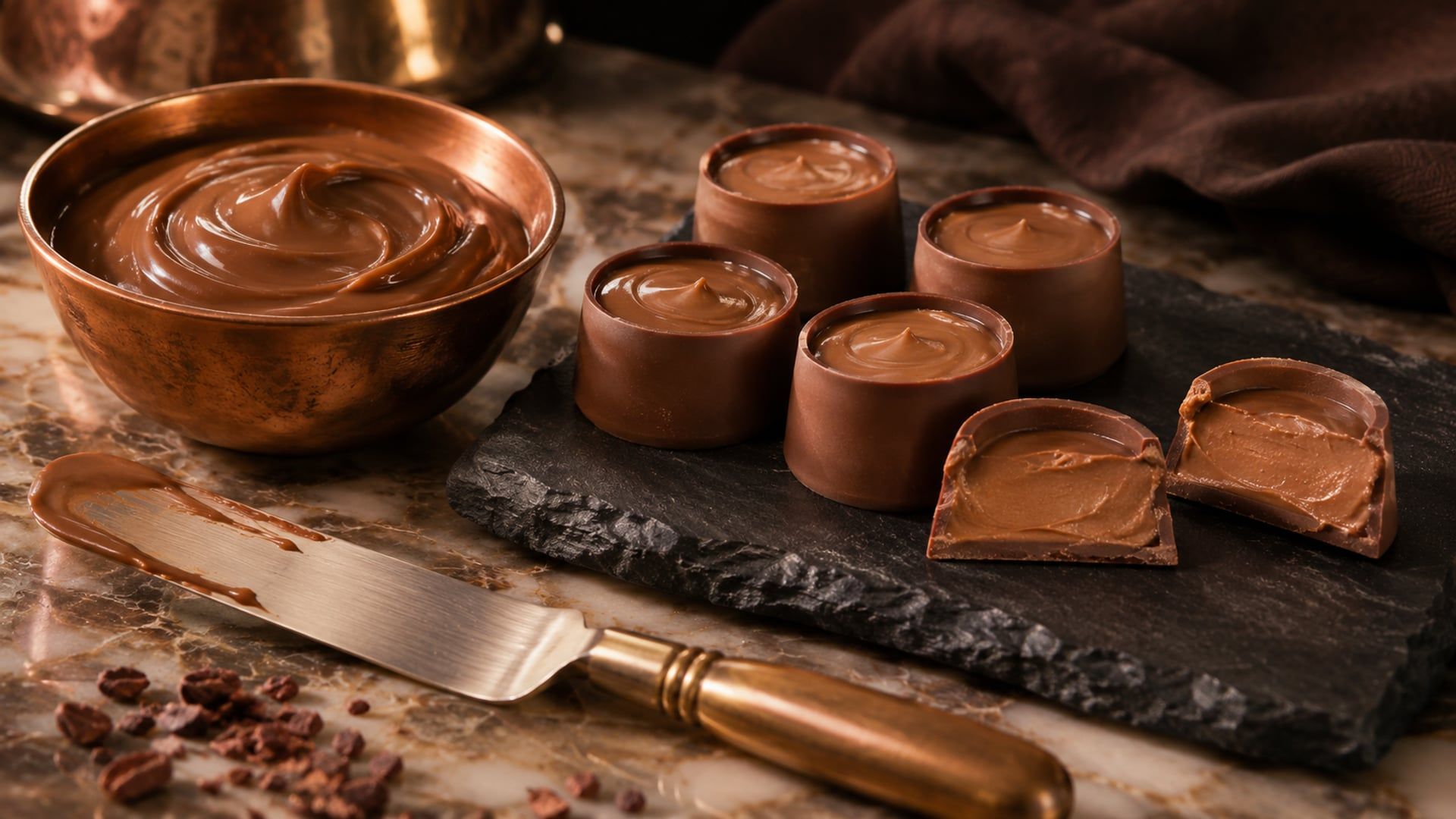
Milk chocolate makes a low water activity easy and a firm, smooth ganache hard. This 1 kg bonbon filling calculates at about 45 days at 20 °C and about 167 days at 4 °C, at a water activity (aw) of 0.730. It gets there with 50 g of extra cocoa butter for the set and 115 g of invert sugar to hold back graining.
Those days are calculator estimates, not a date for your label. Measure the aw of your finished batch and run a storage test before you rely on them. For the general question of whether a ganache can stay out of the fridge at all, start with our shelf-stable guide.
Milk Chocolate Ganache Formula
The formula totals 1,000 g, with chocolate to cream at about 2.6:1 by weight.
| Ingredient | Weight (g) | Share | What it does |
|---|---|---|---|
| Milk chocolate (Callebaut 823) | 550 | 55 % | Base, sugar and milk solids |
| Cream, 35 % fat | 215 | 21.5 % | Water phase of the emulsion |
| Invert sugar (Trimoline) | 115 | 11.5 % | Slows graining, lowers aw |
| Cocoa butter | 50 | 5 % | Sets the ganache |
| Sorbitol, crystalline | 30 | 3 % | Lowers aw without more sugar |
| Glucose syrup DE40 | 20 | 2 % | Slows crystallization |
| Butter, unsalted | 20 | 2 % | Softer melt |
| Total | 1000 | 100 % |
Makes 1 kg of bonbon filling.
Open the live milk chocolate ganache
See the calculation behind aw 0.730 and about 45 days at 20 °C, then save a copy and try your own chocolate in it.
This formula is built on Callebaut 823
Two milk chocolates with the same cocoa percentage can differ in sugar, cocoa butter and milk fat. Crystallization risk has one point of room here, so swap the chocolate in a saved copy of the recipe and recalculate before you buy for a batch.
Why Milk Chocolate Needs a Different Balance
Callebaut 823 is 49.9 % sugar. That sugar dissolves in the cream’s water and pulls aw down on its own, so milk chocolate starts with an advantage over dark. Its weakness is structure: it brings less cocoa butter, the fat that sets a ganache, and the cream adds milk fat, which softens it. All that sugar can also grain.
Here is a plain ganache of the same chocolate against this formula:
| Calculated value | 640 g 823 + 360 g cream† | This formula |
|---|---|---|
| Days at 20 °C | ~8 | ~45 |
| Water activity | 0.853 | 0.730 |
| Crystallization risk (target 30 or less) | 65 | 29 |
| Cocoa butter | 19.3 % | 21.6 % |
| Milk fat | 16.4 % | 12.5 % |
| Water | 21.59 % | 15.89 % |
† Calculator simulation of a plain ganache, not a saved recipe. Days are from the Conservative model; they are spoilage estimates, not safe holding times.
At 0.853 the plain ganache is too close to the 0.85 line for a calculation to settle it, so it stays in the fridge until a test of the finished ganache shows 0.85 or lower. This formula’s 0.730 sits under 0.80, the level where a ganache is likely to pass that line. You still confirm it on the finished batch.
Each change answers one of those weaknesses:
- Cocoa butter carries the set. The formula uses 90 g less chocolate than the plain ganache and still ends up with more cocoa butter, because 50 g goes in on its own. The calculator reads the texture as firm.
- Less cream cuts water and milk fat together. Going from 360 g to 215 g of cream takes water from 21.59 % to 15.89 % and milk fat from 16.4 % to 12.5 %.
- Invert sugar holds back the grain. It is the largest addition at 115 g, joined by 20 g of glucose syrup, and crystallization risk falls from 65 to 29.
- Sorbitol stays low. The chocolate’s own sugar already does much of the work, so this formula takes 30 g, against 60 g in the dark chocolate recipe.
The Ratio in This Formula
The ganache ratio chart gives starting ratios for every use, and this formula runs at about 2.6:1. Its fat-to-liquid balance of 1.85 is inside the calculator’s target, but this much fat needs a blender, not only a spatula.
To see where a plain milk chocolate ganache starts, choose milk chocolate in the estimator below and change the cream. It has no sorbitol input and counts invert sugar as glucose syrup, so use the linked recipe for this formula’s own figures.
Milk Chocolate Ganache Method
Melt the chocolate
Melt the milk chocolate with the cocoa butter gently in a dry bowl, stirring until smooth. Milk solids scorch easily, so use short bursts of heat.
Heat the cream and sugars
Combine the cream, invert sugar, sorbitol and glucose syrup in a saucepan. Heat to 85 °C, stirring until the sorbitol dissolves.
Emulsify
Pour a third of the hot liquid over the chocolate. Wait 30 seconds, then stir from the center in small circles. Add the rest in two more additions, emulsifying each time.
Add the butter
When the ganache reaches 35–40 °C, add the softened butter.
Blend
Use an immersion blender for 30 seconds with its head under the surface, so you add no air. At this ratio, do not skip this step.
Fill or hold
At 28–29 °C, pipe the ganache into shells or spread it into a frame, then leave it 12–24 hours at 16–18 °C before you cap or cut. To hold it instead, pour it into a shallow container, cool at 20 °C for 2 hours, then cover and refrigerate.
If the ganache turns oily or looks curdled while you make it, bring it to 32–34 °C and blend again. The split ganache guide walks through each cause. Sugar grain that appears in storage does not blend out at that temperature.
What the Calculator Flags
The calculator grades this formula S, its top grade. The grade counts water activity, free water, emulsion, fat, water and sugars. It does not count the three figures below, which sit at the edge of the calculator’s targets, and it is not a storage test:
- Water migration risk is 31, one point over the limit of 30. Water tends to move from the filling toward the shell. Keep shells complete and free of cracks, hold a steady temperature, and watch the shell in your storage test. The moisture migration guide explains the mechanism.
- Crystallization risk is 29, one point under the limit of 30. There is no margin. A sweeter chocolate or less invert sugar can take it over, so recalculate before you change either.
- Fat as a share of dry matter is 40.5 %, half a point over its 30–40 % target. The added cocoa butter puts it there. If you want a softer bite, try the change in a copy of the recipe first.
Free water, at 14.9 %, is inside its target. Two inputs are estimates from class profiles rather than supplier data: the pH of the 823, and the fatty acids of the cream and butter. The lab comparison behind the calculator has no couverture milk chocolate ganache and no ganache with sorbitol or glucose syrup, so a meter reading matters more here than for a plain ganache.
Storing Milk Chocolate Ganache Bonbons
Plan with about 45 days at 20 °C or about 167 days at 4 °C, but do not print either number. At this aw the calculator expects molds and yeasts, not bacteria, to set the limit, and with crystallization risk at 29, watch for graining as well as spoilage. These days come from its Conservative shelf-life model, while the dark recipe’s page quotes the default Balanced model, which reads longer, so compare formulas on one model only.
Measure the aw of a finished batch with a calibrated meter, then follow retained samples in your final packaging for flavor, emulsion stability and microbial quality. The shelf-life testing guide turns the estimate into checkpoints and a sample plan. For fridge and freezer handling, see how long ganache keeps. If you chill finished bonbons, keep them sealed while they warm so no condensation forms on the shell.
Milk Chocolate Ganache Questions
What ratio of milk chocolate to cream does this ganache use?
Is milk chocolate ganache shelf stable?
Why does milk chocolate ganache stay soft?
Can I use a different milk chocolate?
Can I leave out the sorbitol?
Can I use sorbitol syrup instead of crystalline sorbitol?
Related Topics
Related Articles
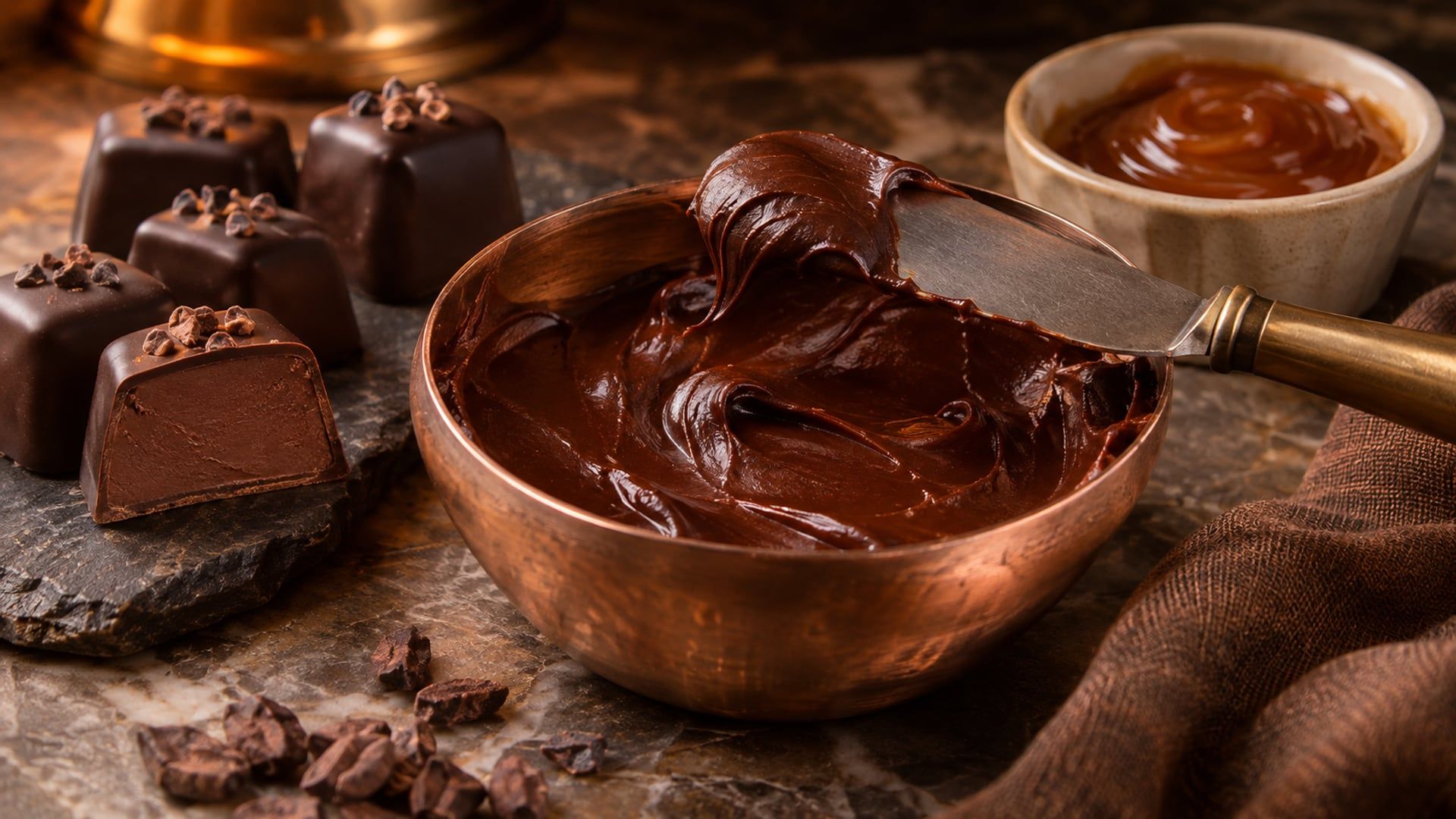
Shelf-Stable Caramel Ganache for Bonbons: A 1 kg Formula
A 1 kg salted caramel ganache for bonbons calculated at about 34 days at 20 °C and a water activity of 0.75: the formula, how to cook the caramel, and what a calculation cannot see in cooked sugar.
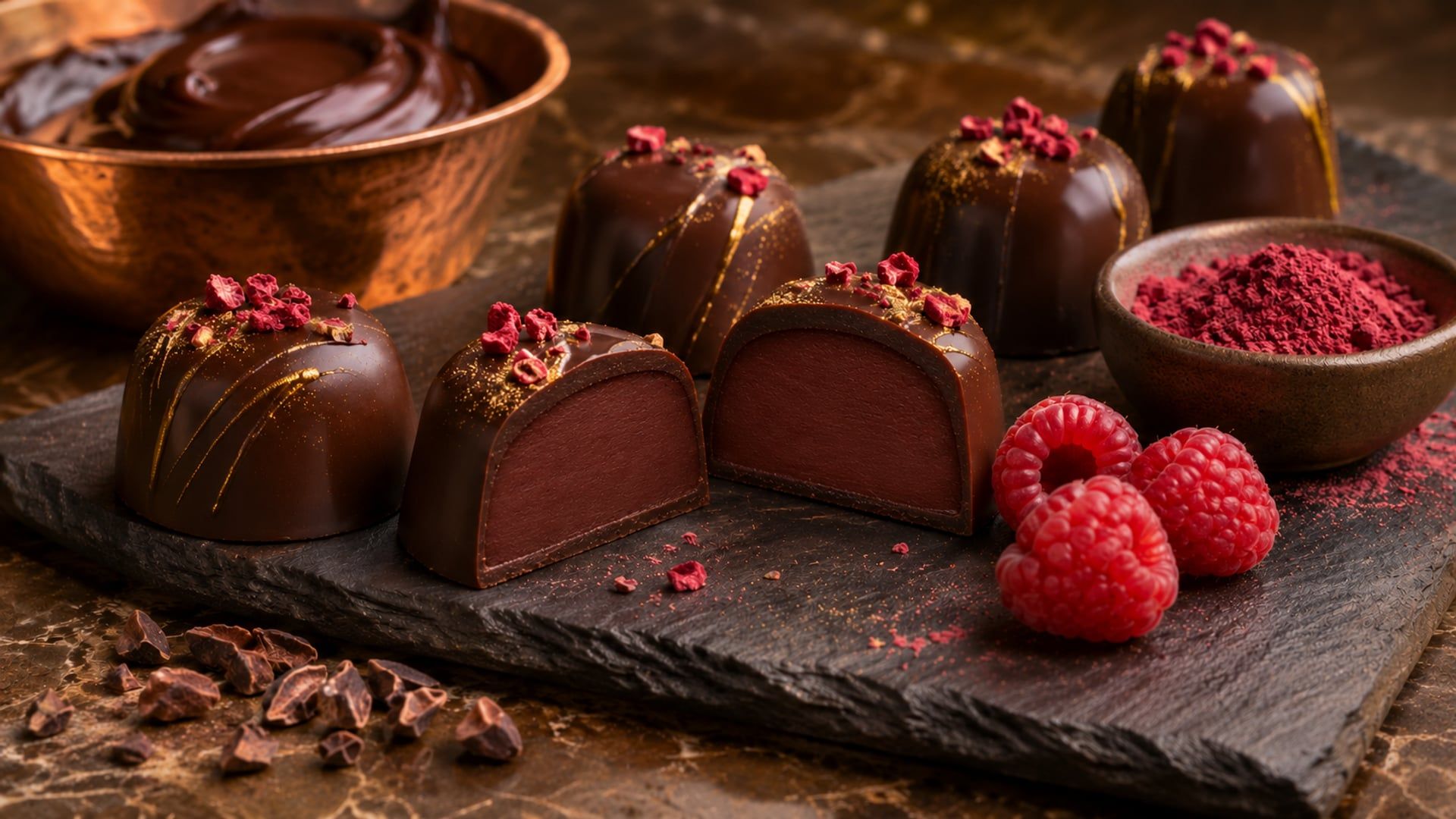
Shelf-Stable Raspberry Ganache for Bonbons: A 1 kg Formula
A cream-free 1 kg raspberry ganache for bonbons calculated at about 30 days at 20 °C and a water activity of 0.759: the formula, the method, and how freeze-dried raspberry adds flavor without water.
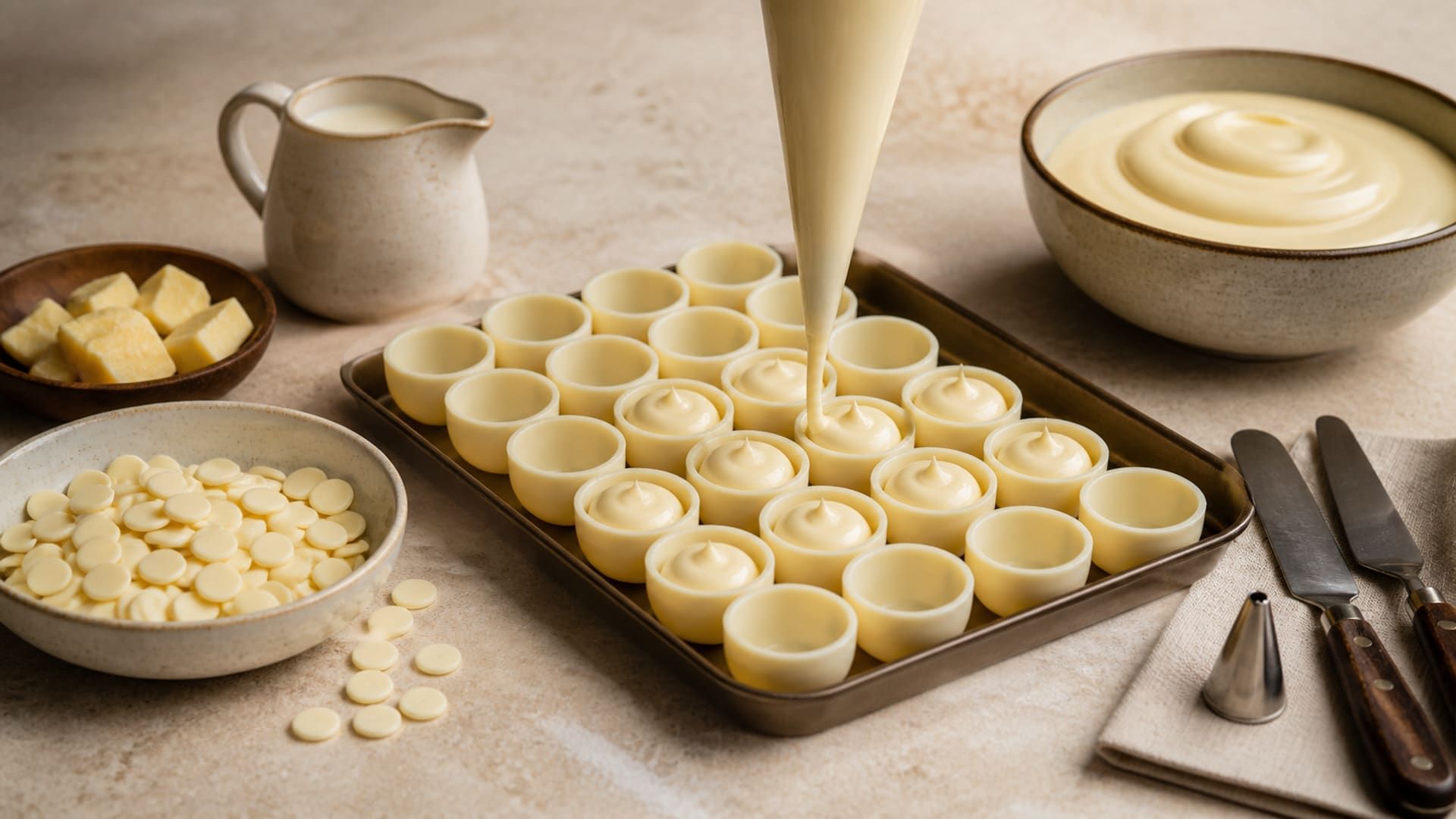
Shelf-Stable White Chocolate Ganache: A 1 kg Trial Formula
A 1 kg white chocolate bonbon filling engineered for low predicted aw, a plastic set, and controlled piping—ready for measurement and shelf-life validation.