Shelf-Stable Caramel Ganache for Bonbons: A 1 kg Formula
A 1 kg salted caramel ganache for bonbons calculated at about 34 days at 20 °C and a water activity of 0.75: the formula, how to cook the caramel, and what a calculation cannot see in cooked sugar.
Ingredient weights and method below; a free account lets you save and adapt the recipe.
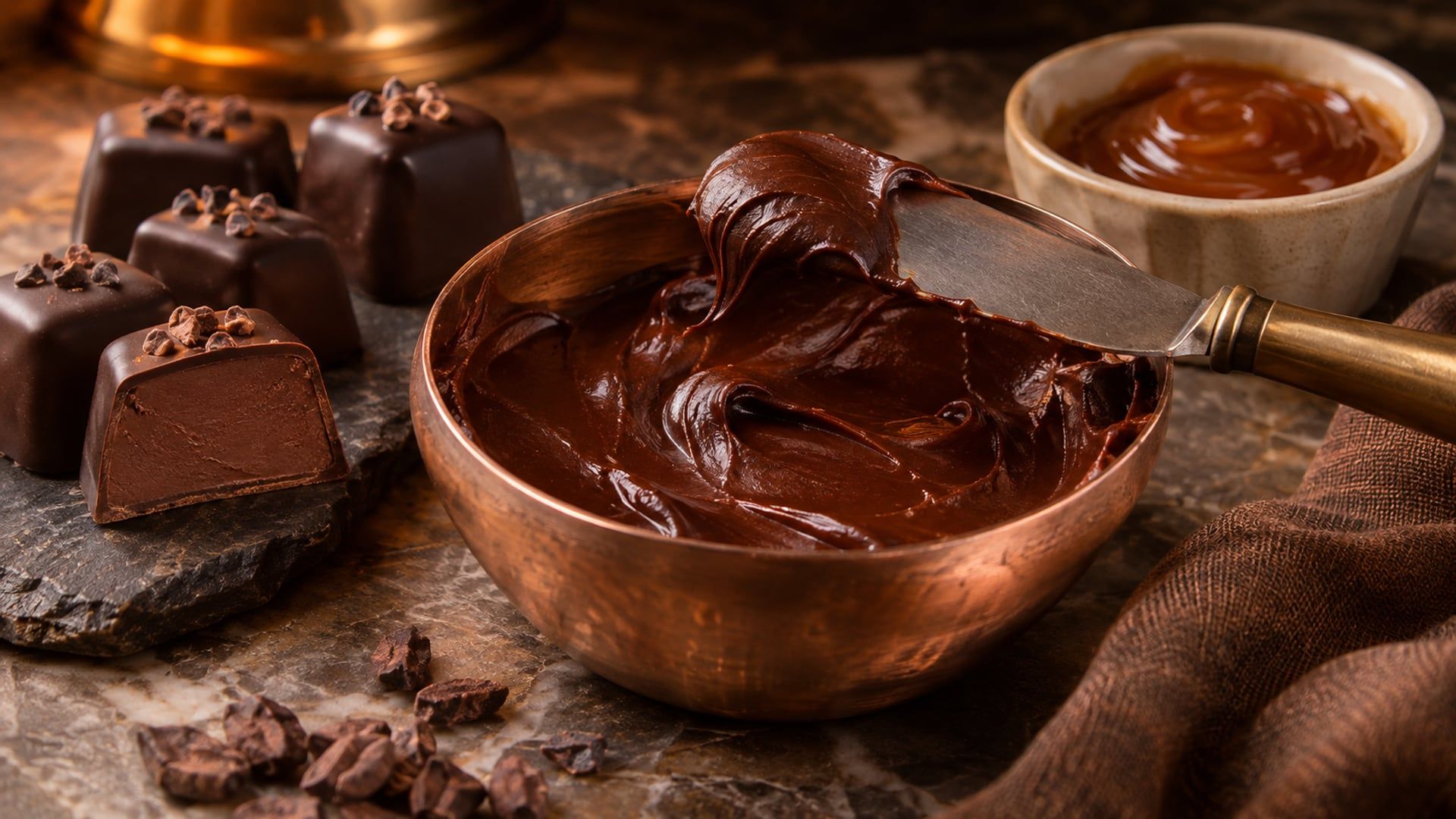
Cooking a caramel into a ganache adds sugar and drives off water, which is what a bonbon filling wants, but that sugar is also the kind most likely to grain. This 1 kg salted caramel ganache calculates at about 34 days at 20 °C and about 131 days at 4 °C, at a water activity (aw) of 0.75, with glucose syrup in the caramel and invert sugar in the cream to hold the grain back.
Those days are calculator estimates, not a date for your label: measure the aw of the finished batch and run a storage test first. Two numbers stay above their targets, crystallization risk at 53 and water migration risk at 34, and this article shows why and what to watch. Whether a ganache can stay out of the fridge in general is a separate question, covered in our shelf-stable guide.
Caramel Ganache Formula
The formula totals 1,000 g: a caramel, a cream mix that stops the cook, a chocolate phase and butter to finish.
| Ingredient | Weight (g) | Goes into | What it does |
|---|---|---|---|
| Sugar | 135 | Caramel | Color and caramel flavor |
| Glucose syrup DE40 | 70 | Caramel | Slows graining |
| Cream, 35 % fat | 230 | Cream mix | Stops the cook; water phase |
| Invert sugar (Trimoline) | 50 | Cream mix | Slows graining, lowers aw |
| Sorbitol, crystalline | 15 | Cream mix | Lowers aw |
| Fine sea salt | 5 | After the cream | Flavor; also lowers the calculated aw |
| Dark chocolate (Valrhona Caraïbe 66 %) | 425 | Chocolate | Structure, bitterness against the sugar |
| Cocoa butter | 40 | Chocolate | Sets the ganache |
| Butter, unsalted | 30 | Finish | Softer melt |
| Total | 1000 |
Makes up to 1 kg of bonbon filling; steam from the cook takes a little of that weight.
Open the live caramel ganache
See the calculation behind aw 0.75 and about 34 days at 20 °C, then save a copy and try your own chocolate in it.
Why Caramel Changes the Formula
The direct way to a caramel ganache is to cook sugar, stop it with cream and pour it over chocolate. That keeps plenty of water and leaves plain sucrose as the only added sugar. Here it is against this formula:
| Calculated value | Plain caramel ganache† | This formula |
|---|---|---|
| Days at 20 °C | ~8 | ~34 |
| Water activity | 0.851 | 0.75 |
| Crystallization risk (target 30 or less) | 77 | 53 |
| Water | 21.48 % | 16.46 % |
| Cocoa butter | 18.1 % | 21.1 % |
† Calculator simulation of 450 g Caraïbe 66 %, 150 g sugar, 350 g cream and 50 g butter, not a saved recipe. Days are from the Conservative model; they are spoilage estimates, not safe holding times.
At 0.851 the plain version sits just over the line, so it stays in the fridge until a test of the finished ganache shows 0.85 or lower. This formula’s 0.75 sits under 0.80, the level where a ganache is likely to pass that line. Four changes get it there:
- Less cream. 230 g instead of 350 g takes water from 21.48 % to 16.46 %.
- Glucose syrup in the caramel. 70 g goes in with 135 g of sugar, so less of the caramel is plain sucrose.
- Invert sugar and sorbitol in the cream. 50 g and 15 g lower the aw, and the invert sugar also slows graining.
- Cocoa butter in the chocolate. 40 g lifts cocoa butter from 18.1 % to 21.1 %, even with less chocolate, and the calculator reads the texture as medium-firm.
The 5 g of salt is there for flavor, and it also counts in the calculation: without it the formula calculates at aw 0.77 and about 26 days at 20 °C. If you change the salt, recalculate in a copy of the recipe.
What the Calculation Cannot See in a Caramel
A calculator works from what you weigh in. A caramel changes after that, in two ways that matter here.
Steam leaves the pan, but the calculation keeps it. The formula counts the full weight of the cream as if none of it boiled off, so the real ganache holds less water than the 16.46 % shown. To see how much left, weigh the empty pan first. Everything that goes into it weighs 505 g, so after the salt goes in, weigh the pan again and subtract the pan’s weight. Almost all of what is missing from 505 g left as steam; a few grams stay in the saucepan. Measure the finished ganache rather than correcting these figures by hand.
Cooked sugar is not plain sucrose, but the calculation treats it as such. Caramelization breaks down and inverts part of the sucrose, which should lower the risk of 53. Steam works the other way: less water leaves the remaining sucrose more concentrated, and this score does not count water at all. The calculation cannot say which effect wins, so treat the graining risk as real: that is why glucose syrup and invert sugar are in this formula. Watch for a sandy texture in your storage samples.
Water migration risk is 34, also over its limit of 30. Water tends to move from the filling toward the shell, so keep shells complete and free of cracks and hold a steady temperature. The moisture migration guide explains the mechanism.
The other figures sit inside the calculator’s targets: free water at 14.5 %, fat-to-liquid balance at 1.77 and milk fat at 10.5 %. It grades the formula S, its top grade, but that grade does not count crystallization risk or water migration risk, and it is not a storage test. The lab comparison behind the calculator has no ganache with cooked caramel, sorbitol or glucose syrup, so a meter reading matters more here than for a plain ganache.
Caramel Ganache Method
Hot cream into hot caramel spits
Cream hitting caramel boils at once, rises in the pan and throws droplets of burning sugar. Use a deep, heavy pan, wear long sleeves, keep your hands and face clear of it, and pour a little at a time.
Get both phases ready
Melt the chocolate with the cocoa butter gently in a dry bowl. Combine the cream, invert sugar and sorbitol in a saucepan, heat to 85 °C, stirring until the sorbitol dissolves, and keep it hot.
Cook the caramel
Weigh the empty deep pan. Add the sugar and glucose syrup and heat over medium heat, stirring gently with a heatproof spatula until the sugar has melted, then swirl the pan without stirring until the caramel turns amber. Color, smell and bitterness set the flavor here: the darker the caramel, the more bitter and less sweet the ganache. Stop before it smokes.
Stop the cook with the cream
Take the pan off the heat. Pour in the hot cream mix a little at a time, stirring until the foam settles before you add more. Stir in the salt, then weigh the pan to see how much water left.
Emulsify
Let the caramel cream fall to about 85 °C. Pour a third of it over the chocolate, wait 30 seconds, then stir from the center in small circles. Add the rest in two more additions, emulsifying each time.
Add the butter and blend
When the ganache reaches 35–40 °C, add the softened butter. Use an immersion blender for 30 seconds with its head under the surface, so you add no air.
Fill or hold
At 28–29 °C, pipe the ganache into shells or spread it into a frame, then leave it 12–24 hours at 16–18 °C before you cap or cut. To hold it instead, pour it into a shallow container, cool at 20 °C for 2 hours, then cover and refrigerate.
If the ganache turns oily, bring it to 32–34 °C and blend again; the split ganache guide walks through each cause. Hard pieces of caramel mean the cream went in too cold or too fast: warm the caramel cream gently and stir until they dissolve before you pour it over the chocolate.
Storing Caramel Ganache Bonbons
The Conservative model gives about 34 days at 20 °C and about 131 days at 4 °C, and neither belongs on a label. With crystallization risk at 53, the first thing to look for in storage is a sandy texture. At this aw, molds and yeasts rather than bacteria set the calculator’s limit. The dark chocolate recipe page quotes the default Balanced model, which reads longer, so do not compare these days with that page.
Measure the aw of a finished batch with a calibrated meter, then follow retained samples in your final packaging for flavor, graining and microbial quality. The shelf-life testing guide turns the estimate into checkpoints and a sample plan, and how long ganache keeps covers fridge and freezer handling. A plain caramel sauce follows different rules: see how long caramel sauce lasts.
Caramel Ganache Questions
How do I make a salted caramel ganache?
Is caramel ganache shelf stable?
Why did my caramel ganache turn grainy?
How dark should the caramel be for ganache?
Can I use milk chocolate in this caramel ganache?
Can I use a ready-made caramel sauce?
Related Topics
Related Articles
Shelf-Stable Milk Chocolate Ganache: A 1 kg Bonbon Formula
A 1 kg milk chocolate bonbon filling calculated at about 45 days at 20 °C and a water activity of 0.730: the formula, the method, and why milk chocolate needs extra cocoa butter and invert sugar.
Shelf-Stable Raspberry Ganache for Bonbons: A 1 kg Formula
A cream-free 1 kg raspberry ganache for bonbons calculated at about 30 days at 20 °C and a water activity of 0.759: the formula, the method, and how freeze-dried raspberry adds flavor without water.
Chewy Salted Caramel Recipe: 119°C, Brix and Aw
A 663 g chewy salted caramel cooked to 119°C, with the Brix, water and water-activity targets that define the chew, butter and salt timing, and what each degree of the cook does to the texture.