Is Ganache Shelf Stable? No, Unless You Change the Recipe
A classic chocolate-and-cream ganache belongs in the fridge. A ganache can stay out only when its water activity (aw), how freely microbes can use its water, is 0.85 or lower.
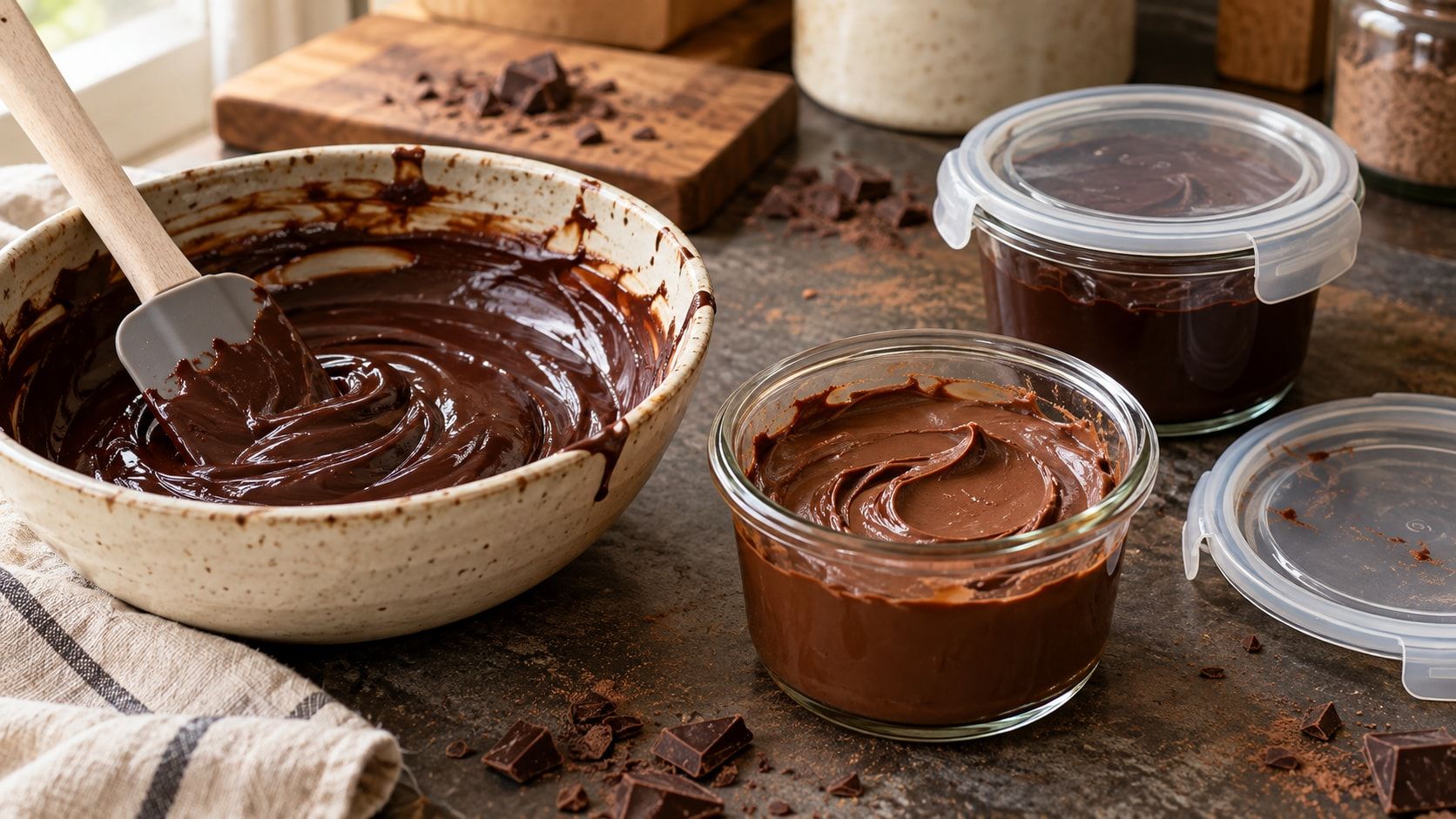
Three real ganaches, three answers
Fridge only: 2 hours out at most
Classic 1:1 dark chocolate cream ganache
Open the recipe: Classic 1:1 dark chocolate cream ganacheEqual weights of 66 % dark chocolate and cream.
- Out of fridge safety limit
- 2 hours
- Fridge 4 °C / 39 °F
- 13 days
- Water activity aw
- 0.925
Fridge until a lab test shows 0.85 or lower
Dark chocolate raspberry ganache
Open the recipe: Dark chocolate raspberry ganacheWith raspberry purée, invert sugar and sorbitol.
- In a jar 20 °C / 68 °F once a test shows 0.85 or lower
- 10 days
- Fridge 4 °C / 39 °F
- 44 days
- Water activity aw
- 0.836
Likely passes 0.85: test it, then it can stay out
Shelf-stable dark chocolate ganache
Open the recipe: Shelf-stable dark chocolate ganacheLess cream; invert sugar, sorbitol, cocoa butter.
- In a jar 20 °C / 68 °F
- 34 days
- Fridge 4 °C / 39 °F
- 131 days
- Water activity aw
- 0.749
Days: calculator estimates for a jar or cake, not label dates.
Don’t pay for a lab test a recipe can’t pass: check yours in the free calculator first.
Why a Classic Ganache Needs the Fridge
A classic ganache of equal weights of dark chocolate and cream calculates at a water activity of 0.925, where bacteria can grow. It belongs in the fridge, where it keeps about 13 days, and should spend no more than 2 hours out of it, or 1 hour above 90 °F (32 °C).
A ganache can stay at room temperature once its water activity is low enough. The FDA Food Code draws that line at 0.88 for a measured value; cottage-food states such as Maryland and Minnesota use 0.85, and so does this page. Getting there takes less water and more dissolved sugar: the shelf-stable ganache above uses less cream and adds invert sugar, sorbitol and glucose syrup to reach 0.749.
Each card is a real recipe calculated with the Formul.io ganache calculator: open it for the full formula and save a copy to your library. The days on the cards are for a ganache kept in a jar or on a cake; Formul.io’s default setting for bonbons sealed in chocolate gives 54 days for the shelf-stable ganache and 16 for the raspberry one. All of them estimate when spoilage begins, not a label date. For the classic ganache, the calculator’s 2 days at 68 °F is a spoilage estimate too, not a safe holding time: the food-safety limit is 2 hours.
How Sure Is a Calculated Water Activity?
A calculation starts from the recipe; a lab measures the finished ganache. We compared the calculation with 11 ganaches whose water activity was measured in published lab studies: from the recipe as written, it read from 0.027 below to 0.067 above the lab. So the verdicts leave that margin around 0.85 instead of using the line itself.
| Calculated water activity | Verdict | What to do |
|---|---|---|
| 0.80 or lower | Likely passes 0.85 | Make it, and confirm the finished ganache before you sell it |
| Above 0.80, below 0.92 | Too close to call | Keep it in the fridge until a test of the finished ganache shows 0.85 or lower |
| 0.92 or higher | Won't pass 0.85 | Keep it in the fridge, or change the recipe before you pay for a test |
At 0.80, even the largest low reading in the comparison leaves the lab under 0.83; at 0.92, even the largest high reading leaves it above 0.85.
The comparison is small: 11 ganaches, nine of them made with compound coating rather than chocolate, and none with sorbitol, glucose syrup or fruit purée like the raspberry and shelf-stable ganaches. In both ganaches made with real chocolate and cream, the calculation read below the lab.
The zones are for the recipe as written. If you weigh your batch after cooking and add a drying step, the calculation drops, so near 0.85 test anyway: in that comparison, a calculation from the measured moisture read up to 0.068 below the lab.
How Close Is a Calculated Water Activity to the Lab? A Ganache Pilot
Eleven lab-tested ganaches against the calculator, sample by sample.
How to Bring a Ganache Below 0.85
Water activity falls when a ganache holds less water and more dissolved sugar or sorbitol in the water it keeps. Cream with 35 % fat is about 58 % water and butter about 16 %, so most of a ganache’s water comes from its cream, fruit purée and syrups. Fat holds no water, so it does not lower water activity by itself.
Here is what each lever does to the raspberry ganache, swapping 40 g of its 120 g of cream so the batch stays at 1 kg. Only sorbitol takes it to 0.80 or lower on its own; with every other lever it stays too close to call.
| Swap 40 g of the cream for | Water activity | Days in a jar at 68 °F | Verdict |
|---|---|---|---|
| Nothing (the recipe as written) | 0.836 | 10 | Too close to call |
| Sorbitol powder | 0.792 | 19 | Likely passes 0.85 |
| Invert sugar | 0.803 | 16 | Too close to call |
| More of the same chocolate | 0.810 | 15 | Too close to call |
| Glucose syrup | 0.816 | 13 | Too close to call |
| Butter | 0.822 | 12 | Too close to call |
Calculated with the Formul.io ganache calculator.
Sorbitol and invert sugar work hardest per gram because they dissolve as small molecules. Glucose syrup carries water just as invert sugar does; it does less because its molecules are larger. Butter only takes water out.
A bigger swap of one lever works too. With 60 g less cream and 60 g more of the same chocolate, the raspberry ganache moves into the likely-pass zone without a new ingredient:
The raspberry ganache before and after the swap
Fridge until a lab test shows 0.85 or lower
As written
560 g chocolate and 120 g cream, with raspberry purée, invert sugar, glucose syrup, sorbitol and butter.
- In a jar 20 °C / 68 °F once a test shows 0.85 or lower
- 10 days
- Fridge 4 °C / 39 °F
- 44 days
- Water activity aw
- 0.836
Likely passes 0.85: test it, then it can stay out
60 g cream → chocolate
620 g chocolate and 60 g cream; everything else stays the same.
- In a jar 20 °C / 68 °F
- 18 days
- Fridge 4 °C / 39 °F
- 74 days
- Water activity aw
- 0.794
Calculated with the Formul.io ganache calculator; try it on your own copy first.
Open the raspberry ganache and try the swap
Save a copy to your library, swap 60 g of cream for chocolate and watch the water activity and days change.
With less cream it may set slightly firmer, though the calculator’s texture estimate stays in the same class.
Enter your recipe
Open the ganache calculator and enter every ingredient in grams, with the chocolate and cream you actually buy, or save a copy of one of the recipes above.
Read the water activity
At 0.80 or lower the ganache likely passes 0.85. Between 0.80 and 0.92, try the levers or test it; at 0.92 or higher, change the recipe first.
Test the finished ganache
Have a lab measure a batch made exactly as written and keep the result with the recipe. After any change, recalculate, and test again where your state's rules require it.
Can You Sell Ganache Under Cottage Food Rules?
Cottage-food rules usually let you sell from your home kitchen only foods that keep safely without refrigeration. Maryland and Minnesota, for example, draw that line at a water activity of 0.85 or lower, or a pH of 4.6 or lower.
- Maryland lists icings, frostings and glazes made with ingredients such as milk, butter or cream cheese among the products that must be tested by an independent laboratory before you sell them. A changed recipe needs a new test, and you keep a copy of the result with you when you sell in person (Maryland Department of Health, Product Testing FAQ, revised October 2025).
- Minnesota excludes any food you need to refrigerate to keep it safe, says a product made from a recipe that is not a standardized, tested one should be tested, and notes that icings and frostings may need testing depending on the recipe. The same training also excludes foods made from milk, such as butter or ice cream, unless they are part of a baked product, so ask the Minnesota Department of Agriculture whether a cream ganache qualifies before you pay for a test (Minnesota Department of Agriculture, cottage food producer training, revised November 2024).
Rules differ from state to state, so check yours before you sell.
Calculate before you pay for a test
Every recipe you send to a lab is a separate test. Recipes that calculate at 0.80 or lower are the ones worth sending. Between 0.80 and 0.92, try the levers above first, or test. At 0.92 or higher, change the recipe before any test.
Shelf-Stable Buttercream: Which Frostings Pass 0.85, and a Recipe That Does
The same 0.85 line for frostings: where buttercream, cream cheese and meringue frostings calculate, and a buttercream recipe with margin.
Shelf-Stable Ganache Questions
Is ganache shelf stable?
How long can ganache sit out at room temperature?
Does ganache need to be refrigerated?
Why do some sites say ganache keeps 2–3 days at room temperature?
Can I sell ganache under cottage food rules?
Does adding more chocolate make ganache shelf stable?
Related Topics
Related Articles
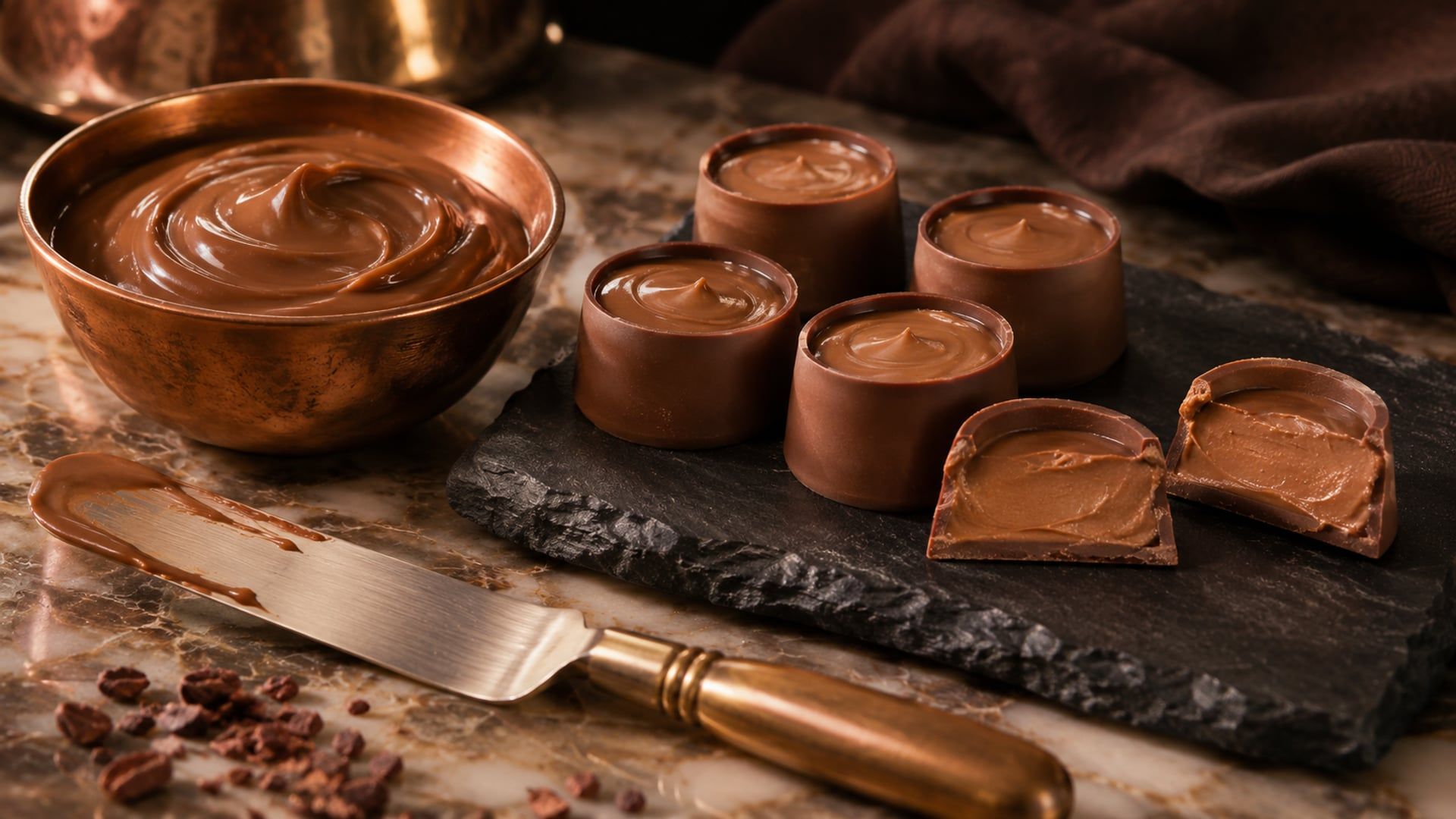
Shelf-Stable Milk Chocolate Ganache: A 1 kg Bonbon Formula
A 1 kg milk chocolate bonbon filling calculated at about 45 days at 20 °C and a water activity of 0.730: the formula, the method, and why milk chocolate needs extra cocoa butter and invert sugar.
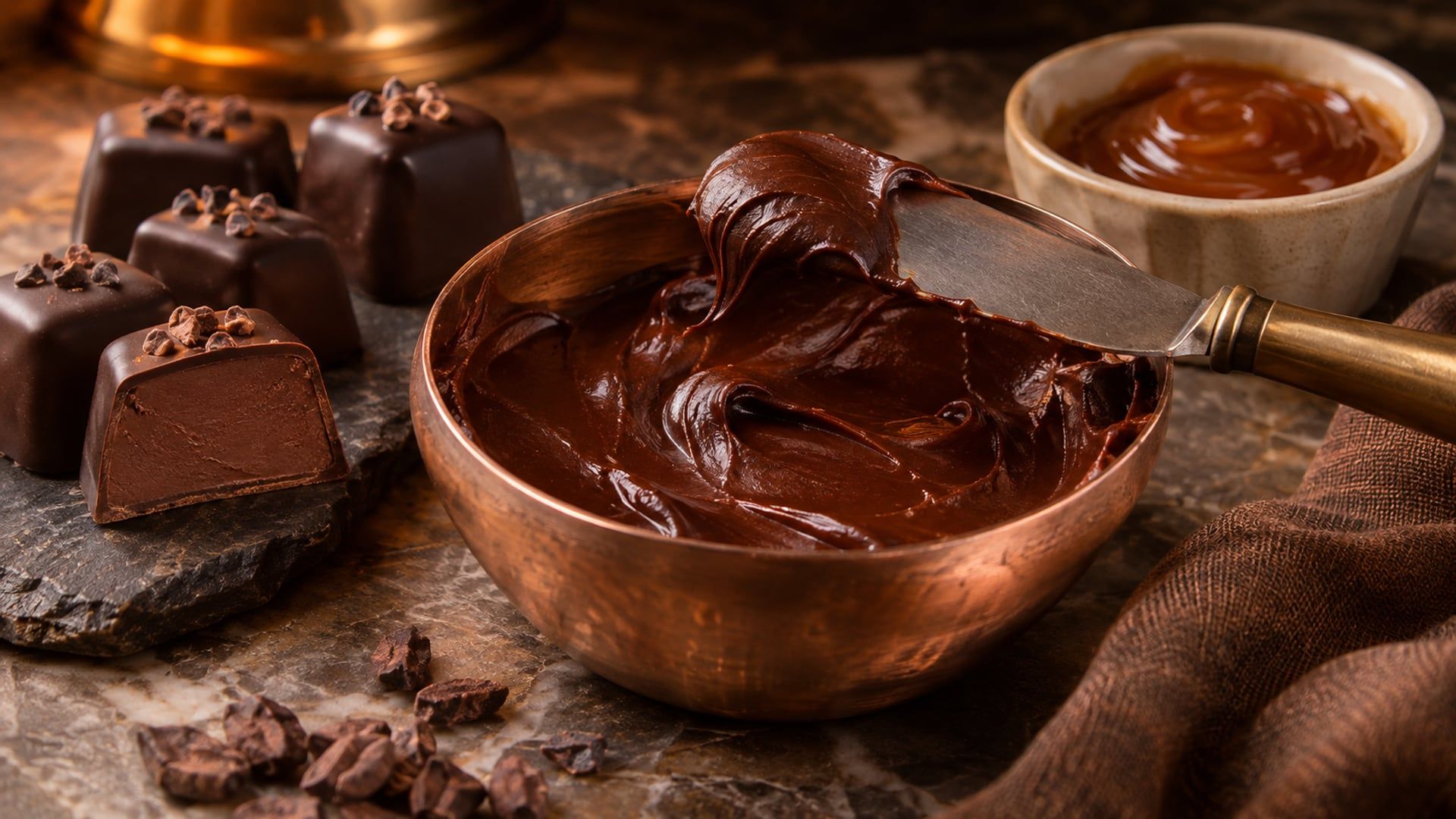
Shelf-Stable Caramel Ganache for Bonbons: A 1 kg Formula
A 1 kg salted caramel ganache for bonbons calculated at about 34 days at 20 °C and a water activity of 0.75: the formula, how to cook the caramel, and what a calculation cannot see in cooked sugar.

Shelf-Stable Raspberry Ganache for Bonbons: A 1 kg Formula
A cream-free 1 kg raspberry ganache for bonbons calculated at about 30 days at 20 °C and a water activity of 0.759: the formula, the method, and how freeze-dried raspberry adds flavor without water.