Shelf-Stable Dark Chocolate Ganache
A 1 kg dark ganache with a calculated aw around 0.75. Use the complete formulation and its model-based storage predictions to develop a filling for your product.
Ingredient weights and method below; a free account lets you save and adapt the recipe.
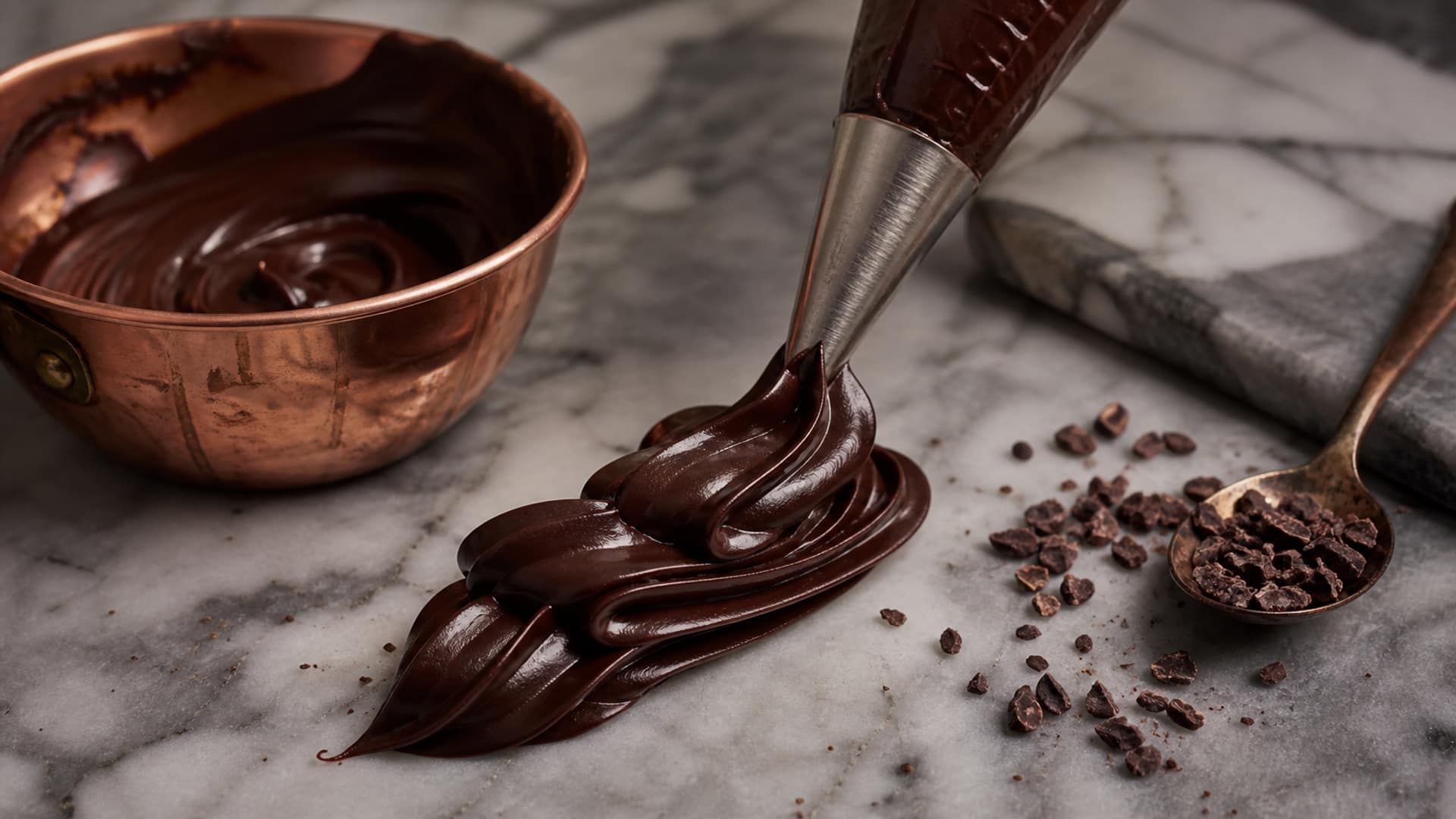
Is ganache shelf-stable? It depends on the complete formulation and storage conditions. A simple chocolate-and-cream ganache and a filling formulated with sugars and polyols have different water activity. This 1 kg recipe provides a low-aw starting point: its current Formul.io calculation predicts aw 0.749, about 36.4% fat, and storage estimates of about 54 days at room temperature (20°C) or 209 days refrigerated on the calculator’s default Balanced shelf-life model. These are outputs of the linked recipe model, not results of a storage trial or label dates.
Formula
| Ingredient | Weight (g) | Percentage | Function |
|---|---|---|---|
| Dark Chocolate (66%) | 530 | 53% | Base, flavor |
| Heavy Cream (35%) | 220 | 22% | Emulsion, moisture |
| Invert Sugar | 80 | 8% | Aw reduction, texture |
| Sorbitol (crystalline) | 60 | 6% | Humectant, Aw reduction |
| Cocoa Butter | 50 | 5% | Replaces cream fat, texture |
| Glucose Syrup (DE40) | 30 | 3% | Crystallization control |
| Butter (unsalted) | 30 | 3% | Mouthfeel, shine |
Ingredient Breakdown
Chocolate Selection
Use couverture chocolate with 64–66% cacao and roughly 37–40% cocoa butter (e.g. Valrhona Caraïbe 66%). Lower cocoa butter content requires more cream; higher content risks splitting.
Sorbitol Form Matters
This formula assumes crystalline sorbitol (essentially 0% water). A 70% sorbitol solution carries 30% water, which adds to the water phase and raises the Aw — recalculate before substituting it. At 6% (60 g/kg) sorbitol also stays below the EU 10% polyol threshold that triggers a laxative-effect label, so none is required at this dose; keep it in mind if you scale the humectants up.
Why It Stays Stable
Dissolved sugars and polyols lower the water activity of the filling. This recipe combines invert syrup, crystalline sorbitol and glucose syrup while limiting the water introduced with cream. The full calculation also includes the actual chocolate, butter and cocoa butter, so you can assess texture and composition alongside aw.
The linked formulation currently predicts aw about 0.749. Use the model to compare nearby changes: a different cream, a liquid sorbitol product or a fruit addition changes the input composition and can move several metrics together. Low aw is useful for storage, while the fat balance and emulsion determine how the ganache handles and sets.
Method
Prepare chocolate
Chop the chocolate or use callets. Gently melt it with the cocoa butter in a dry bowl, stirring until combined.
Heat cream mixture
Combine cream, crystalline sorbitol, invert sugar, and glucose syrup in a saucepan. Heat to 85°C, stirring until the sorbitol and sugars dissolve.
Create emulsion
Pour 1/3 of hot cream over chocolate. Let sit 30 seconds, then stir from center outward in small circles. Add remaining cream in two additions, emulsifying each time.
Add butter
When ganache reaches 35–40°C, add softened butter and blend until incorporated.
Homogenize
Use an immersion blender for 30 seconds to create a perfectly smooth emulsion.
Cool properly
Pour into a shallow container. Cool at room temperature (20°C) for 2 hours, then cover and refrigerate.
Pro Tips
- All equipment must be completely dry - water drops cause seizing
- Temperature control is critical: heat the cream to 85°C to dissolve the sugars, then add the softened butter only once the ganache has cooled to 35–40°C
- Never whisk vigorously - this incorporates air and destabilizes the emulsion
- The immersion blender step is optional but dramatically improves consistency
Customize with Formul.io
This recipe can be adapted for different chocolates, shelf life targets, or flavor additions. Use the Ganache Calculator to recalculate ratios while maintaining stability.
Recalculate This Recipe
Adjust for your chocolate, add flavors, or change batch size
Open the Live Formulation
Built on Valrhona Caraïbe 66% — see its calculated aw (~0.749), fat (~36%) and storage predictions and clone it into your own account
For a useful comparison, clone the linked recipe before changing it. Keep the original as your baseline, replace the ingredient you intend to buy, and compare the recalculated aw, fat balance and storage predictions together. A chocolate with the same cocoa percentage can still have a different fat and sugar composition. Likewise, the word “sorbitol” does not identify whether you are weighing dry crystals or a solution. Match those details before scaling the batch.
Storage & Handling
Keep the ganache protected from moisture, odours and repeated temperature changes. Decide whether the finished product will be stored at room temperature or refrigerated, then use the matching model prediction as the starting point for your storage plan. The current recipe gives about 54 and 209 days respectively; changing its ingredients or process can change those outputs.
Check the finished batch’s aw and follow retained samples in the intended packaging for flavour, emulsion stability and microbial quality. The shelf-life testing guide turns the prediction into checkpoints and a sample plan. Keep cold products sealed while they warm to reduce surface condensation.
Troubleshooting
Ganache is too thick
Ganache is grainy
Oil separation on surface
Can I use a sorbitol syrup instead of crystalline?
How to Fix Split Ganache
Diagnose an oily, grainy or seized batch and re-emulsify it at 32–34°C
Related Topics
Related Articles
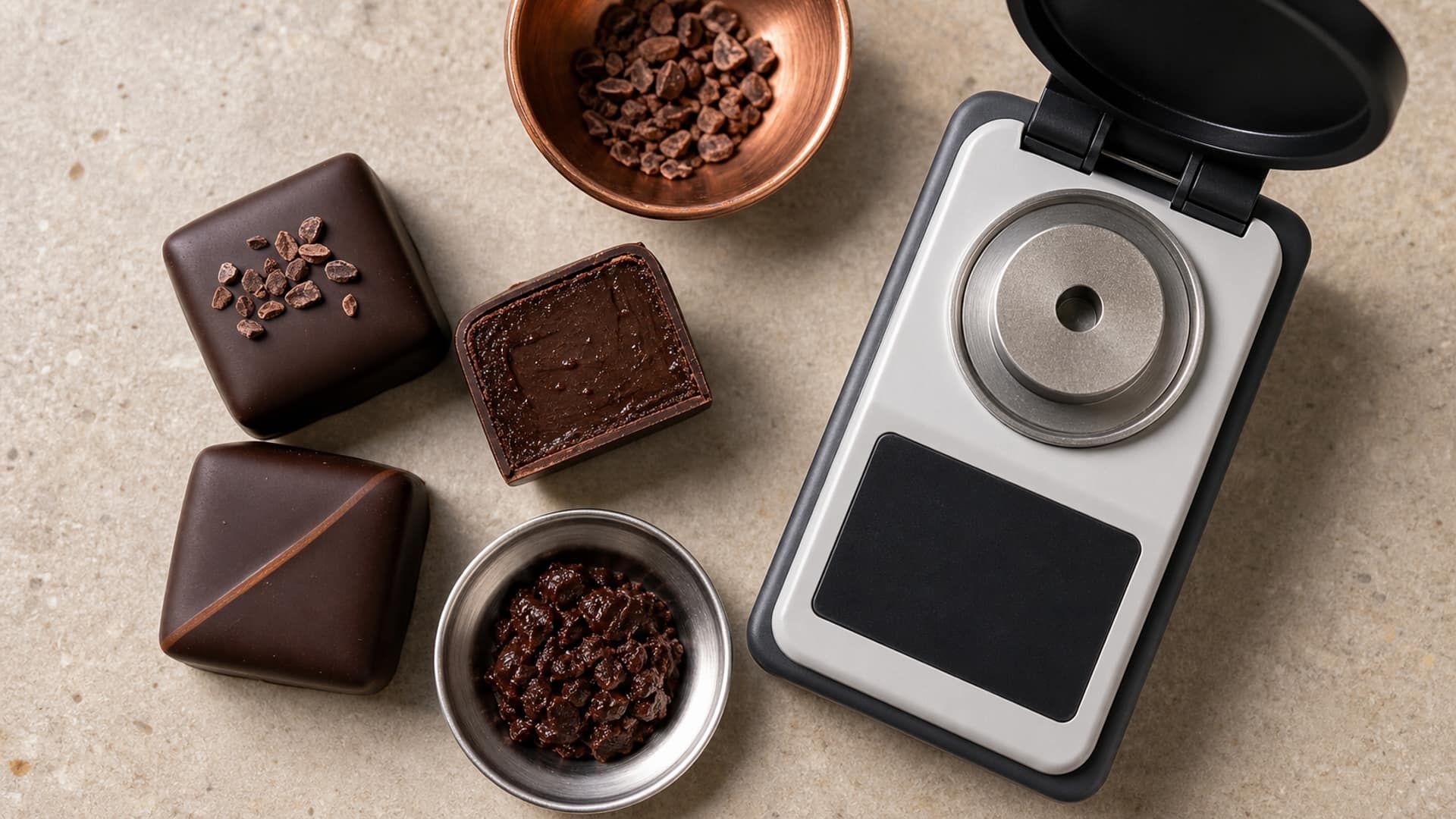
Water Activity Calculator for Ganache and Filled Chocolates
Calculate water activity from your formulation, compare ingredient changes, and use recipe-level predictions to plan shelf-life testing for filled chocolates.
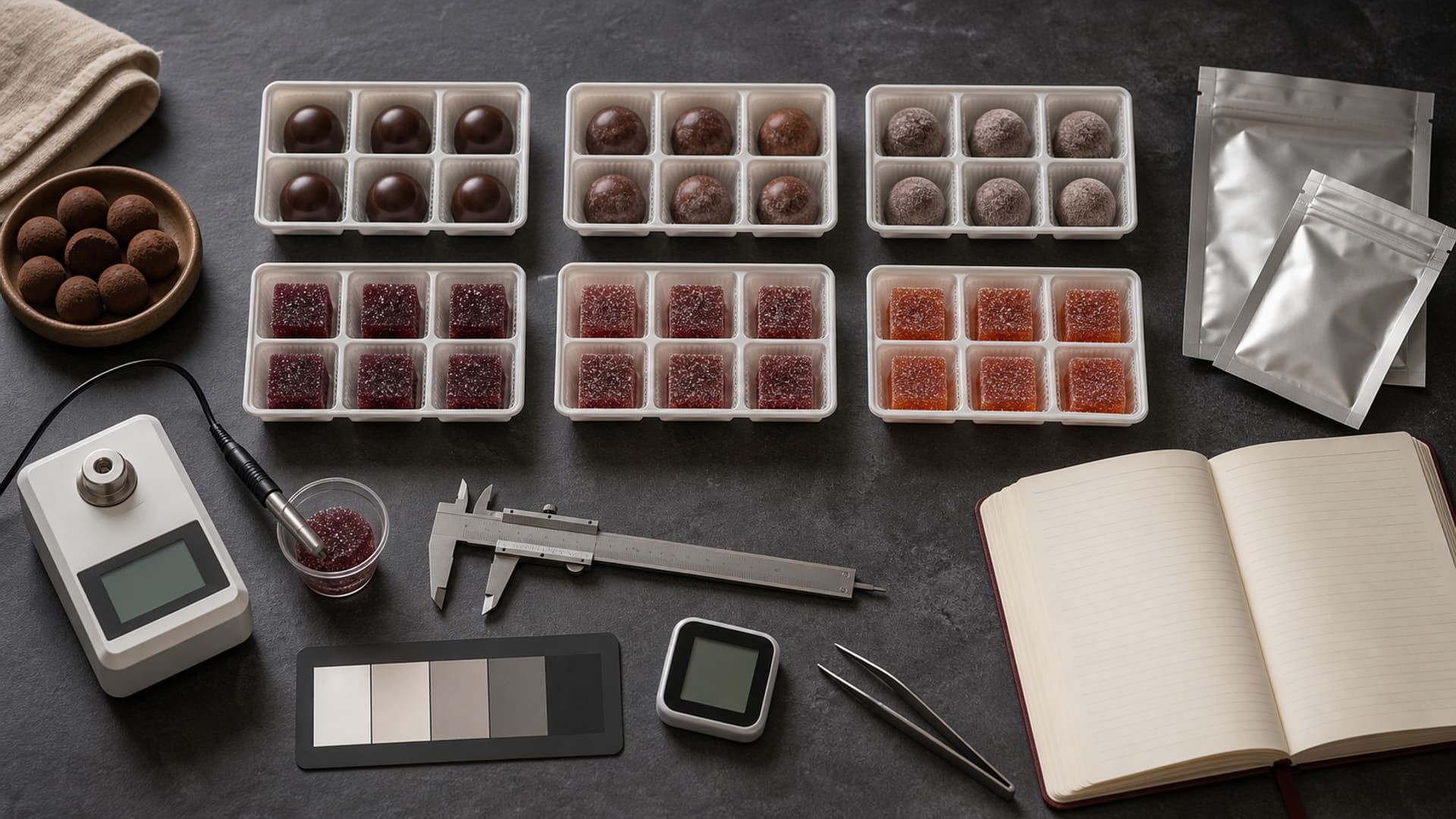
Confectionery Shelf-Life Testing: Plan Your First Study
Build a retention-sample plan for a filled chocolate: choose checkpoints, calculate the packs needed, and record results without confusing a trial target with a validated date.
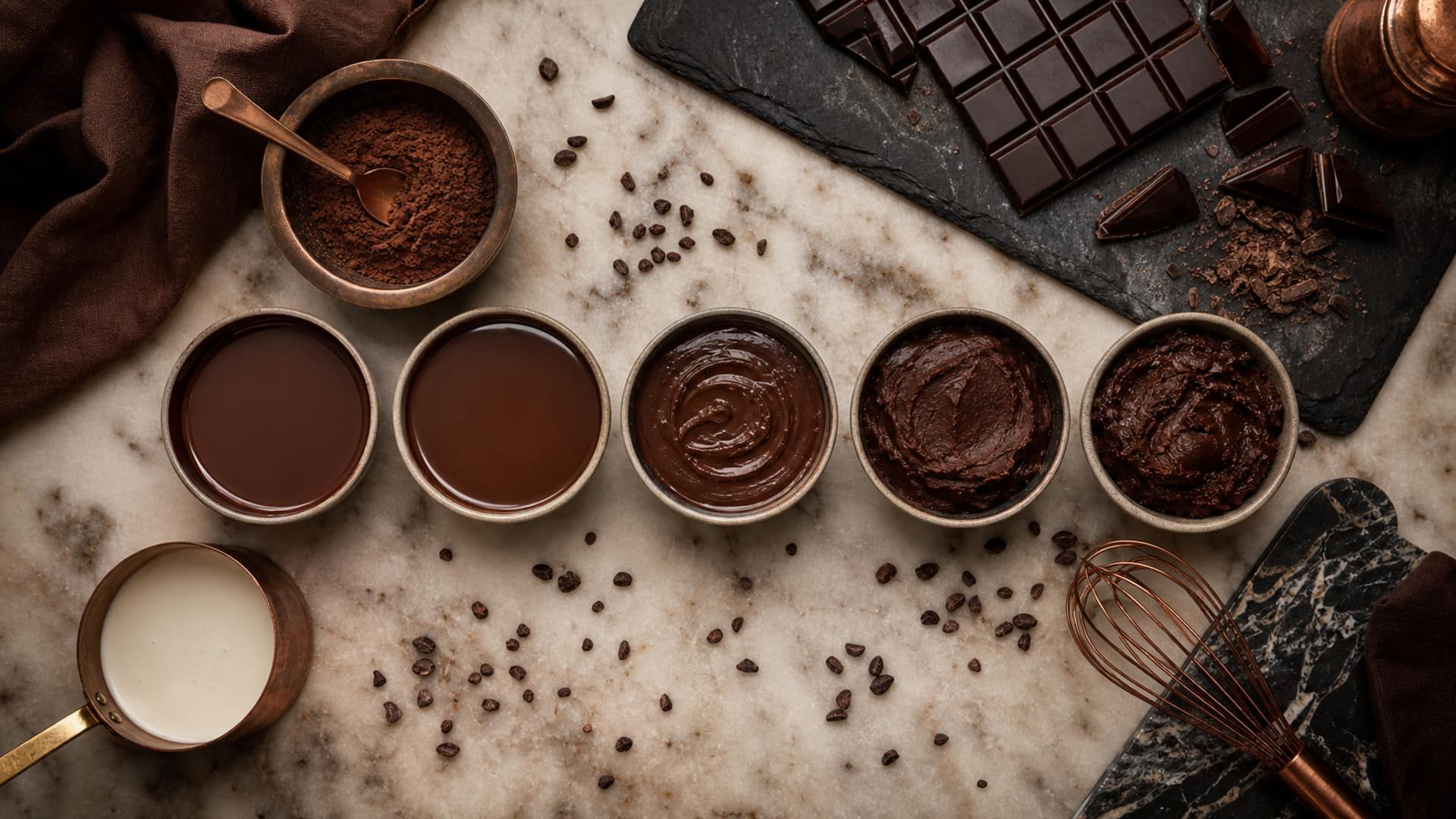
Ganache Ratio Guide: Matching Chocolate-to-Cream Ratios to Every Use Case
The chocolate-to-cream ratio determines everything: texture, setting time, shelf stability, and workability. This guide maps each ratio to its application — from pourable glazes to firm praline centres.