Ganache Ratio Guide: Matching Chocolate-to-Cream Ratios to Every Use Case
The chocolate-to-cream ratio determines everything: texture, setting time, shelf stability, and workability. This guide maps each ratio to its application — from pourable glazes to firm praline centres.
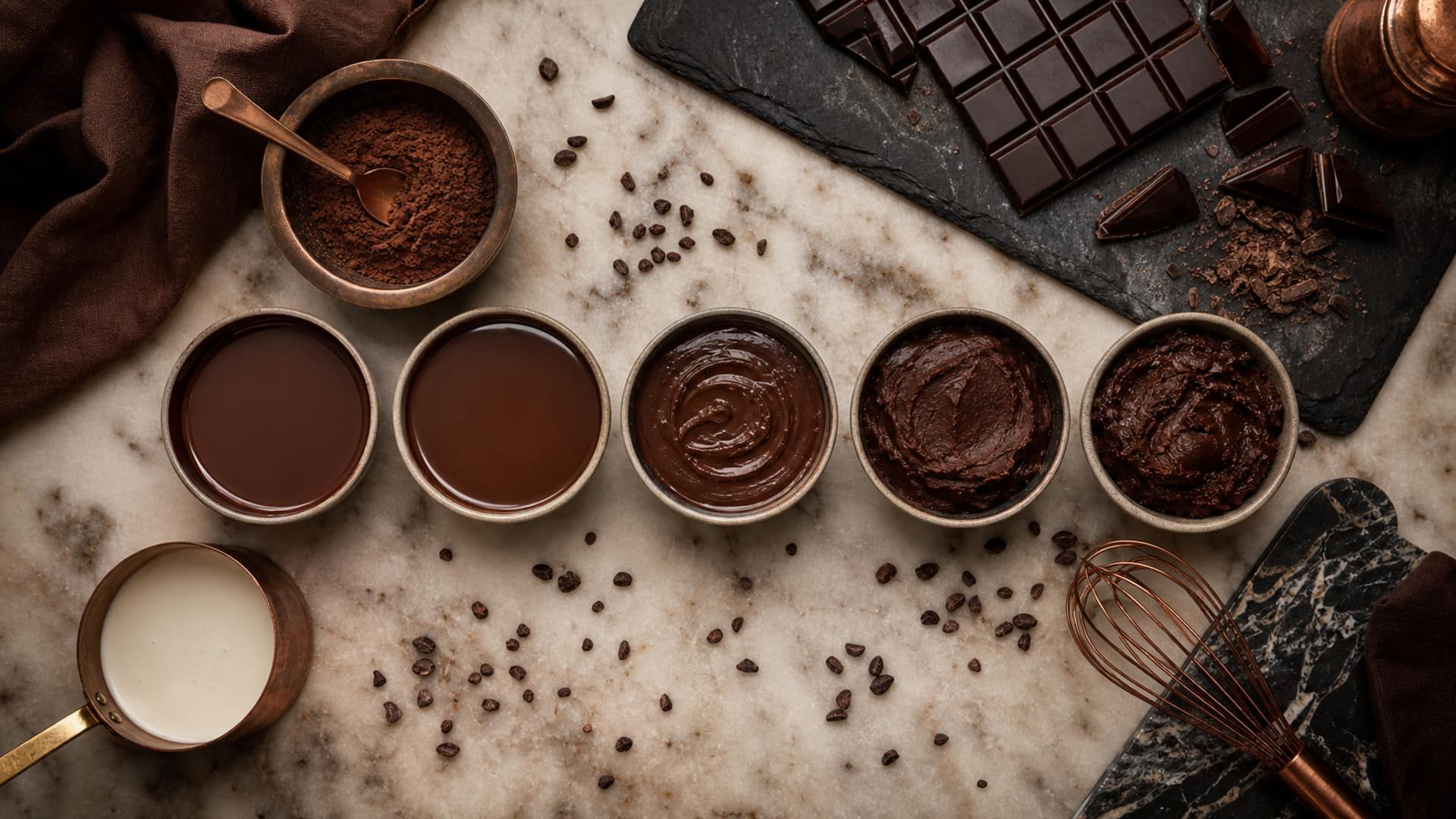
The ratio of chocolate to cream in a ganache is not a stylistic preference — it is a technical parameter that controls emulsion structure, fat crystallization rate, and final texture at service temperature. Every confectionery application demands a specific firmness window, and the ratio is the primary lever you pull to hit it.
How the Ratio Works
All ratios in this guide are expressed as chocolate : cream by weight. A 2:1 ratio means 200 g chocolate per 100 g cream. As the chocolate fraction increases, the ganache sets firmer because more cocoa butter is available to crystallize. As cream increases, the aqueous phase dominates and the result is softer, more fluid.
Ratio Reference by Application
The table below maps ratios to use cases across the production range. All values assume dark chocolate (60–70% cocoa solids) and heavy cream (35% fat) at standard room temperature (20°C). Adjustments for milk and white chocolate are covered in the next section.
| Application | Chocolate:Cream Ratio | Texture at 20°C | Key Requirement |
|---|---|---|---|
| Pourable glaze / mirror | 1:1–1.2:1 | Fluid, glossy, self-levelling | Pour at 32–35°C for even coverage |
| Cake frosting / tart filling | 1:1 | Spreadable, holds shape | Use at 20–22°C after short set |
| Bonbon / moulded shell filling | 1.5:1–2:1 | Soft but pipeable, clean cut | Must release cleanly from mould at 18°C |
| Hand-rolled truffle centre | 1.5:1–2:1 | Firm enough to roll, melts on palate | Chill 1–2 h before rolling |
| Enrobed truffle / cut slab | 2:1 | Sliceable, holds wire cut cleanly | Frame at 18°C; cut within 24 h |
| Praline centre / shelf-stable insert | 2:1–3:1 | Very firm, snap when cold | Lower Aw; verify water activity before production |
All ratios by weight; dark 60–70% chocolate + 35% cream at 20°C. Synthesized from professional confectionery references.
Sources: Callebaut Chocolate Academy (individual application examples); Greweling, Chocolates and Confections (2nd ed., Wiley).
Why the Glaze Ratio Works
A 1:1 ratio at 32–35°C behaves as a pourable, low-viscosity liquid because cocoa butter is fully melted — stable Form V (beta) crystals melt at 33.8°C. As the ganache cools on the cake surface, cocoa butter re-nucleates into Form V crystals, producing the characteristic gloss. At ratios higher than 1.2:1 chocolate, the setting happens too quickly and the glaze drags rather than flowing flat.
Why Truffle and Bonbon Ratios Are Firmer
A 2:1 ratio holds its structure at ambient temperature because the elevated cocoa butter content generates a solid fat network on crystallization. For a hand-rolled truffle, the ganache must be pipeable at 28–30°C (to deposit centres), but firm enough at 18°C to hold a round shape without deforming under the weight of a chocolate coating. Bonbon shell fillings need to release cleanly from polycarbonate moulds, which requires a ganache that contracts slightly on cooling — a property driven by cocoa butter crystallization.
How Chocolate Type Shifts the Ratio
Dark, milk, and white chocolate contain meaningfully different compositions, and the same chocolate-to-cream ratio produces very different textures across types. This is the single most common source of ganache formulation errors when converting a recipe between chocolate types.
The practical consequence: to achieve the same texture as a dark 2:1 ganache, you need approximately 2.5:1 for milk chocolate and 3:1–3.5:1 for white chocolate. Milk fat does not form stable Form V crystals — it acts as a plasticizer that disrupts the cocoa butter crystal network, producing a softer set. Lower cocoa solid content in milk and white chocolate further reduces the particulate matrix that contributes to ganache structure.
White Chocolate Sets Differently
White chocolate has no cocoa solids to contribute to structure. Its fat network is built entirely from cocoa butter and milk fat, both of which crystallize at lower temperatures than dark chocolate. A white ganache at 2:1 that looks firm at refrigerator temperature (4°C) may be unworkably soft at 20°C. Always test firmness at service temperature, not straight from the fridge.
Ratio, Temperature, and the Texture Window
Ratio and temperature work together. The same ganache formula occupies different points on the firmness spectrum depending on its temperature, which means every application has both a formulation target (ratio) and a working temperature (where you pipe, pour, or roll it).
Freshly made — fluid emulsion (35–45°C)
Immediately after emulsification, cocoa butter is fully melted. The ganache is pourable regardless of ratio. Use this window only for glaze applications or pouring into frames. Do not pipe at this stage — it will flow and not hold.
Partially set — pipeable (26–32°C)
Cocoa butter begins nucleating stable crystals. A 2:1 dark ganache in this range is ideal for depositing bonbon fillings or piping truffle centres. Viscosity is high enough to hold shape but low enough to push through a piping bag without tearing. Work quickly — this window closes in 10–20 minutes at room temperature.
Set — workable (18–22°C)
The fat network is substantially crystallized. Ganache at 2:1 is firm enough to cut with a guitar cutter or roll in palms. At 1:1 it is spreadable, at 3:1 it is stiff and may crack under a guitar wire. This is the stage for rolling, dipping, or applying frosting.
Cold — fully crystallized (below 15°C)
Maximum firmness. Useful for storage and transport, but not for working. Bring cold ganache back to the pipeable window slowly at room temperature. To speed it up, use short microwave bursts and stir between them; long bursts create hot spots that melt the fat and can break the emulsion.
Dialling In Ratios with the Calculator
Calculating the correct ratio by hand across multiple ingredients — cream, invert sugar, glucose, cocoa butter additions — quickly becomes error-prone. The Formul.io ganache calculator handles the full composition, predicts water activity (Aw), and shows whether the formulation falls within a safe shelf-life band for your chosen application.
For a quick sense of where a chocolate:cream ratio lands, try the estimate below, then run the exact formula in the full calculator.
Calculator Workflow for Ratio Decisions
- Enter your target application (truffle centre, glaze, bonbon filling).
- Input your chocolate type and cocoa solid percentage.
- Adjust the cream weight until the predicted texture band matches your use case.
- Check the Aw result — praline centres and cut slabs should target Aw below 0.80 for short-term ambient storage (up to 4 weeks); target below 0.75 for extended ambient shelf life.
- Recalculate whenever you switch chocolate origin or batch; cocoa butter content varies between suppliers by ±2–3 percentage points, which shifts the set firmness noticeably at 2:1 and above.
For a complete worked example using a 3.43:1 dark truffle formulation, see the step-by-step calculator walkthrough in the related articles below.
Why does my glaze ganache set too fast and leave drag marks?
How do I convert a dark chocolate truffle recipe to milk chocolate?
Why does a higher ratio ganache have better shelf life?
Can I use the ratio as the only formulation variable for shelf life?
What ratio should I use for a ganache that will be piped into bonbon shells?
Related Articles
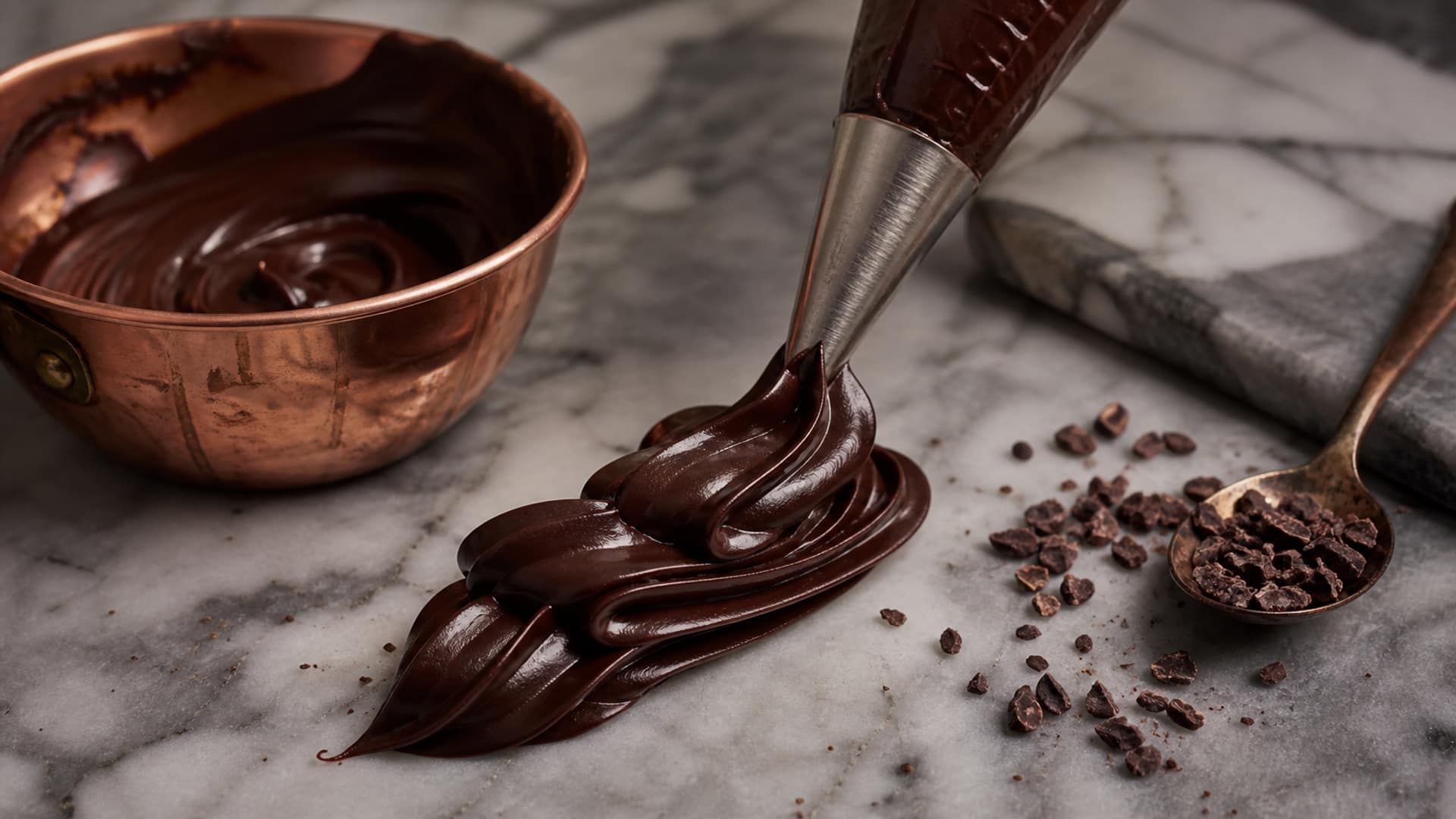
Shelf-Stable Dark Chocolate Ganache
A 1 kg dark ganache with a calculated aw around 0.75. Use the complete formulation and its model-based storage predictions to develop a filling for your product.
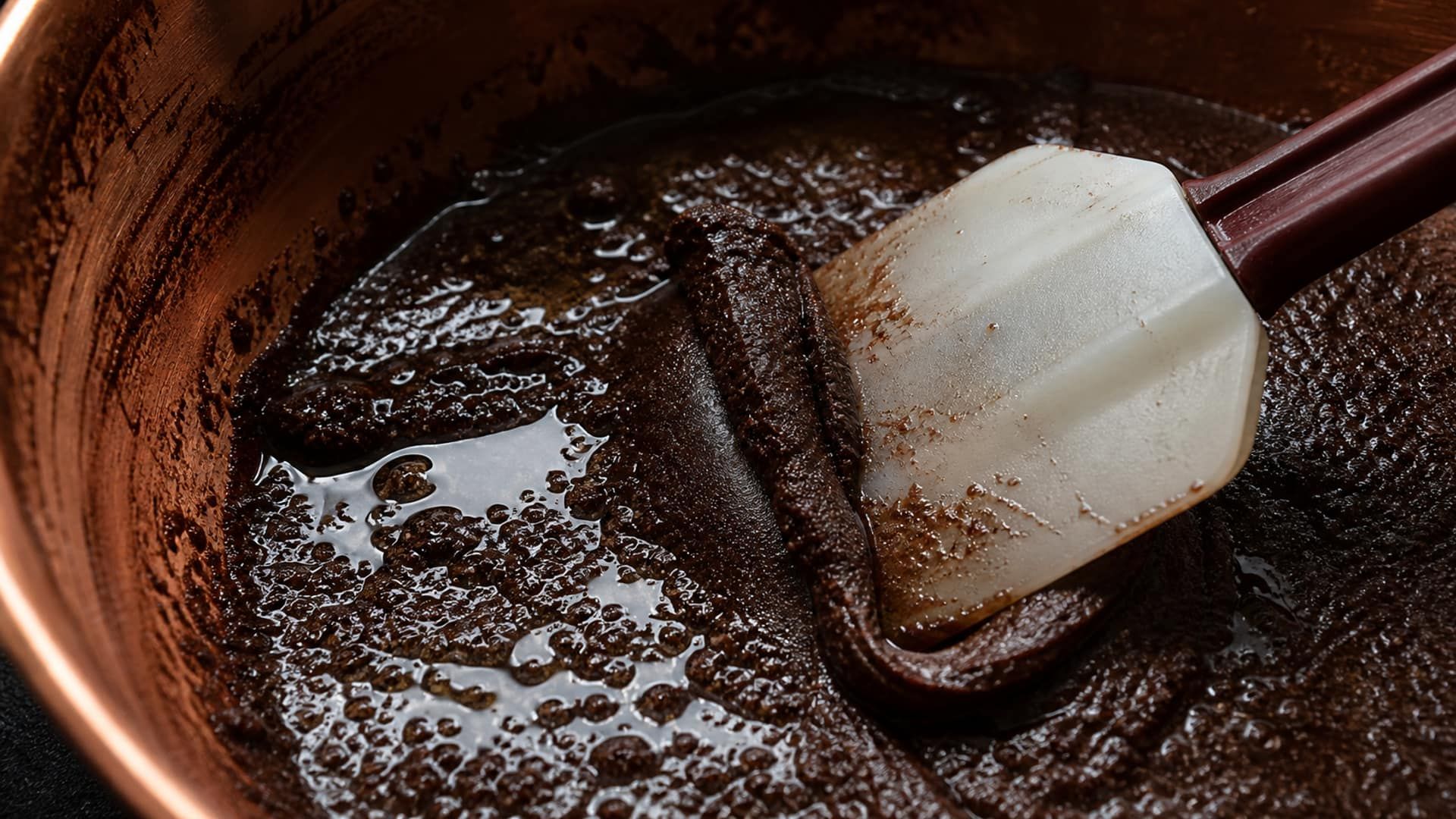
Why Ganache Splits After Cooling
Your ganache looked perfect, but after refrigeration it's oily and broken. Here's why it happens and how to prevent it.
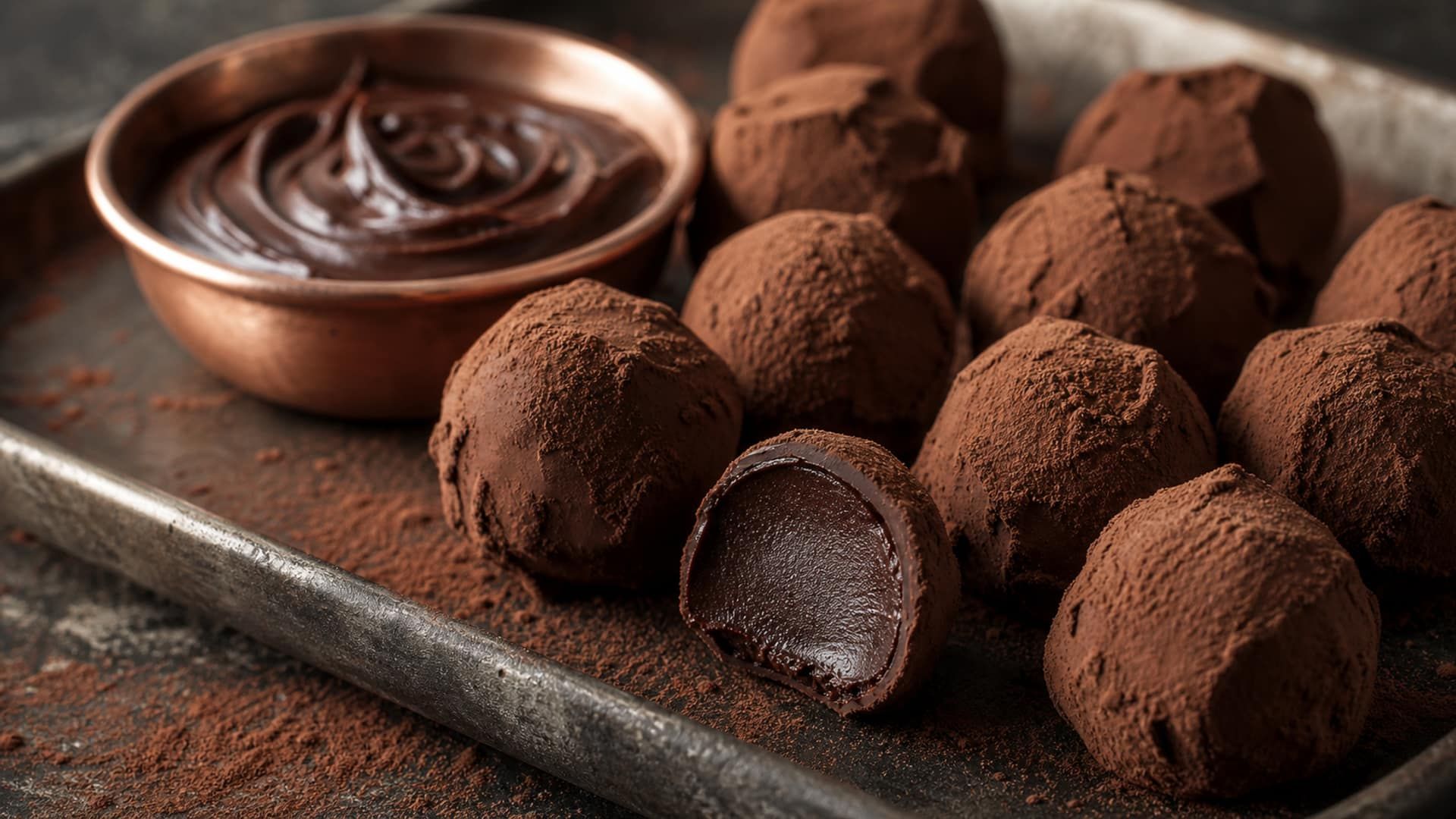
Dark Chocolate Truffle Ganache: A Step-by-Step Calculator Walkthrough
Learn to formulate a dark chocolate truffle ganache against an Aw 0.75 target using the Formul.io calculator. Covers ingredient entry, metric interpretation, adjustments, and process control toward a 21-day ambient shelf life.