Macaron Ganache Filling: Ratios for Dark, Milk and White Chocolate
Which chocolate-to-cream ratio keeps a macaron filling dry enough for its shells, three 500 g recipes with calculated water activity, and how long filled macarons keep.
Weights and method below; a free account lets you save the live recipe and try your own chocolate in it.
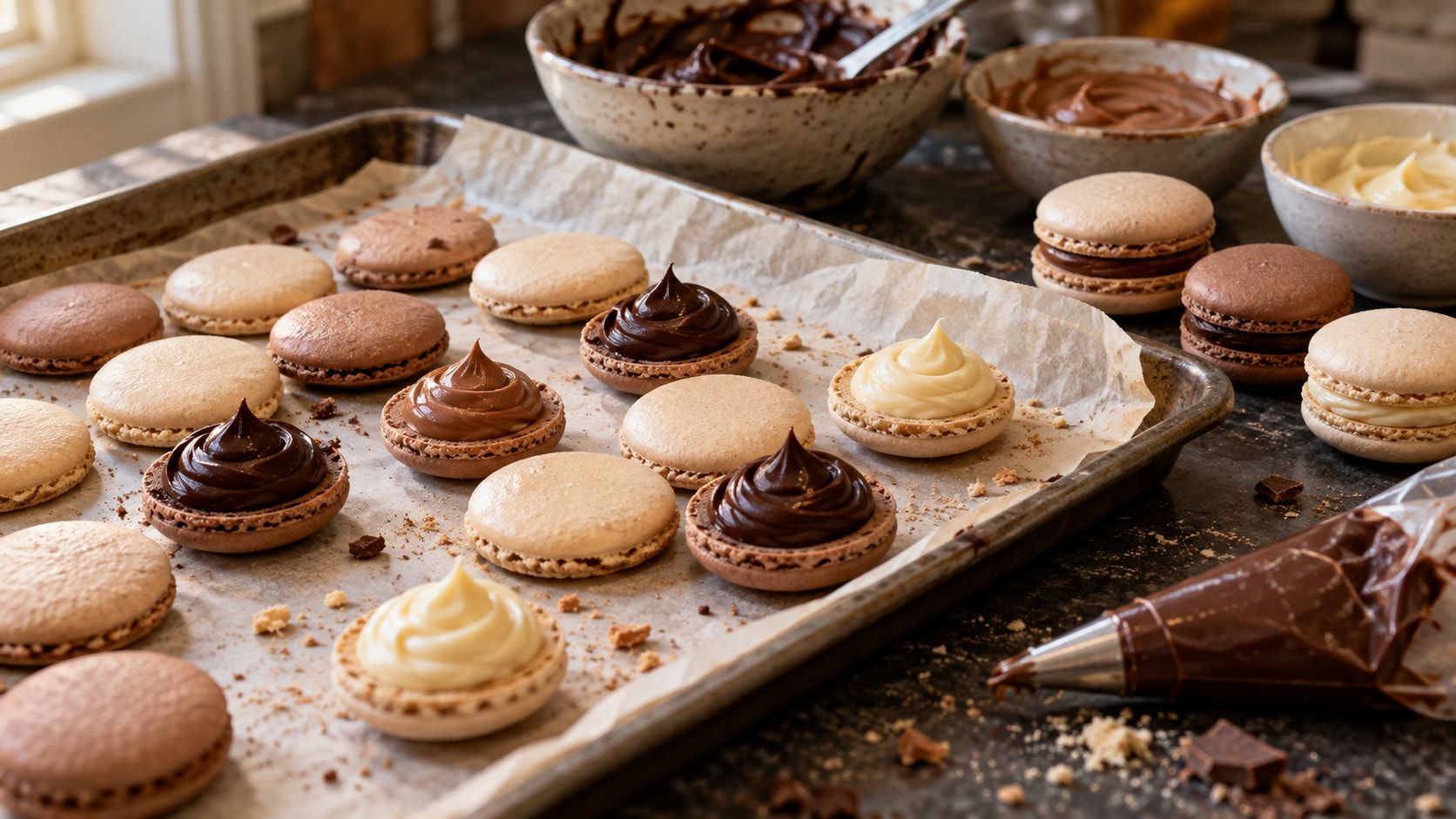
A macaron ganache of chocolate and cream alone needs about 3 parts dark chocolate to 1 part cream, or 2.5:1 with milk or white, to calculate at aw 0.82 or lower, dry enough to soften the shells slowly; dark at 3:1 sets very firm. The popular 1:1 ganache of 70 % dark chocolate calculates at 0.935, a fridge filling that can spend no more than 2 hours out. The 500 g recipe below stays softer, near 2.3:1, and gets to 0.761 with invert sugar and sorbitol, with milk and white versions beside it.
Macaron Ganache Ratios by Chocolate
Each value below is plain chocolate and 35 % cream, calculated with the ganache calculator’s Macaron type. Its water-activity band runs from 0.65 to 0.82; values inside it are in bold.
| Chocolate : cream, by weight | Dark 70 % | Milk 34 % | White 28 % |
|---|---|---|---|
| 1:1† | 0.935 | 0.907 | 0.905 |
| 1.5:1† | 0.907 | 0.872 | 0.865 |
| 2:1† | 0.878 | 0.837 | 0.823 |
| 2.5:1† | 0.847 | 0.802 | 0.807 |
| 3:1† | 0.816 | 0.784 | 0.805 |
Calculated water activity. † Calculator simulations, not saved recipes. Chocolates: Callebaut 70-30-38, 823 and W2.
- 1:1 dark, a common macaron ratio, is a fridge filling. At 0.935 it is above 0.88, where bacteria can grow (0.925 with the 66 % chocolate of our ratio chart: the darker the chocolate, the higher the number). The calculator gives it about 11 days in the fridge; food-safety rules give it 2 hours out, or 1 hour above 32 °C.
- 2:1 white, the ratio usually quoted for white chocolate, calculates at 0.823, just outside the band.
- More chocolate stops drying a white ganache. Past 2.5:1 the water left is already saturated with sugar, so 3:1 calculates at 0.805 against 0.807: more sweetness and firmness, almost no drop in water activity.
- Dark at 3:1 sets very firm in the calculator’s texture estimate, firmer than the 2:1 our ratio chart gives for truffles.
That is why the recipes below lower water activity with invert sugar and sorbitol instead of more chocolate. To check your own filling, open the ganache calculator and set Ganache Type to Macaron: it judges the recipe against this band.
Dark Chocolate Macaron Ganache Recipe
This 500 g filling keeps the chocolate-to-cream ratio near 2.3:1. Invert sugar and sorbitol bring the water activity down, and butter keeps the bite soft.
| Ingredient | Weight (g) | What it does |
|---|---|---|
| Dark chocolate, 70 % (Callebaut 70-30-38) | 245 | Structure and flavor |
| Cream, 35 % fat | 105 | The water phase of the emulsion |
| Invert sugar syrup, 82 % solids | 80 | Lowers water activity and keeps the filling from graining |
| Sorbitol powder | 25 | Lowers water activity with less sweetness than sugar |
| Unsalted butter | 45 | Softer bite and melt |
| Total | 500 |
Makes 500 g: about 60 macarons at 8 g of filling each.
Dark chocolate macaron ganache
245 g dark chocolate, 105 g cream, invert sugar, sorbitol and butter: open the live calculation behind aw 0.761 and save a copy to try your own chocolate.
Melt the chocolate
Melt the chocolate gently to about 45 °C in a tall container that fits an immersion blender.
Heat the cream with the sugars
Bring the cream, invert sugar and sorbitol to about 85 °C, stirring until the sorbitol has dissolved.
Emulsify
Pour the hot cream over the chocolate in three additions and blend with the blender head fully submerged until the ganache is smooth and glossy.
Blend in the butter at 35 °C
Let the ganache cool to about 35 °C, add the soft butter in pieces and blend again.
Let it set, then pipe
Press film onto the surface and leave it at 19–25 °C until it holds its shape. Pipe it onto half the shells and close them with the other half; if it is too stiff to pipe, warm it slightly.
Mature in the fridge
Keep the filled macarons in a closed box in the fridge for 24 hours while water from the filling softens the inside of the shells. This filling is drier than a 1:1 ganache, so taste one at 24 and at 48 hours and keep the timing you prefer.
Serve at room temperature
Take the closed box out about 30 minutes before serving and open it once the macarons have warmed up, so condensation forms on the box, not on the shells.
The invert sugar is there as much for smoothness as for water activity. In a calculator simulation with the same weight of plain sugar instead, aw does not move: it stays at 0.761, but the calculator’s crystallization risk jumps from 4 to 68 out of 100: the filling can turn grainy.
Milk and White Chocolate Versions
Milk and white chocolate carry more sugar than dark, so their versions land lower. The white version gets 10 g of cocoa butter, melted with the chocolate, for a firmer set.
| Per 500 g | Dark | Milk | White |
|---|---|---|---|
| Chocolate | 245 g, 70 % | 265 g, 34 % | 240 g, 28 % |
| Cocoa butter | – | – | 10 g |
| Cream, 35 % fat | 105 g | 100 g | 100 g |
| Invert sugar syrup | 80 g | 70 g | 85 g |
| Sorbitol powder | 25 g | 20 g | 20 g |
| Unsalted butter | 45 g | 45 g | 45 g |
| Water activity | 0.761 | 0.723 | 0.718 |
| Water | 17.2 % | 16.3 % | 16.8 % |
Callebaut 70-30-38, 823 and W2 in the calculation. All three are saved recipes.
Milk chocolate macaron ganache
265 g milk chocolate with invert sugar, sorbitol and butter: aw 0.723. Open it and save a copy.
White chocolate macaron ganache
240 g white chocolate and 10 g cocoa butter with invert sugar, sorbitol and butter: aw 0.718.
How Long Do Filled Macarons Keep?
The shell, not the filling, sets the limit: filled macarons keep for days, while the fillings above would keep for weeks on their own. A baked shell is drier than its filling, so water moves from the filling into the shell until their water activities meet. In the first day that turns the crisp inside chewy, which is what maturing is for; after that it carries on until the shells go soft. The closer the filling’s water activity is to the shell’s, the more slowly the water moves, and the cold of the fridge slows it further.
| Filling on its own | Water activity | Out of the fridge | Fridge, 4 °C |
|---|---|---|---|
| 70 % dark chocolate and cream, 1:1† | 0.935 | 2 hours at most | ~11 days |
| Dark recipe above | 0.761 | ~29 days | ~113 days |
| Milk version | 0.723 | ~49 days | ~180 days |
| White version | 0.718 | ~53 days | ~194 days |
The filling on its own, from the ganache calculator's Conservative model at 20 °C and 4 °C: spoilage estimates, not label dates. † Calculator simulation, not a saved recipe; its 2 hours is the food-safety limit.
For the macarons themselves:
- In the fridge: in a closed box, filled macarons are usually eaten within 3 to 5 days. A drier filling keeps the shells from going soft as fast.
- Out of the fridge: with a cream ganache like the 1:1, no more than 2 hours, or 1 hour above 32 °C. With a drier filling like the recipes above, the shells go soft long before the filling would spoil, so serve them within a day or two; if you sell them, have the finished filling measured first.
- In the freezer: freeze them after they have matured, in an airtight box, for 1 to 2 months. Thaw them in the fridge with the box closed, then give them about 30 minutes at room temperature before opening it.
Moisture Migration: Water Activity, Fick's Law, and Packaging
Why water moves from a wetter filling into a drier shell, and what slows it down.
Selling macarons? Measure the finished filling
A calculation starts from the recipe; a lab measures the filling you made. Against 11 lab-tested ganaches, none of them made with sorbitol like these recipes, the calculation from the recipe as written read from 0.027 below to 0.067 above the lab, so near any line your rules set, have the finished filling measured before you rely on it. The comparison shows each sample.
Macaron Ganache Questions
Do macarons need to be refrigerated?
How long do macarons last at room temperature?
Can you freeze macarons with ganache filling?
Why did my macaron shells go soggy?
Can I make the dark filling without sorbitol?
Can I use glucose syrup instead of invert sugar?
Can I sell macarons with ganache filling from home?
Related Topics
Related Articles
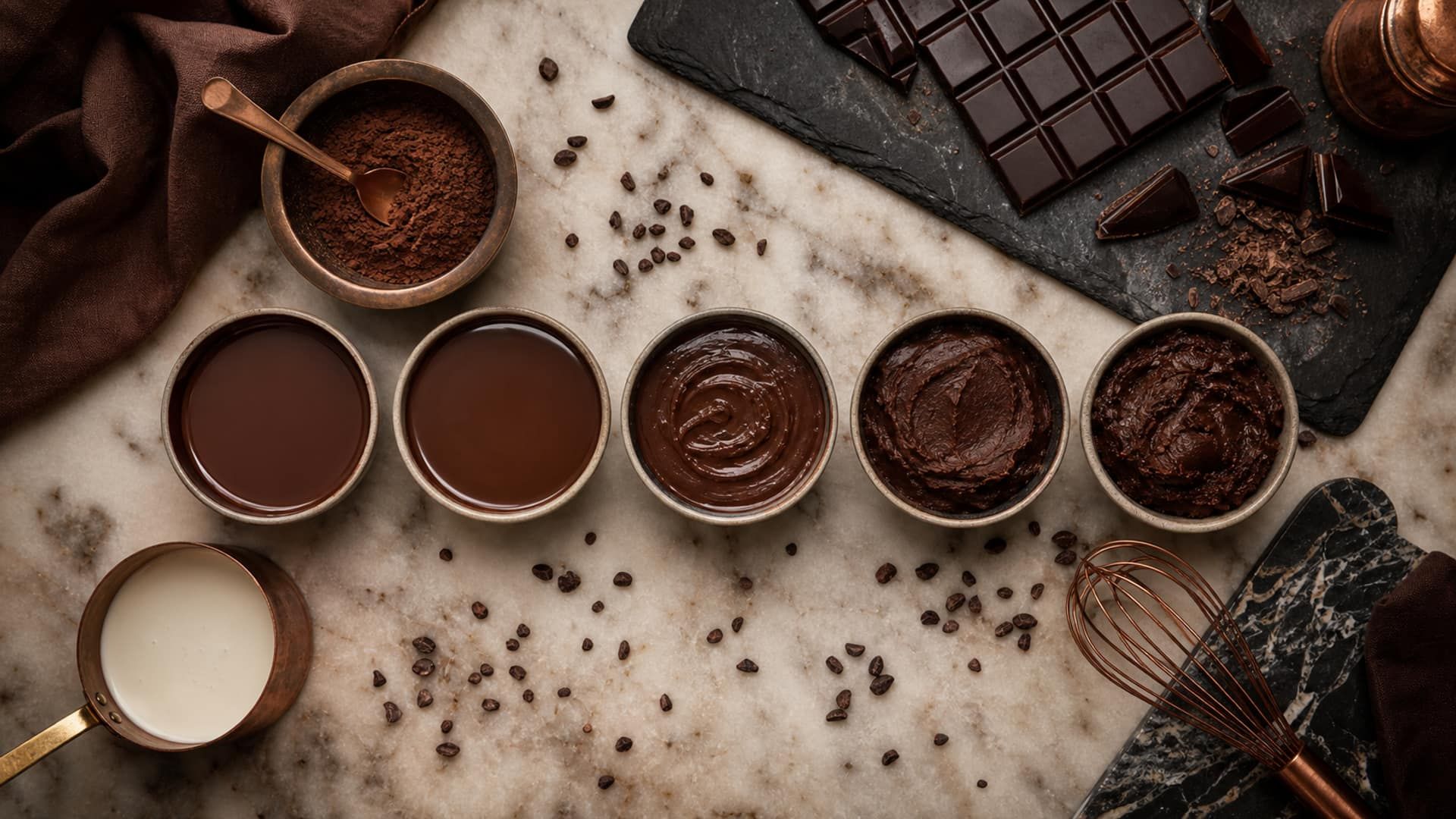
Ganache Ratio Guide: Matching Chocolate-to-Cream Ratios to Every Use Case
A ganache ratio chart for dark, milk and white chocolate: how much chocolate to cream for whipped ganache, drips, fillings, macarons, bonbons, truffles and covering a cake, and how long each one keeps.
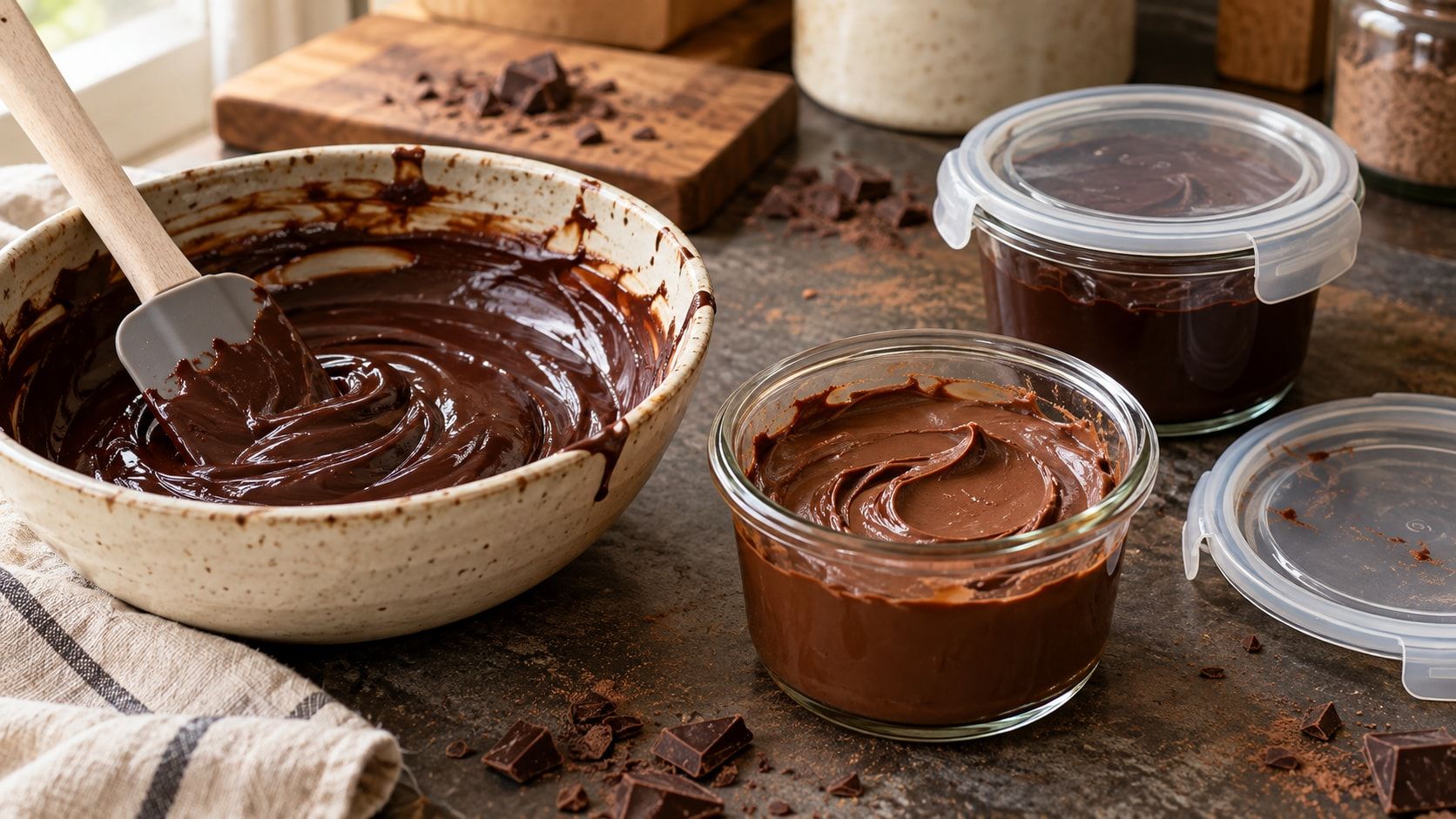
Is Ganache Shelf Stable? No, Unless You Change the Recipe
A classic chocolate-and-cream ganache belongs in the fridge. A ganache can stay out only when its water activity (aw), how freely microbes can use its water, is 0.85 or lower.
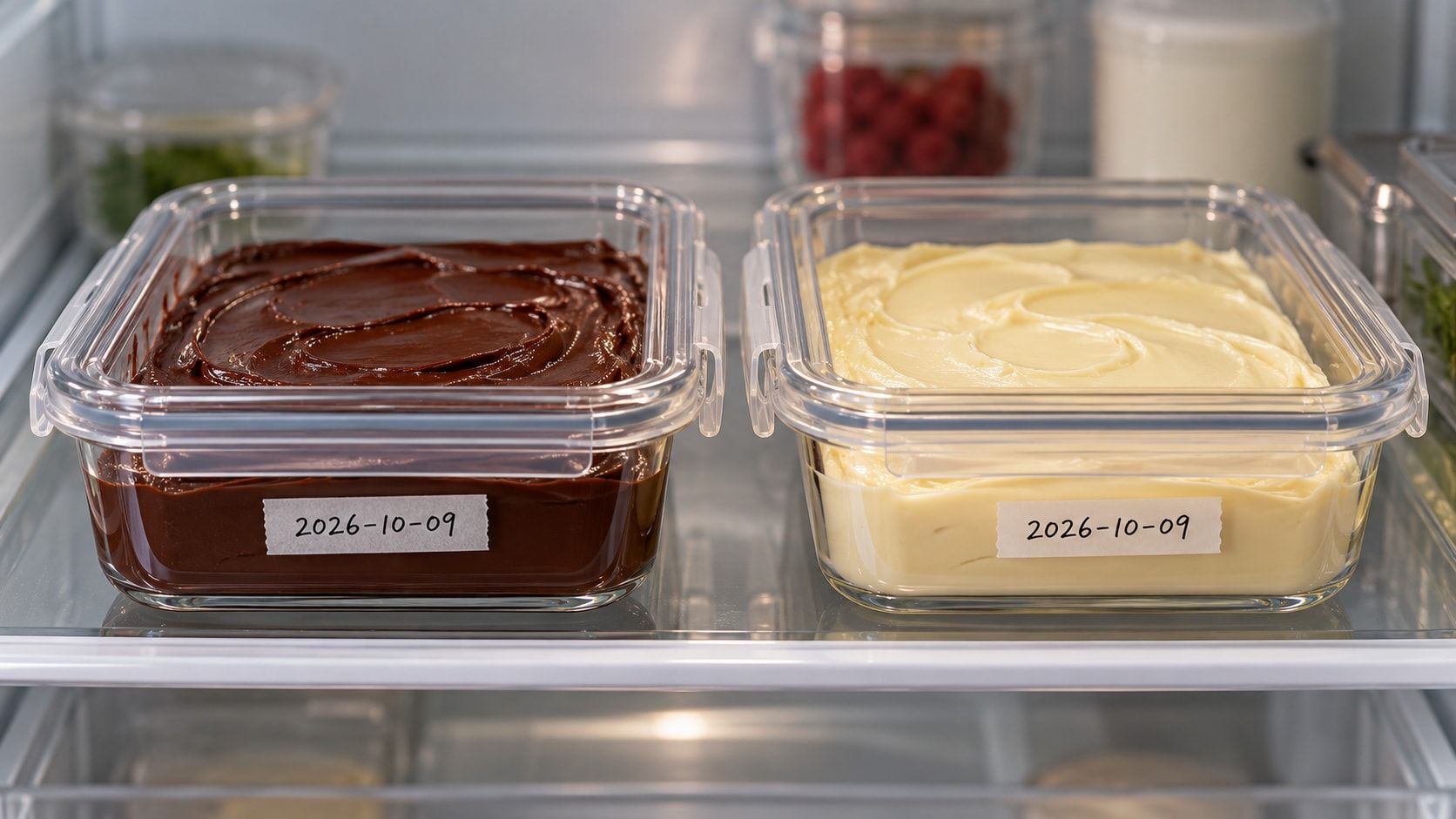
How Long Does Ganache Last? Shelf Life by Type and Storage
How long ganache keeps in the fridge, out of it and in the freezer — from a classic 1:1 cream ganache to shelf-stable bonbon fillings — and why water activity sets the limit.