Gelatin Bloom Strength, Types and Dosing
Convert between gelatin grades by bloom strength and dose gelatin for the exact texture you want — with an interactive calculator and a clear guide to sheet, powder, and blooming.
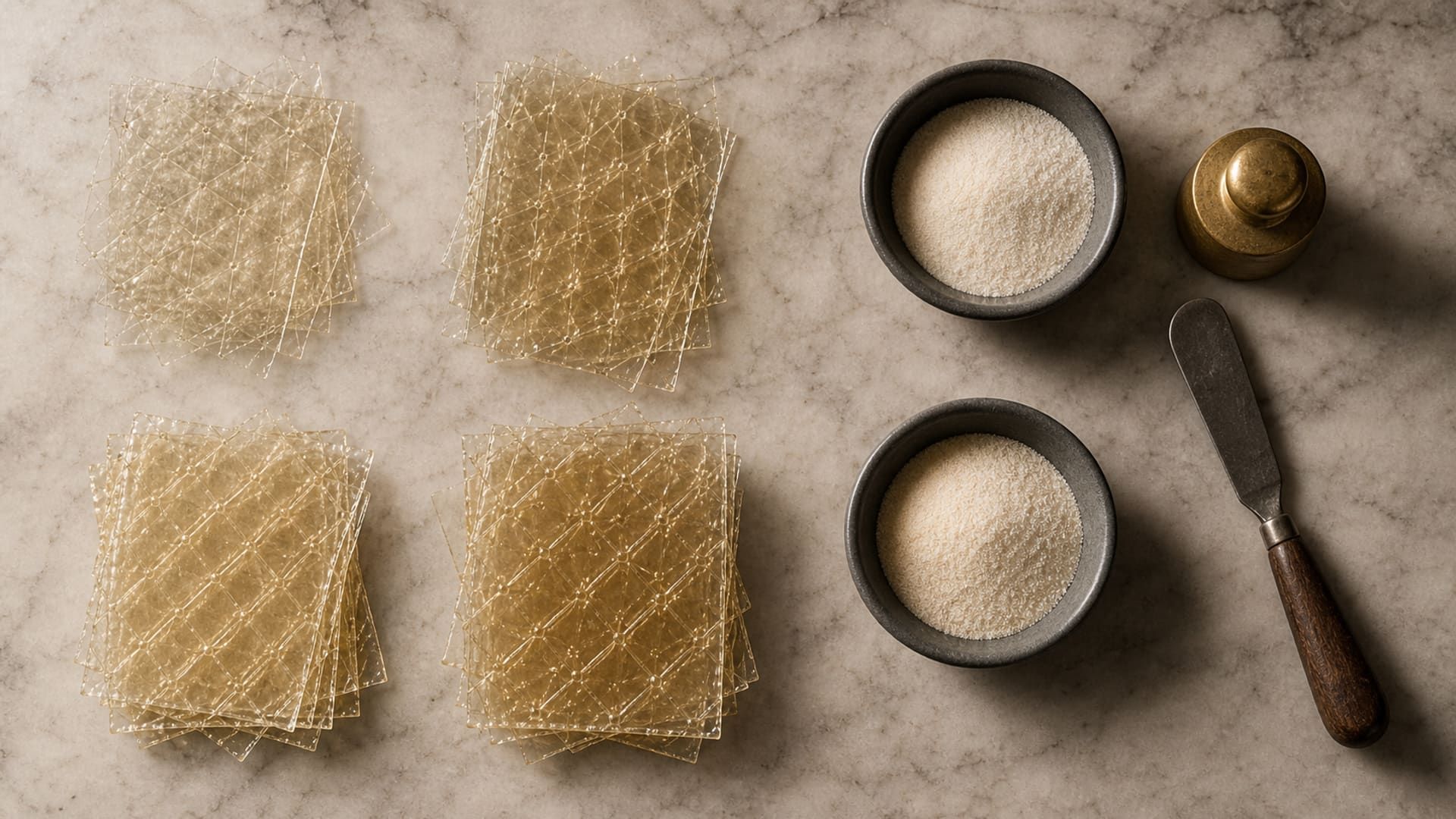
Two questions come up every time gelatin is on the bench. My recipe calls for a gelatin I do not have — how much of mine do I use instead? And how much gelatin do I need for the texture I am aiming at? Both answers hinge on one number: bloom strength. Once you can read bloom, swapping grades and dialling in texture become simple arithmetic rather than guesswork.
The calculator below does that arithmetic for you. The Substitute tab converts a quantity from one grade to another so the set stays the same firmness; the Dose tab works the other way, turning a target texture and a volume of liquid into the weight of gelatin you actually need. The sections that follow explain the reasoning so you can trust — and adjust — the numbers.
What Bloom Strength Measures
Bloom is a standardized measure of gel firmness, named after Oscar T. Bloom, who devised the test in the 1920s. A gelometer presses a flat plunger a set distance into a matured gel prepared at a fixed concentration — 6⅔% by weight, chilled to 10°C for around 17 hours — and records the force in grams needed to do it. That force, in grams, is the bloom value. A 200 bloom gelatin is firmer, gram for gram, than a 120 bloom gelatin.
Because the test fixes the concentration, bloom lets you compare products fairly. Manufacturers sort sheet gelatin into named grades that map to bloom bands: platinum sits highest (around 230–250), then gold (about 190–220), silver (about 150–170), bronze (about 125–140), and titanium lowest (around 100–120). Powdered gelatin is usually sold without a grade name; common retail powder lands near 200–250 bloom.
The practical rule that falls out of this is straightforward: to a first approximation, the firmness of a finished set is proportional to the gelatin concentration multiplied by its bloom. Double the bloom and you can roughly halve the weight for the same firmness. That single relationship powers both the substitution and the dosing math.
The bloom rule is first order — verify big jumps
Treating firmness as proportional to concentration times bloom is an excellent working approximation and the standard the pastry trade uses. It is not exact: real gel modulus rises faster than concentration alone, closer to concentration squared, so a large bloom swap — say titanium for platinum — can land slightly firmer or softer than the ratio predicts. Use the calculator to get close, then confirm the final texture with a small bench test before scaling a recipe up.
Substituting One Gelatin for Another
To keep a set at the same firmness while changing grades, hold the product of weight and bloom constant. The replacement weight is simply the original weight multiplied by the ratio of the two bloom values: your amount equals the recipe amount times recipe-bloom divided by your-bloom.
A worked example: a French pastry recipe assumes 10 g of gold sheet at 200 bloom, but your drawer holds powdered gelatin at 225 bloom. Multiply 10 by 200 divided by 225 and you get about 8.9 g — a little less, because your gelatin is a touch stronger. Swap the direction and it flips: replacing that same gold with weaker bronze at 150 bloom needs about 13.3 g, because bronze sets more softly per gram.
Sheet and powder are interchangeable on a weight basis once bloom is accounted for; the calculator shows the equivalent number of sheets so you can measure by leaf when that is easier. The one thing that does not transfer directly is the water each form carries into the recipe, which the next sections cover.
Dosing Gelatin for a Target Texture
When there is no recipe to copy, dose from the texture you want. Confectionery textures form a ladder, and each rung corresponds to a rough gelatin percentage of the liquid being set, quoted here at gold-grade 200 bloom:
- Soft and spoonable — panna cotta and delicate cream sets — around 1.0 to 1.5%.
- Standard and molded — mousse, bavarois, and charlotte fillings that unmold cleanly — around 1.5 to 2.5%.
- Firm and sliceable — cut jellies, terrines, and aspics — around 2.5 to 4%.
- Chewy — pâte-de-fruit-style confections and gummies — a much higher 6 to 10%.
Those percentages assume 200 bloom. If your gelatin is weaker or stronger, scale the percentage by 200 divided by your bloom — exactly the same normalization the substitution uses, so the two tabs stay consistent. Setting 500 ml of liquid to a standard molded texture with 200 bloom gelatin needs about 10 g; do the same with 160 bloom silver and you need about 12.5 g, because the weaker gelatin has to work harder for the same firmness.
Treat these as starting points, not guarantees. Acidity, sugar concentration, dairy proteins, and alcohol all shift how a gel sets, which is why a bench test on the real formula matters before you commit a batch.
Blooming and Dissolving Gelatin Without Losing the Set
Gelatin has to hydrate — bloom — in cold water before it will dissolve cleanly, and how you do it differs by form.
Hydrate in cold water
Hydrate powder in measured cold water using the supplier’s ratio and time; count that water in the recipe. Soak sheets separately, lift them out and squeeze off excess water. They retain absorbed water: for precise work, weigh the hydrated sheets and subtract the original dry weight.
Melt gently, never boil
Warm the bloomed gelatin to about 50 to 60°C to dissolve it fully, or stir it into a warm (not boiling) base. Prolonged boiling degrades the protein and weakens the set, so add gelatin off the strongest heat.
Combine at compatible temperatures
Blend the dissolved gelatin into a base that is warm rather than fridge-cold; adding it to a very cold mixture can set it in threads before it disperses. Then chill the whole thing to let the network form.
Two ingredients fight gelatin. Strong acids hydrolyse the protein and soften the set, so very tart mixtures may need a little more gelatin. Fresh pineapple, kiwi, papaya, figs, and ginger carry proteases that digest gelatin outright and stop it setting at all — cook these fruits first to deactivate the enzymes, or the dessert will stay liquid.
Sheet and Powder Grades at a Glance
Grade names are a shorthand for bloom bands. The table below gives the typical values used throughout this guide and inside the calculator; treat them as representative, since exact bloom and sheet weight vary a little between manufacturers.
| Grade | Form | Typical bloom (g) | Typical sheet weight |
|---|---|---|---|
| Platinum | Sheet | 230–250 | ~1.7 g |
| Gold | Sheet | 190–220 | ~2.0 g |
| Silver | Sheet | 150–170 | ~2.5 g |
| Bronze | Sheet | 125–140 | ~3.3 g |
| Titanium | Sheet | 100–120 | ~5.0 g |
| Powder (generic) | Powder | 200–250 | by weight |
Typical bloom bands and sheet weights for standardized gelatin grades
Higher-bloom grades set firmer and clearer per gram and are often preferred for glossy mirror glazes and clean-unmolding entremets; lower-bloom grades give a softer, more melting set. Because the calculator normalizes everything to bloom, you can reach for whatever grade you have and still hit the texture you planned.
What is gelatin bloom strength in simple terms?
How do I convert sheet gelatin to powder?
How much gelatin do I need per litre of liquid?
Why did my gelatin dessert fail to set?
Is bloom strength printed on consumer gelatin packets?
Related Articles
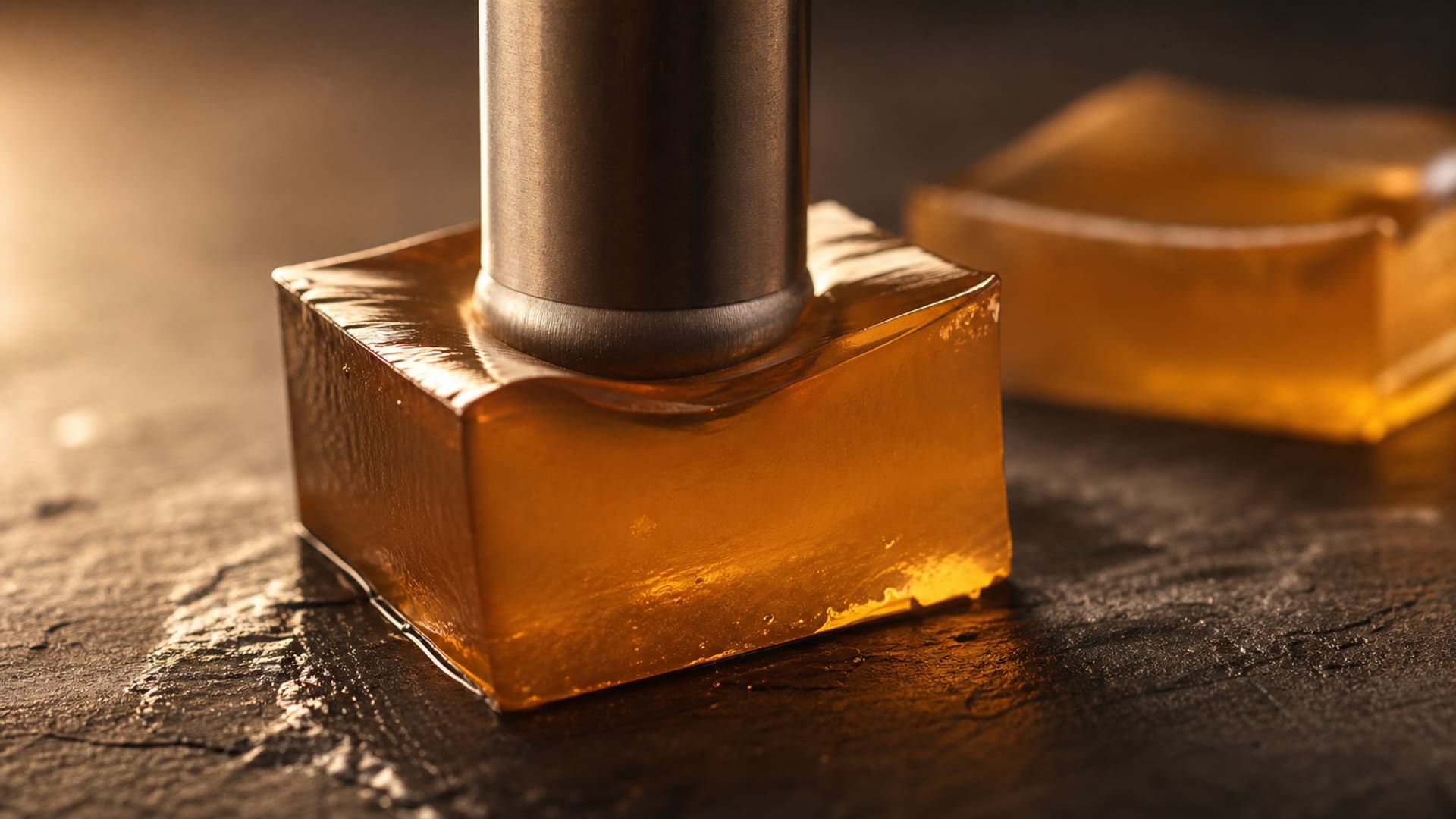
What Gelatin Bloom Strength Really Measures
The science behind the bloom number — how the gelometer test works, why firmness tracks concentration times bloom, and what heat, acid, and fresh fruit do to a gel.
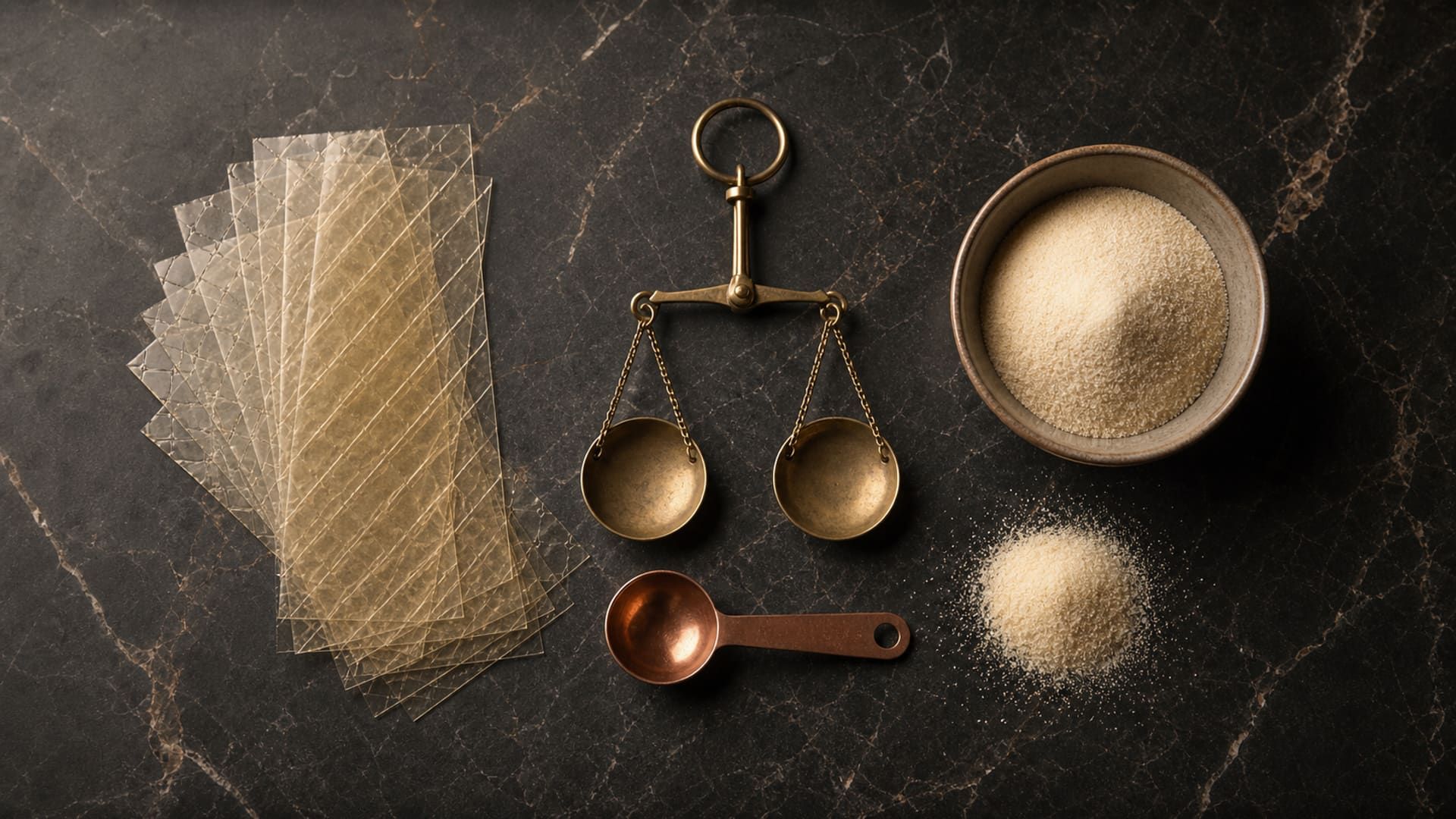
Sheet vs Powder Gelatin: Grades, Weights, and Conversion
How to move between sheet and powder gelatin without changing your set — matching by bloom, converting leaf grades by sheet count, and handling the water each form carries.
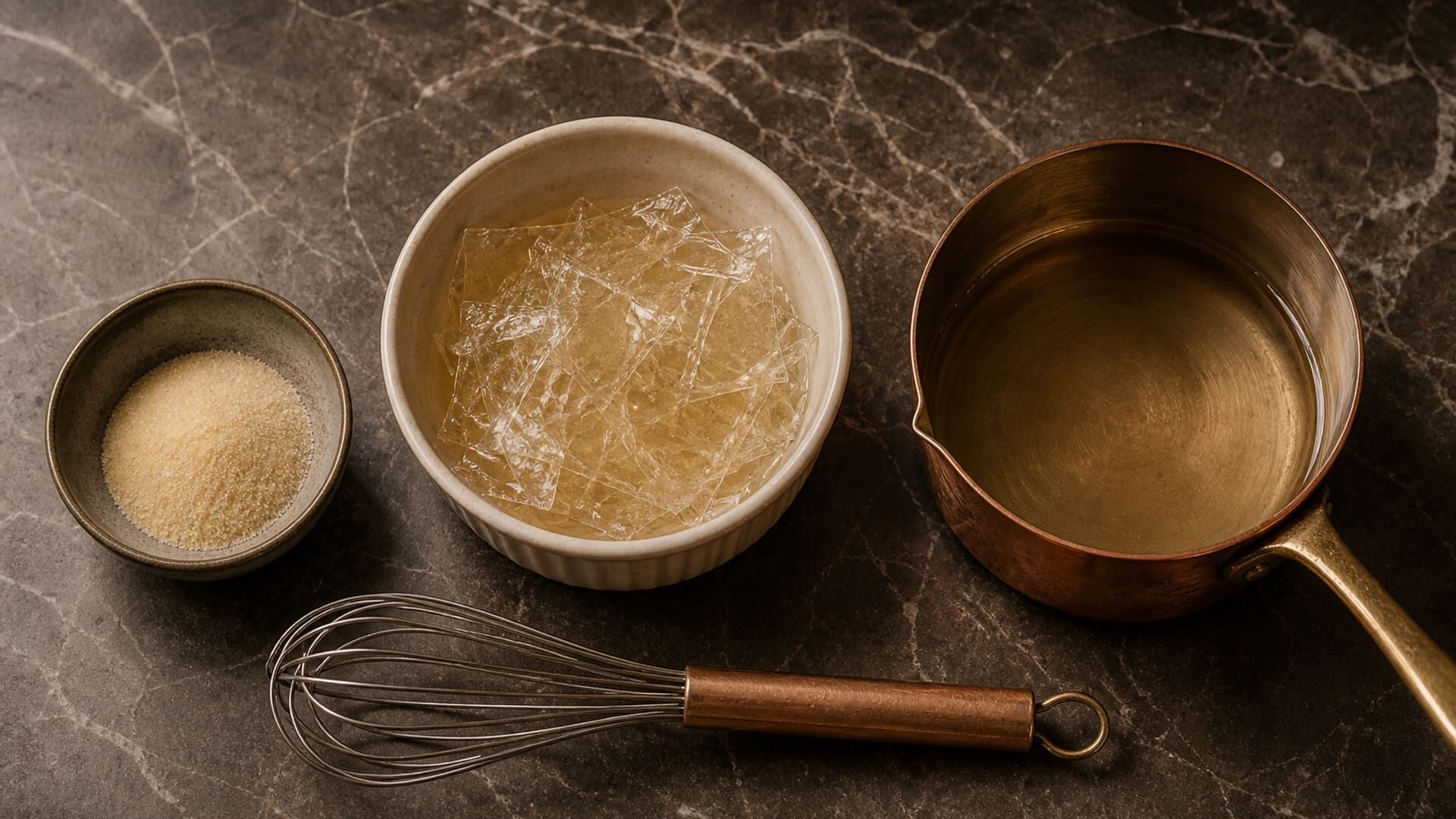
How to Bloom and Dissolve Gelatin Correctly
Bloom powdered gelatin in measured cold water; soak sheets separately and squeeze them. Follow the method for each form, account for the water and convert gelatin mass.