How to Bloom and Dissolve Gelatin Correctly
Bloom powdered gelatin in measured cold water; soak sheets separately and squeeze them. Follow the method for each form, account for the water and convert gelatin mass.
Open the free calculator; no account needed.
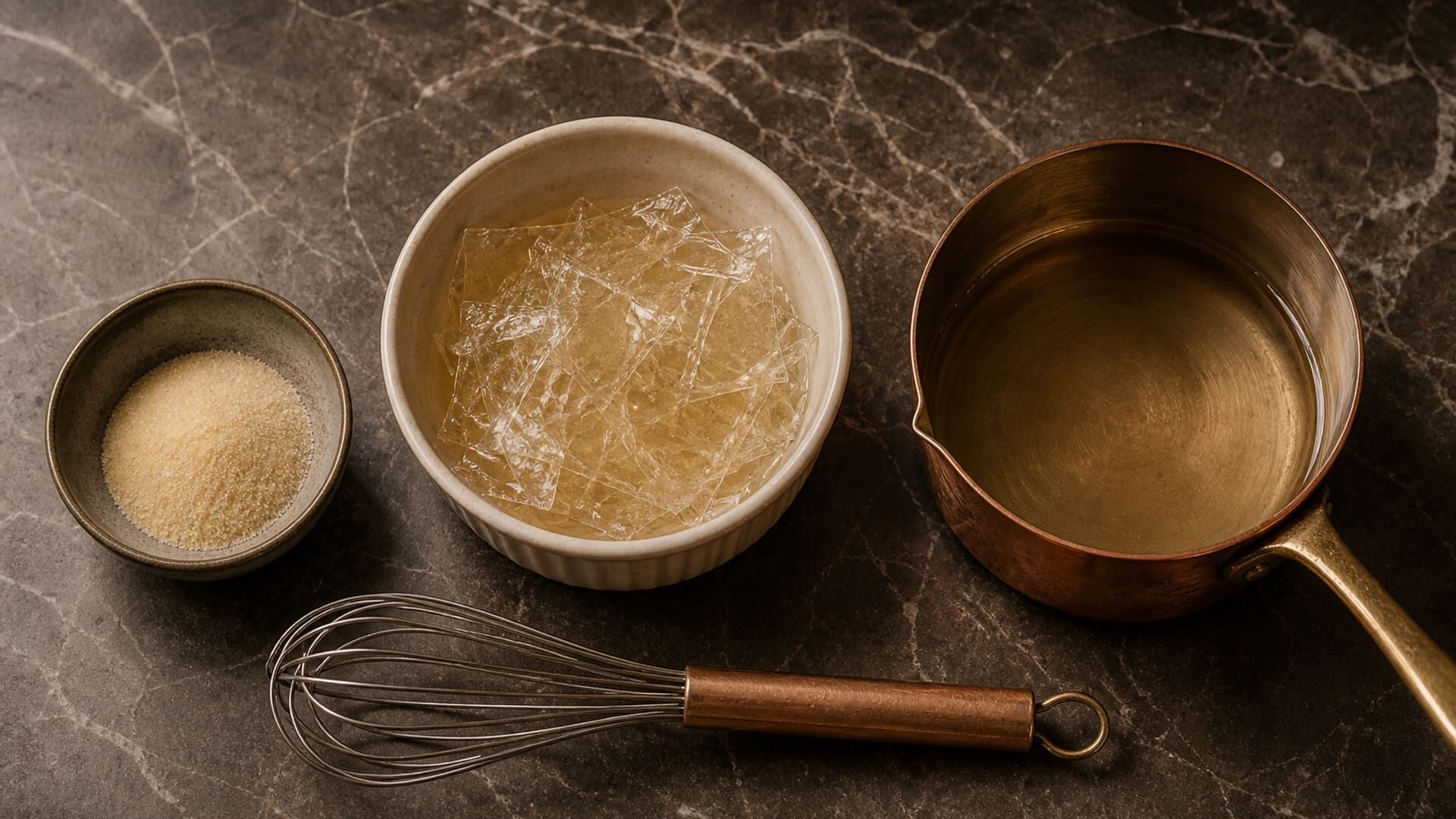
For powdered gelatin, sprinkle it over a measured amount of cold water, let it hydrate fully, then dissolve it in a warm mixture. A 1:5 powder-to-water ratio is common, but use the ratio and time specified for your product. For sheets, soak them separately in plenty of cold water, lift them out and squeeze off excess water before dissolving.
Count measured powder-hydration water in the recipe. Discard the sheet soaking bath, while accounting for water retained by the sheets when the formulation needs a precise balance. The calculator below gives the dry-gelatin dose and the Bloom conversion, plus the cold water for powder at 1:5.
Why Bloom First
A gelatin granule is a tightly coiled bundle of protein. To dissolve, water has to penetrate and separate those coils, and that happens most cleanly in cold water, where the gelatin swells slowly without its surface melting and sealing. Blooming is simply this controlled hydration step: the gelatin drinks up several times its weight in water and turns soft and translucent, primed to melt evenly the moment it is warmed.
Skip it, and the outside of each grain gels on contact with hot liquid while the inside stays dry, trapping lumps that never fully dissolve and never contribute to the set. A few minutes of cold-water blooming prevents all of that.
How much water a gelatin drinks depends on its form and grade, but the visible signal is the same: powder swells from a loose dust into a solid, wobbling mass, and a sheet turns from stiff and glassy to soft and pliable. That change is your cue that hydration is complete. Follow the product’s hydration time and keep a longer hold refrigerated rather than leaving hydrated gelatin warm.
Blooming Powdered Gelatin
Powdered gelatin blooms directly in a measured amount of cold liquid.
Measure cold liquid
Use the supplier’s hydration ratio. At 1:5, 10 g powder needs 50 g cold water. Keep that measured water in the recipe; if the product calls for another ratio, update the liquid balance.
Sprinkle, don't dump
Scatter the powder evenly over the surface of the cold liquid rather than piling it in one spot. This lets every granule hydrate instead of forming a dry-cored clump.
Let it swell
Leave it for the time on the product instructions, until evenly swollen with no dry centre. Some products hydrate in minutes; professional gelatin-mass methods can specify 30 minutes or longer.
Melt gently
Warm the bloomed mass to 50–60°C to liquefy it, or stir it into a warm (not boiling) base until fully dissolved and clear.
The key point with powder is that its bloom water is part of the recipe. Those 50 g of water for 10 g of gelatin go into the finished product, so include them in your total liquid — otherwise you are quietly adding water and diluting the set.
Soaking Sheet Gelatin
Sheet gelatin is bloomed by soaking, and its water is handled the opposite way.
Separate the sheets in enough cold water to submerge them without sticking together. Follow the manufacturer’s soaking time and wait until they are fully soft. Lift them out, gently squeeze off excess water, and add them to a warm portion of the base to dissolve.
Discard the sheet soak water — do not add it
Discard the soaking bath, but do not assume that hydrated sheets are water-free. Gelatin absorbs several times its dry weight in water, and the retained amount depends on the product and squeezing. For precise work, weigh the hydrated sheets and subtract their original dry weight to account for retained water.
Measured powder hydration is convenient when water balance must be repeatable; sheets are convenient to soak and handle. Either form works when its dry gelatin, Bloom strength and retained water are accounted for.
Converting Gelatin Mass to Dry Gelatin
Gelatin mass means gelatin already hydrated with a known quantity of water. A 1:5 mixture contains one part dry gelatin and five parts water, so its total mass is six parts: 60 g of this mass contains 10 g dry gelatin and 50 g water.
Divide the required gelatin mass by one plus the water ratio to recover the dry weight. For a 1:7 preparation, divide by eight instead: 80 g contains 10 g dry gelatin and 70 g water. Check the recipe’s convention before converting; a weight of gelatin mass is not the same as that weight of powder.
Keep the Bloom conversion separate. First recover the dry gelatin and water, then adjust the dry quantity if changing Bloom strength. This preserves the recipe’s liquid balance while letting you use the gelatin you have.
Dissolving Without Weakening the Set
Bloomed gelatin melts at a gentle warmth. Aim for 50 to 60°C, either by warming the bloomed gelatin on its own or by stirring it into a base that is warm rather than fridge-cold. It should turn completely clear with no visible strands or grains.
What to avoid is a hard boil. Gelatin’s setting power degrades gradually with heat — slowly above about 40°C, faster as the temperature climbs through 60–70°C — and a sustained boil is what genuinely weakens a batch. A brief brush with a simmer is usually survivable, just softer; a rolling boil is not. So add gelatin off the strongest heat, near the end of cooking.
You can tell dissolution is complete when the liquid runs clear off a spoon with no glassy specks and no slippery undissolved film at the bottom of the pan. If a few stubborn grains remain — common when powder was under-bloomed — pass the warm mixture through a fine sieve rather than pushing the heat higher; straining removes them without costing setting power.
Temperature also governs how gelatin combines. Stir dissolved gelatin into a base that is warm, not icy: added to a fridge-cold mixture, it can set into fine threads before it disperses, leaving a weak, uneven network. Blend it smoothly into a warm base first, then chill the whole thing to set. And since gelatin sets on cooling and melts on warming, let the finished dessert firm up properly in the fridge — most sets need a few hours, and firm up fully overnight. Treat time at temperature as a budget: the sooner a dissolved mixture moves off the heat and toward the cold, the more of its gelling strength survives to the plate.
How much water do I use to bloom gelatin?
Can I bloom gelatin in warm or hot water?
What happens if I boil gelatin?
How long does gelatin need to bloom?
Related Articles
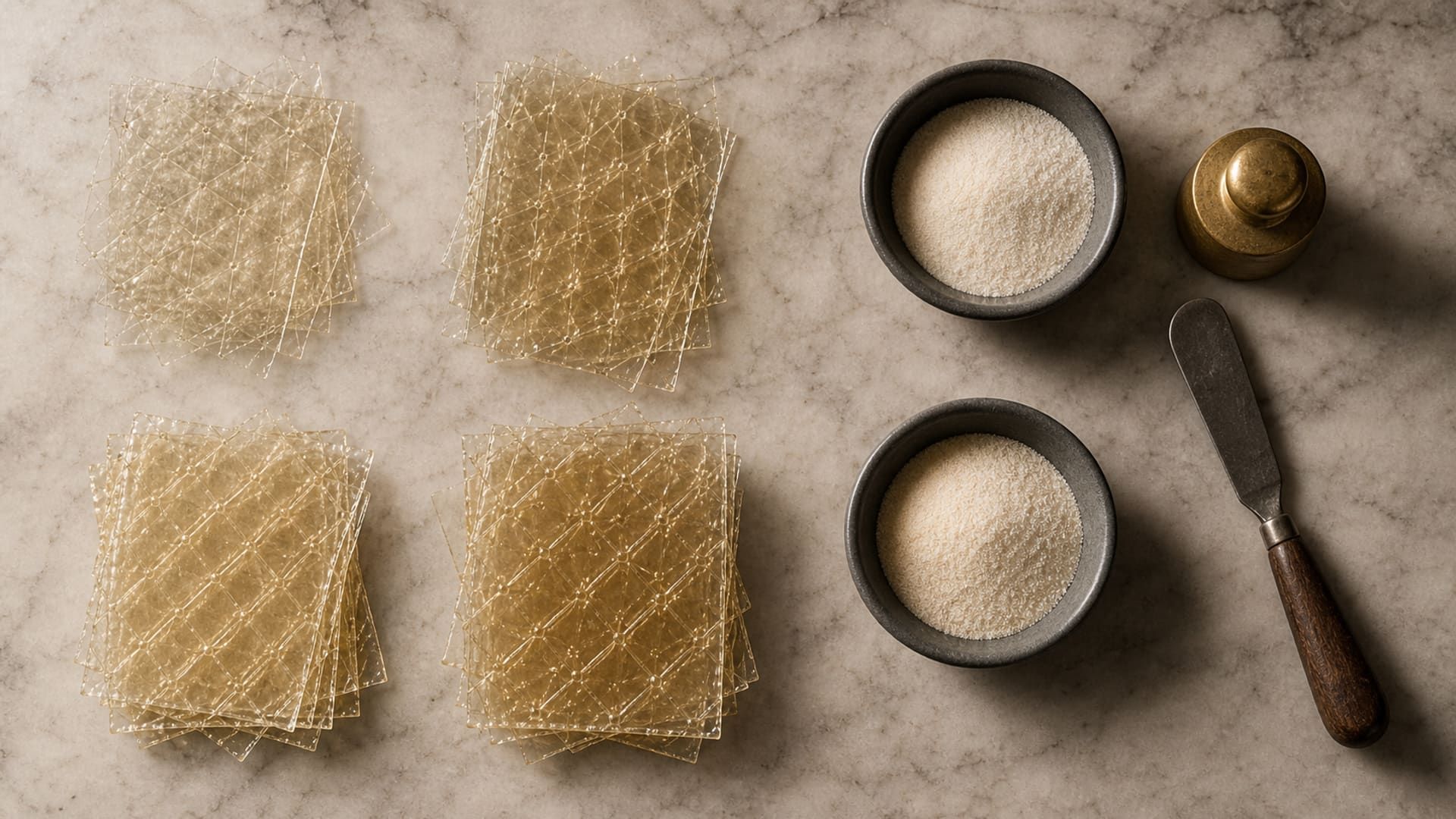
Gelatin Bloom Strength, Types and Dosing
Convert between gelatin grades by bloom strength and dose gelatin for the exact texture you want — with an interactive calculator and a clear guide to sheet, powder, and blooming.
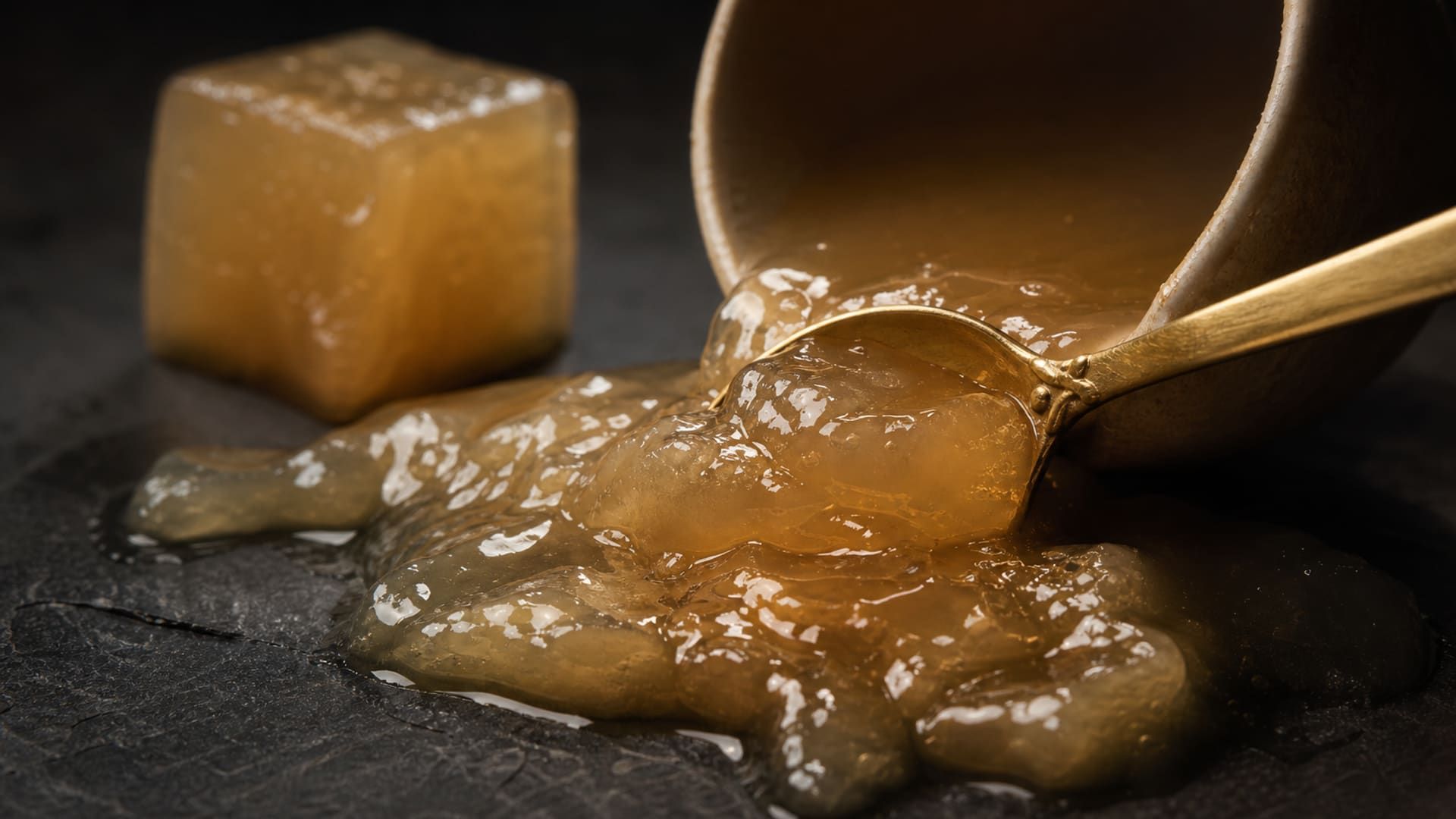
Why My Gelatin Dessert Won't Set (or Sets Too Firm)
The handful of reasons a gelatin set fails — too little gelatin, a hard boil, fresh proteolytic fruit, strong acid, or incomplete blooming — plus how to diagnose and rescue a batch.
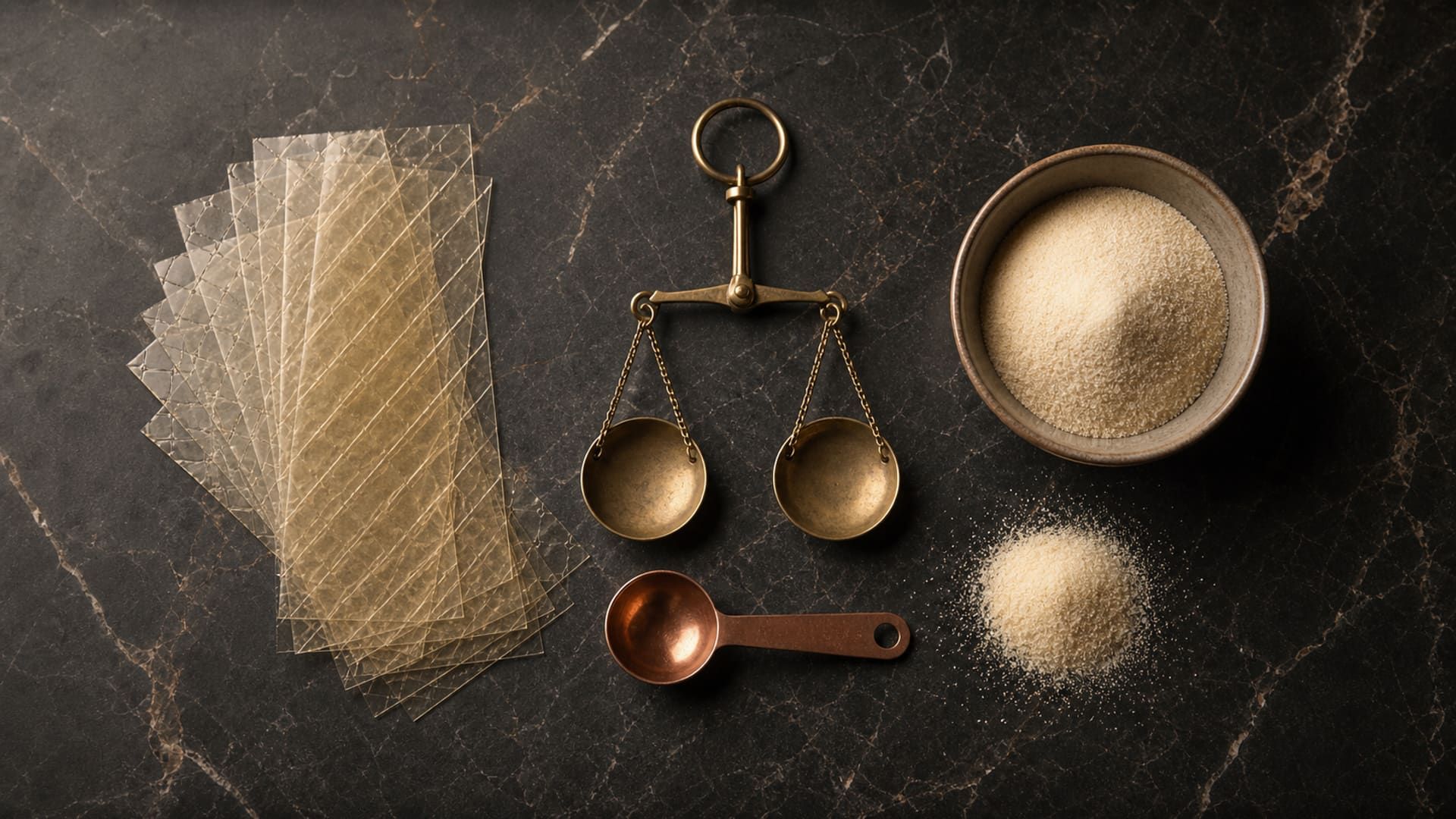
Sheet vs Powder Gelatin: Grades, Weights, and Conversion
How to move between sheet and powder gelatin without changing your set — matching by bloom, converting leaf grades by sheet count, and handling the water each form carries.