Why My Gelatin Dessert Won't Set (or Sets Too Firm)
The handful of reasons a gelatin set fails — too little gelatin, a hard boil, fresh proteolytic fruit, strong acid, or incomplete blooming — plus how to diagnose and rescue a batch.
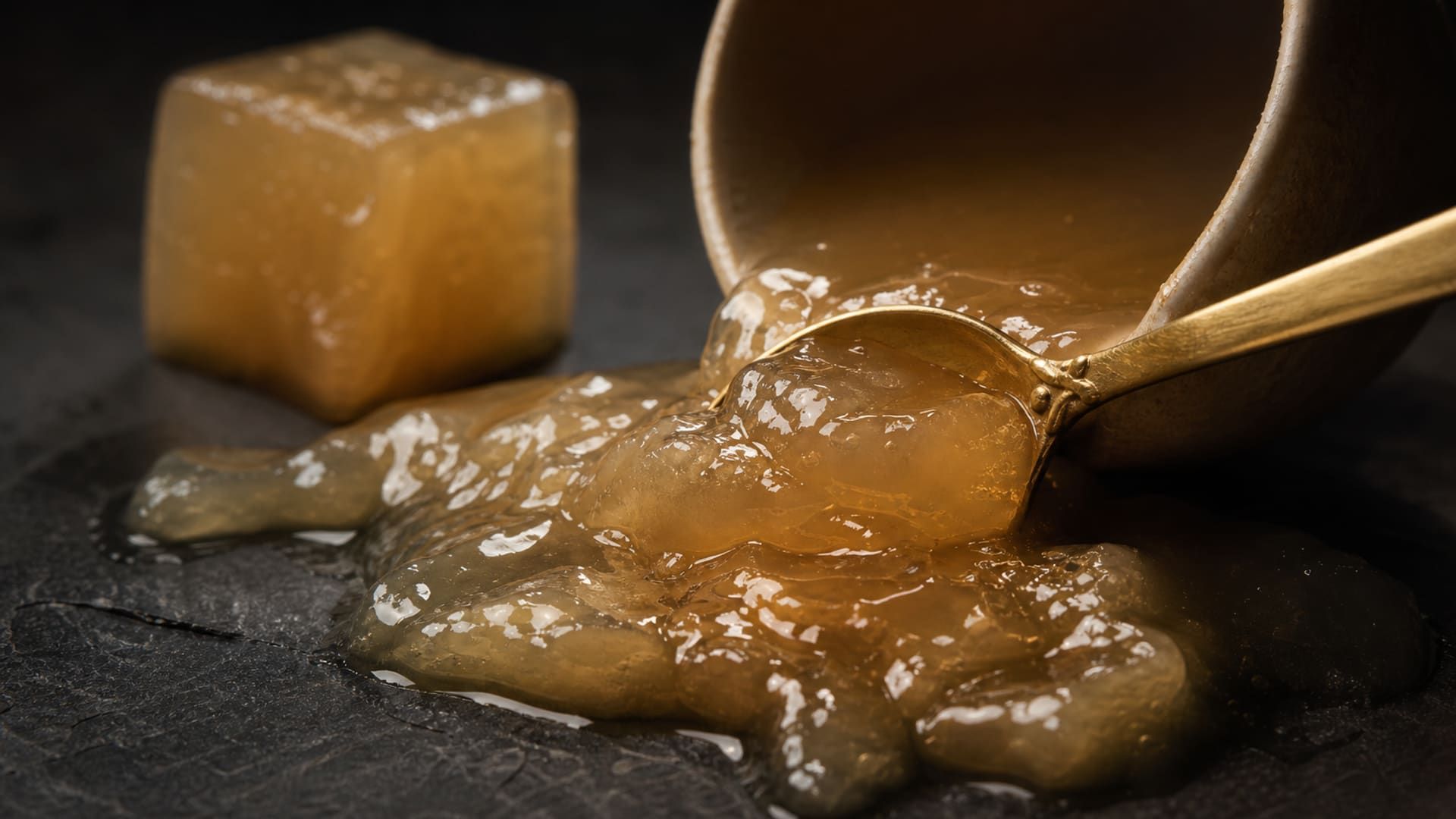
A gelatin set that stays soupy — or turns out rubbery — almost always traces to one of a short list of causes. Gelatin is forgiving once you know what breaks it: the failures cluster around dose, heat, fruit enzymes, acid, and how the gelatin was hydrated. Work through them in order and the culprit usually reveals itself. To rule out dosing first, check your amount in the calculator below.
The Usual Causes
Too little gelatin for the texture. The most common reason a set stays loose is simply under-dosing — often because a recipe assumed a stronger bloom than you used. A soft, spoonable set needs roughly 1 to 1.5% gelatin by weight of the liquid at 200 bloom; a clean-unmolding set needs closer to 1.5 to 2.5%. Weaker gelatin needs proportionally more.
A hard, prolonged boil. Gelatin dissolves at 50–60°C and should be added off the strongest heat. Boiling degrades the protein and weakens the set. This is gradual rather than absolute — a brief accidental simmer usually still sets, just softer — but a sustained boil can ruin the batch.
Fresh proteolytic fruit. Raw pineapple, kiwi, papaya, figs, and ginger carry enzymes that digest gelatin so it can never form a network. This is the classic “my jelly stayed liquid” failure. Warming the fruit is not enough — pineapple’s bromelain survives to around 70°C — so these fruits must be boiled, cooked thoroughly, or used canned.
Strong acid. Very tart mixtures slowly hydrolyze the gelatin network, especially when combined with heat, so acidic formulas may set softer. A little acid is fine and can even firm a gel; it is strong acid plus prolonged heat that does damage.
Incomplete blooming or bad incorporation. Gelatin that was not fully hydrated before dissolving can leave undissolved grains that never contribute to the set. Adding dissolved gelatin to a fridge-cold base can also set it in threads before it disperses, leaving a weak, uneven network.
These causes are not equally likely, and that is useful. A set that is uniformly loose across the whole batch points to dose, heat, or acid — something that affected all of the gelatin at once. A set that is patchy, with firm areas and liquid pockets, points instead to a mechanical problem: undissolved grains, gelatin that seized in threads when it hit a cold base, or a purée of enzyme-bearing fruit that was unevenly cooked. Reading whether the failure is uniform or patchy narrows the search before you change anything.
It also matters when the mixture stopped behaving. If it never thickened even while warm, suspect enzymes or a wildly low dose. If it thickened on cooling but then relaxed back to liquid overnight, suspect acid slowly hydrolyzing the network, or sugar and alcohol competing for the water the gelatin needs. Timing is a clue the recipe rarely spells out.
If instead your set is too firm or rubbery, the cause is the mirror image: too much gelatin, or a much higher bloom than the recipe assumed. Recalculate the dose for your actual gelatin and reduce accordingly.
Diagnose It Step by Step
Check the dose against your gelatin's bloom
Confirm the recipe's gelatin amount matches the texture you want at your gelatin's bloom strength. If the recipe assumed gold (200) and you used a weaker bronze (140), you under-dosed — recalculate and add more. This alone explains most loose sets.
Recall the temperature
Did the mixture boil hard or sit at a rolling boil after the gelatin went in? Brief warmth is fine; a sustained boil weakens the set. Next time, add gelatin off the boil at 50–60°C.
List the fruit
Any raw pineapple, kiwi, papaya, fig, or ginger? Their enzymes prevent setting entirely. If so, the fix is to cook that fruit to a boil or switch to the canned version before setting.
Consider acidity
Very tart mixtures set softer. If the formula is highly acidic, nudge the gelatin up slightly and avoid holding it hot for long.
Inspect the gelatin itself
Were there undissolved grains, or did you add it to something fridge-cold? Bloom fully in cold water first, dissolve completely, and combine into a warm — not icy — base.
Rescuing an Unset Batch
A loose set is often recoverable. Gently warm the mixture back to about 50–60°C so it becomes fluid again — do not boil it. Bloom a little additional gelatin in cold water, dissolve it, and whisk it in, then chill. Add conservatively: it is easier to re-melt and add more than to fix an over-set, rubbery result.
How much to add depends on how far off the set was. If the mixture thickened but never held its shape, it was probably close — an extra quarter to half of the original gelatin is usually enough. If it stayed fully liquid, it was badly under-dosed or something prevented setting entirely, so re-run the amount through the calculator for your gelatin’s bloom rather than guessing. Whenever you re-melt, work quickly and off the heat: each additional warming cycle costs a little setting power, so you want the fewest passes possible.
If the failure was proteolytic fruit, none of this applies until that fruit is dealt with — no amount of extra gelatin will hold against active bromelain or actinidin. Boil the fruit thoroughly or replace it with the canned version, then re-set with the original dose.
For a set that came out too firm, warm it back to fluid, dilute with a measured amount of the base liquid to lower the gelatin concentration, and re-chill. Then recalculate next time so the dose matches your gelatin’s bloom from the start.
How long should gelatin take to set?
Can I fix a gelatin dessert that didn't set?
Why is my gelatin rubbery?
Does fresh pineapple really stop gelatin setting?
Related Articles
Gelatin Bloom Strength, Types and Dosing
Convert between gelatin grades by bloom strength and dose gelatin for the exact texture you want — with an interactive calculator and a clear guide to sheet, powder, and blooming.
How to Bloom and Dissolve Gelatin Correctly
Bloom powdered gelatin in measured cold water; soak sheets separately and squeeze them. Follow the method for each form, account for the water and convert gelatin mass.
What Gelatin Bloom Strength Really Measures
The science behind the bloom number — how the gelometer test works, why firmness tracks concentration times bloom, and what heat, acid, and fresh fruit do to a gel.