Passion Fruit Mango Ganache for Bonbons: A Formula That Keeps
A white chocolate passion fruit and mango ganache for molded or framed bonbons at a calculated water activity of 0.771: the formula, the method, and how purée, invert sugar and sorbitol move its shelf life.
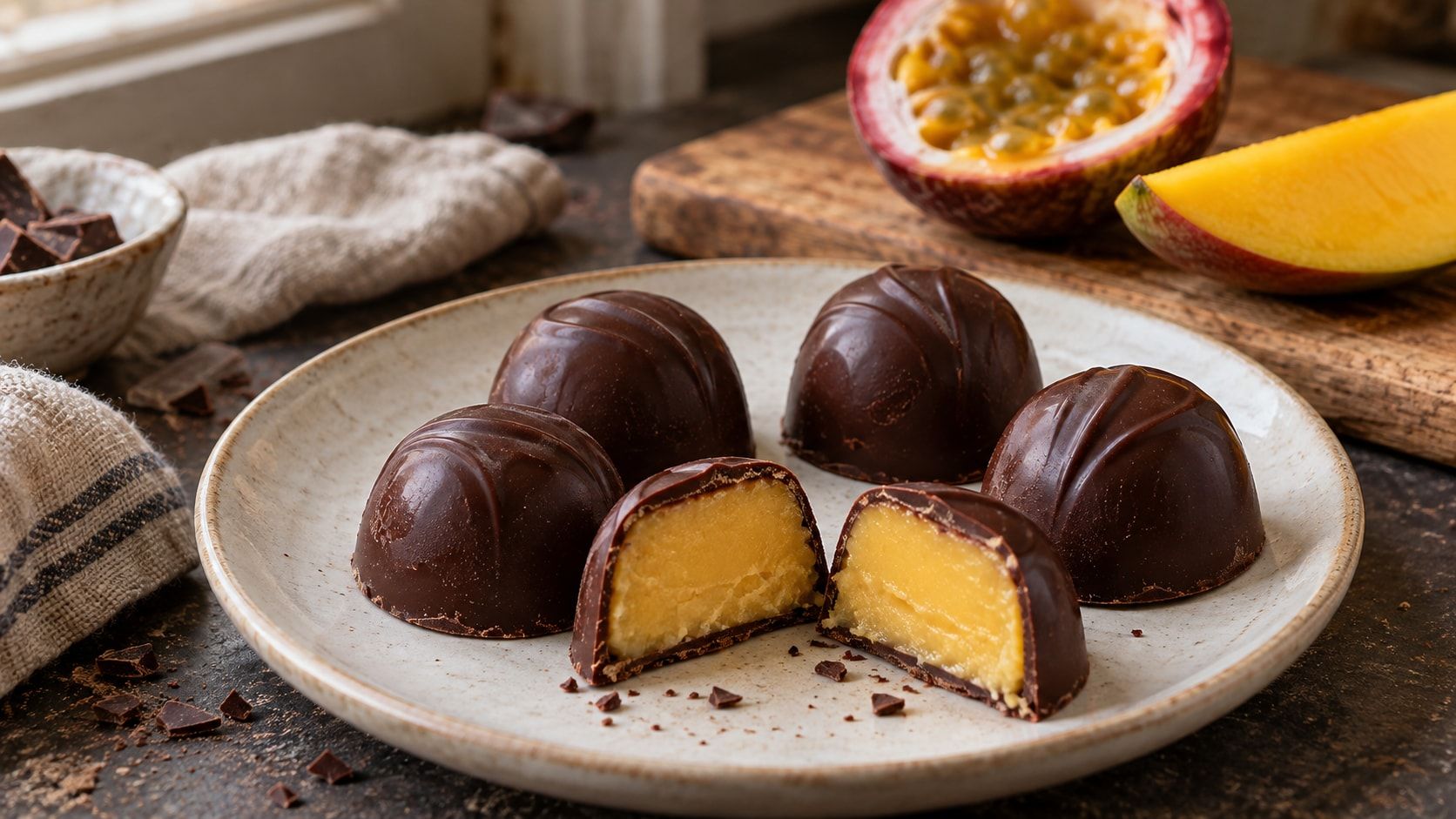
A fruit ganache keeps for weeks in a bonbon only while its water activity (aw) stays below about 0.80, and fruit purée is mostly water. This white chocolate ganache carries 140 g of passion fruit and mango purée in 725 g and still calculates at aw 0.771, because invert sugar and sorbitol bind the water the purée brings. Below are the formula, the method, and what each lever is worth in water activity.
Passion Fruit Mango Ganache Recipe
| Ingredient | Amount | Role |
|---|---|---|
| White chocolate, about 28 % cocoa butter | 450 g | Structure, sugar and milk solids |
| Cocoa butter | 20 g | Extra fat to hold the purée's water |
| Passion fruit purée | 90 g | Acidity and the main flavour |
| Mango purée | 50 g | Body and a rounder sweetness |
| Invert sugar | 35 g | Lowers water activity, keeps it soft |
| Glucose syrup DE 40 | 25 g | Slows sugar crystallization |
| Sorbitol powder | 25 g | Lowers water activity; 3.4 % of the ganache |
| Butter, 82 % fat | 30 g | Softness and melt |
Makes about 725 g, enough to fill around 70 bonbons of 10 g.
Melt the chocolate and cocoa butter
Melt the white chocolate with the cocoa butter to about 40 °C. White chocolate scorches easily, so use short bursts in the microwave or a gentle water bath.
Boil the purées with the sugars
Bring the passion fruit and mango purées to the boil with the invert sugar, glucose syrup and sorbitol, stirring until everything dissolves. Boiling the purée also lowers its microbial load. Let it cool to about 60 °C.
Emulsify
Pour the purée over the chocolate in three additions, stirring from the centre, or blend with an immersion blender kept below the surface, until the ganache is glossy and elastic.
Add the butter
At about 35 °C, blend in the soft butter.
Fill or frame
At 28–29 °C, pipe the ganache into chocolate shells, or pour it into a frame for cutting and enrobing.
Crystallize and close
Leave it 12–24 hours at 16–18 °C before capping the shells or cutting the slab.
Passion fruit and mango ganache for bonbons
450 g white chocolate, 20 g cocoa butter, 90 g passion fruit and 50 g mango purée with invert sugar, glucose syrup, sorbitol and butter: open the live calculation behind aw 0.771 and change the purée yourself.
Why a Fruit Ganache Needs Its Own Balance
A classic ganache takes its water from cream, and cream brings fat with it. A fruit ganache takes its water from purée, which brings sugar and acid but almost no fat. That changes three things in the formula.
There is less fat to hold the water. Cream is about a third fat; fruit purée has next to none. Here the fat comes from the white chocolate, a little extra cocoa butter and the butter, and the formula sits inside the calculator’s fat-to-liquid band, which is what keeps the emulsion stable. If you add purée, add fat with it.
The acid is strong. Ripe yellow passion fruit runs at about pH 2.4 to 3.0, with roughly 4 % acid. There is no cream in this ganache to curdle, so the acid does not break it, but it dominates the flavour: the mango and the sweetness of the white chocolate are there to round it off.
The shell does part of the preserving. A molded bonbon seals the ganache inside chocolate, and a framed piece is sealed by its coating. Both slow the exchange of moisture with the air, but only if the chocolate layer is complete and free of cracks, so cap the shells cleanly and check the coating on cut edges.
What Moves the Shelf Life of a Fruit Ganache
Every gram of purée brings water: passion fruit purée is about 89 % water and mango about 79 %. The table shows what the same ganache does when one lever moves. Everything else stays as in the recipe, so each row isolates one decision you make at the bench.
| Change to the recipe | Water activity | Model day count at 20 °C |
|---|---|---|
| The recipe | 0.771 | ~40 |
| Passion fruit only: 140 g, no mango† | 0.781 | ~35 |
| More purée: 110 g passion fruit and 60 g mango† | 0.805 | ~25 |
| No sorbitol† | 0.793 | ~30 |
| No sorbitol and no invert sugar† | 0.810 | ~22 |
Calculated in Formul.io. † Calculator simulation of the same formula, not a saved recipe. Day counts are house-calibrated references from water activity, for comparing formulas only.
Mango helps, not just flavours. Replacing part of the passion fruit with mango lowers aw from 0.781 to 0.771 at the same purée weight, because mango purée has less water and more sugar.
The purée dose matters most. Thirty more grams of purée raise aw to 0.805 and cut the model’s day count by about a third.
Sorbitol and invert sugar are the cheapest correction. The 25 g of sorbitol alone are worth about 0.02 of aw. At 3.4 % of the ganache it is far below the 10 % of added polyols at which EU labelling requires a laxative-effect warning.
Why the calculator flags crystallization
The calculator’s crystallization index for this ganache is 54, above its band of 30. White chocolate is about 55 % sugar, so a white chocolate fruit ganache is rich in sucrose by nature. The glucose syrup and invert sugar are there to slow graining; store the bonbons at a steady temperature, because warm and cool cycles help crystals grow.
How Long Passion Fruit Bonbons Keep
At aw 0.771 the ganache sits in the range where molds and yeasts, not bacteria, set the limit. Inside a well-closed chocolate shell, kept at 15–18 °C away from light and humidity, expect weeks rather than days. The calculator’s reference count of about 40 days at 20 °C is a comparison tool, not a date to print. If you sell the bonbons, confirm their life with a storage test of the finished product in its packaging, and see the ganache shelf-life guide for how fridge storage and the shelf-life models compare.
Keep finished bonbons out of the fridge if you can. Taken out cold, they collect condensation, which dissolves sugar on the surface and dries into a dull grey film, the sugar bloom that spoils the shine of a molded shell. If you must chill them, keep them in a closed box and let the box come to room temperature before you open it.
Passion Fruit Ganache Questions
Why does my passion fruit ganache split?
Can I use fresh passion fruit pulp instead of purée?
How long do passion fruit bonbons last?
Do I need sorbitol in a fruit ganache?
Can I make it with milk or dark chocolate?
Related Topics
Related Articles
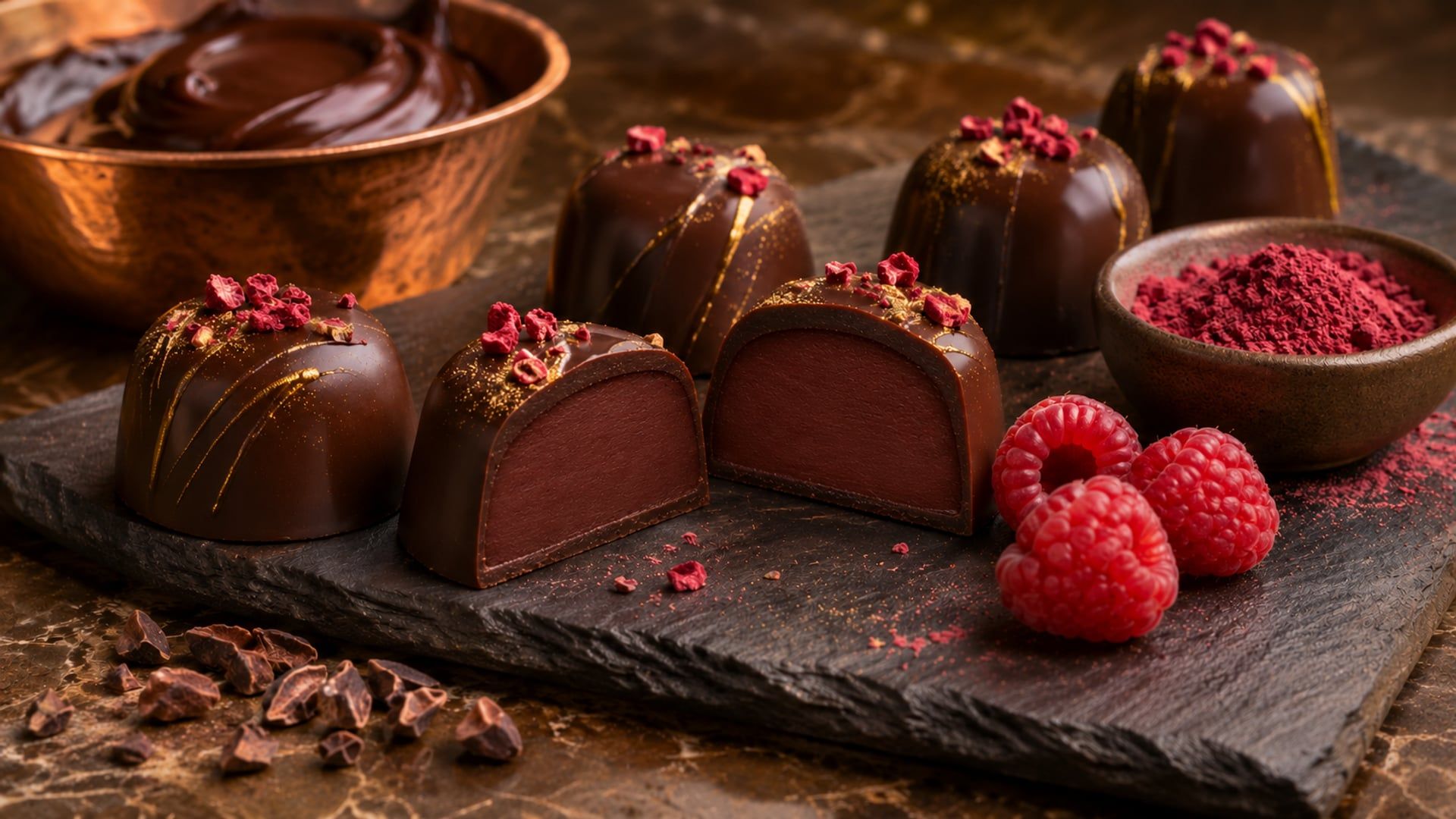
Shelf-Stable Raspberry Ganache for Bonbons: A 1 kg Formula
A cream-free 1 kg raspberry ganache for bonbons calculated at about 30 days at 20 °C and a water activity of 0.759: the formula, the method, and how freeze-dried raspberry adds flavor without water.
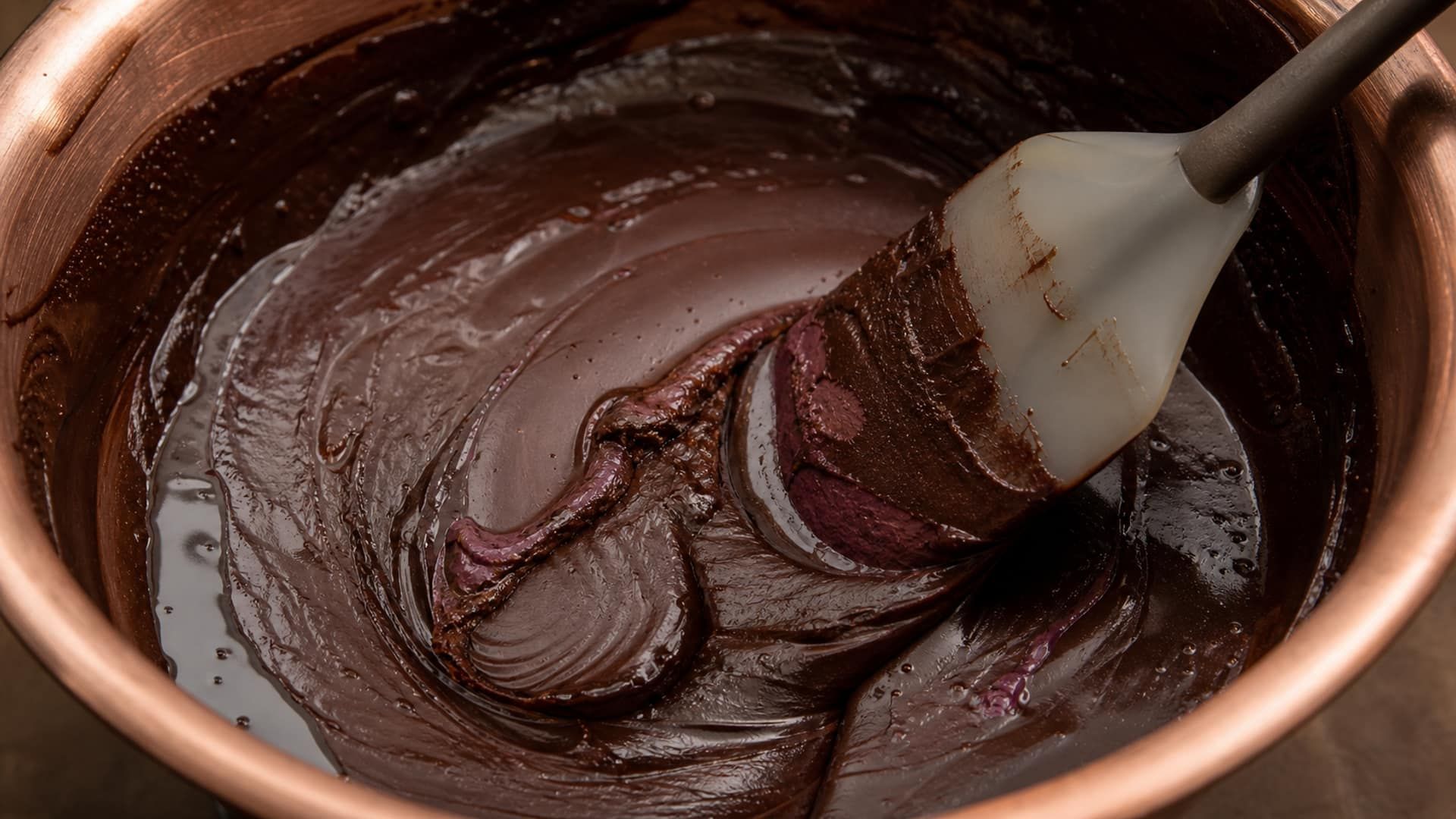
Fruit Purée in Ganache: Substitution, Not Addition
Adding fruit purée to ganache without reformulating around it splits the emulsion and cuts shelf life. Here's the science and the fix.
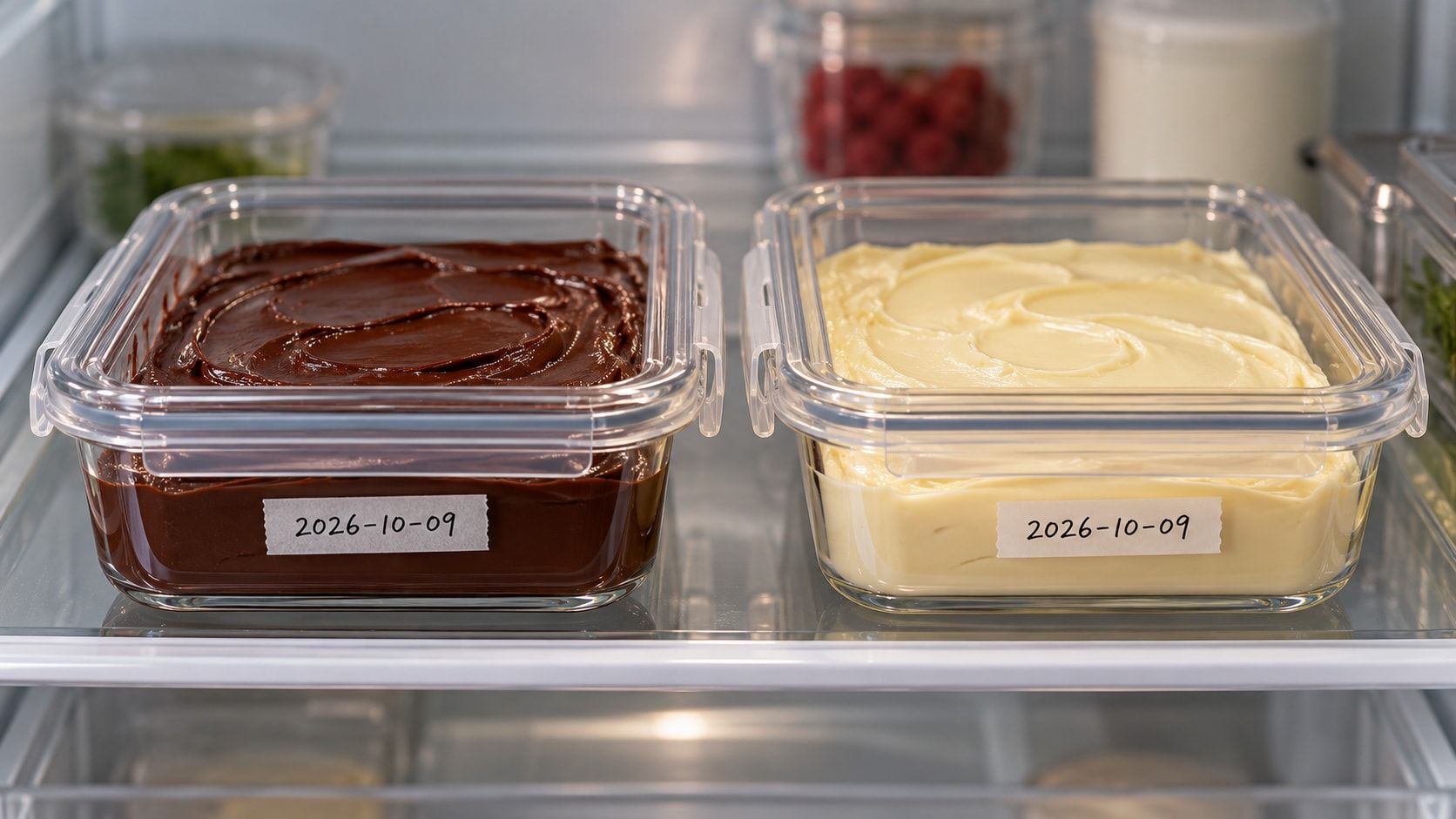
How Long Does Ganache Last? Shelf Life by Type and Storage
How long ganache keeps in the fridge, out of it and in the freezer — from a classic 1:1 cream ganache to shelf-stable bonbon fillings — and why water activity sets the limit.