Strawberry Pâte de Fruit: A 1 kg Batch Cooked to 77°Brix
A 1 kg strawberry pâte de fruit with slow-set HM pectin, cooked to 77°Brix at pH 3.2: the formula, the calculator readings, the cook, cutting, coating and storage.
What Makes Pâte de Fruit Different
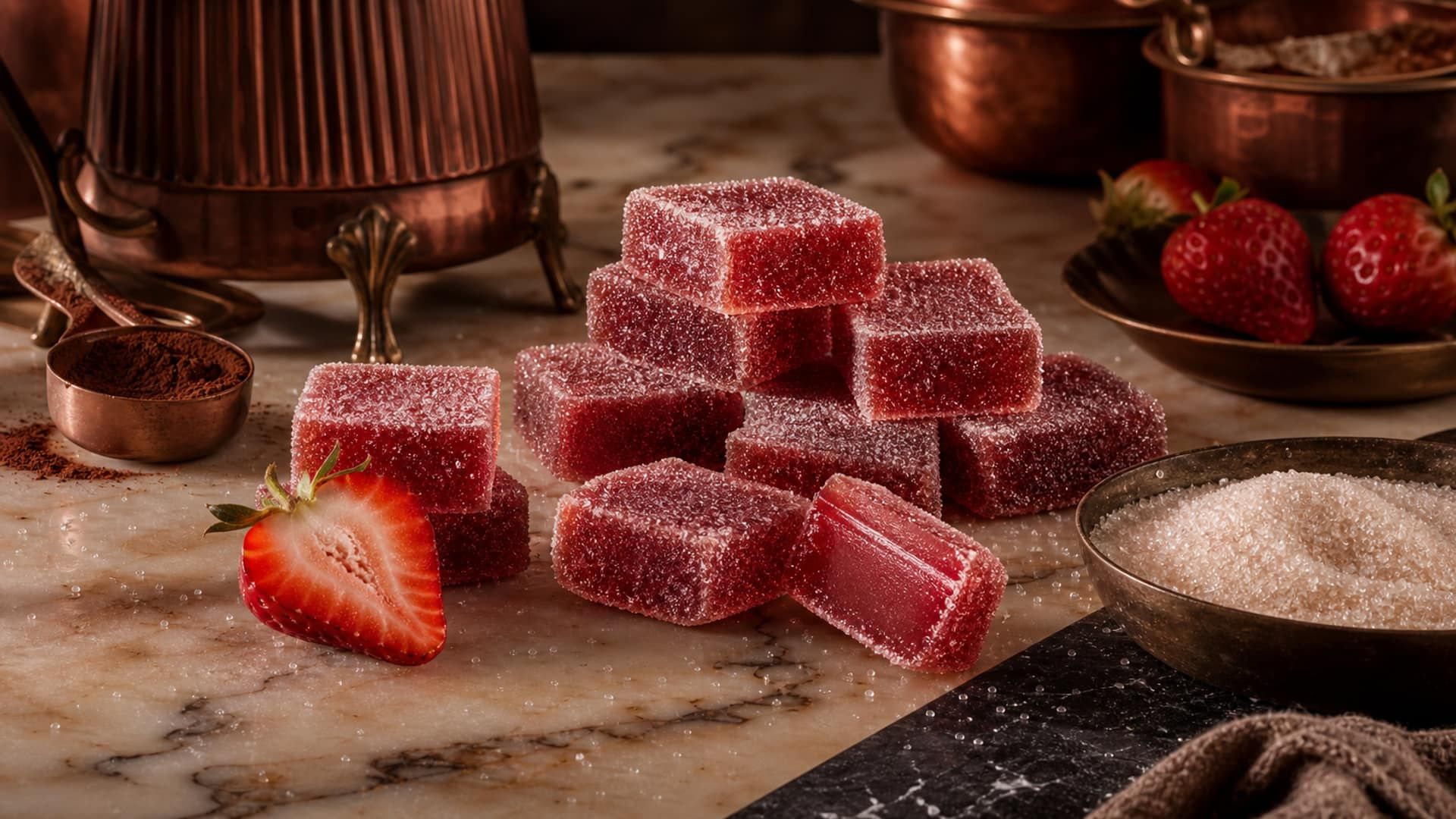
A pâte de fruit is a fruit purée set with high-methoxyl (HM) pectin at very high sugar, about 75–78°Brix, and a controlled pH. That is what separates it from a gelatin gummy or a jam: the gel only forms when pectin, Brix and pH all sit in the same narrow window.
Made well, it gives a firm yet tender square with a bright strawberry flavour, cut cleanly and rolled in sugar. Sealed and kept dry, plan on one to two months at room temperature without preservatives.
Water Activity at 77°Brix
This formula cooked to 77°Brix reads a water activity of about 0.75 in the Pâte de Fruit Calculator. Across 75–78°Brix a pâte de fruit typically sits at about 0.73–0.78, depending on its sugars. Measure the finished batch with a water-activity meter before you set a date code.
Target Metrics for a Professional Pâte de Fruit
Formulation: 1 kg Pre-Cook Batch
The ingredients below weigh exactly 1,000 g before cooking. Cooked to 77°Brix, the batch loses about 212 g of water and yields about 788 g of finished paste before cutting losses.
| Ingredient | Weight (g) | % of Batch | Role |
|---|---|---|---|
| Strawberry purée (10°Brix) | 400 | 40.0% | Fruit character, acids, some natural pectin |
| Sucrose | 438 | 43.8% | Main soluble solid; drives the gel and lowers aw |
| Glucose syrup DE40 | 140 | 14.0% | Holds sucrose back from crystallising |
| HM pectin (slow-set) | 12 | 1.2% | Gel network |
| Citric acid solution 50% | 8 | 0.8% | Drops the pH off the heat to start the set |
| Sodium citrate | 2 | 0.2% | Buffer: holds the pH up during the cook |
| Total | 1000 | 100.0% | Pre-cook weight; water evaporates in the cook |
Strawberry pâte de fruit, 1 kg pre-cook batch
Expected Yield After Cooking
The batch carries about 607 g of soluble solids: 40 g from the purée, 438 g of sucrose, 112 g from the glucose syrup, about 11 g from the pectin, 4 g of citric acid and 2 g of sodium citrate. At 77°Brix those solids are 77% of the paste, so the batch finishes at about 607 ÷ 0.77 ≈ 788 g. The other 212 g is water you boil off.
Why Each Ingredient Matters
Strawberry Purée (400 g)
Use a commercial strawberry purée with a consistent Brix, about 9–11°Brix; frozen-thawed purée works too. At 10°Brix, 400 g brings about 40 g of dissolved solids and 360 g of water. Strawberry’s own acids put the purée at about pH 3.3, which reduces the acid you add later. Its own pectin, about 0.65% of the fruit, counts toward the gel.
Sucrose (438 g)
Sucrose is the bulk of the soluble solids and the main driver of both the gel and the low water activity. At 77°Brix the finished paste is 77% soluble solids by weight, and sucrose supplies about 438 of the roughly 607 g. Refined white sugar keeps the colour bright and the flavour clean.
Glucose Syrup DE40 (140 g)
A DE40 glucose syrup is about 80% dry matter, so 140 g adds 112 g of solids and 28 g of water. Its glucose and longer sugars get in the way of sucrose crystals, the main cause of the grainy texture covered in the troubleshooting article. Here the syrup solids are 112 ÷ (438 + 112) ≈ 20% of the added sugar. Counting the strawberry’s own glucose and fructose, the calculator reads about 23% anti-crystallising sugars and a controlled graining risk. More syrup makes the surface sticky and dissolves the sugar coating faster.
HM Slow-set Pectin (12 g)
Slow-set HM pectin gels cooler and later than rapid-set pectin, which leaves time to fill frames or moulds after the acid goes in. 12 g is 1.2% of the batch and about 1.5% of the finished paste, within the 0.8–1.3% of pectin product that published pâte de fruit formulas use on the batch.
A commercial pectin is about 65% pure pectin, and the calculator adds the strawberry’s own pectin to it. It reads about 1.3% pectin in the finished gel and classes the texture as firm, just above the tender class of a softer, classic cube.
If the pack does not say whether your pectin is slow-set HM, check it in the free pectin selector before you cook: it names the pectin family a pâte de fruit needs and what to confirm on the data sheet.
Always Pre-Mix Pectin with Sugar
Never add dry pectin straight to warm liquid. The granules swell on contact and form lumps (“fish eyes”) that will not disperse. Pre-mix the 12 g of pectin with 60 g of the weighed sucrose, five times its weight, until evenly blended.
Citric Acid Solution 50% (8 g) and Sodium Citrate (2 g)
The citric acid goes in as a 50% solution, 4 g of acid in 4 g of water, so it disperses instantly off the heat. Dry crystals risk local acid spots and patchy setting. The 2 g of sodium citrate dissolves in the purée first and holds the pH up while the batch cooks, so the slow-set pectin does not start to set in the pan. The acid stirred in at the end brings the pH down to about 3.2 and starts the set.
Calculator Walkthrough: Entering the Formulation
The Pâte de Fruit Calculator reads the formula before you cook: initial and final Brix, estimated pH, whether the gel sets and how firm it is, water activity, yield and the cooking endpoint. The readings below come from entering this exact formula.
Open the Pâte de Fruit Calculator
Set Pectin Type to Slow-set, Target Brix to 77 and Target pH to 3.2. Turn on the Two-Part Mixing Method, which keeps the citric acid solution as a separate stream added off the heat at casting. Leave Atmospheric Pressure at sea level unless you cook at altitude.
Enter the Fruit Purée
Add strawberry purée at 400 g. Enter the Brix and pH you measured on the batch; these readings used 10°Brix and pH 3.3. The calculator works out the water and sugars the purée brings.
Enter Sucrose and Glucose Syrup
Add sucrose at 438 g, counted as 100% soluble solids. Add glucose syrup DE40 at 140 g; at 80% dry matter it brings 112 g of solids and 28 g of water.
Enter the Pectin
Add slow-set HM pectin at 12 g. The calculator reports the pectin itself as a share of the finished gel, adding the strawberry's own pectin: about 1.3% here.
Enter the Acid
Add citric acid solution 50% at 8 g and tag it as the off-heat acid stream. Sodium citrate is not modelled: the pH estimate titrates the citric acid against the fruit and ignores the citrate's buffering. The readings here leave the 2 g out, which adds about 2 g to the real finished weight.
Read the Key Outputs
Initial Brix about 60.6. Water Evaporated about 212 g, Final Weight about 786 g without the citrate, Yield about 79%. End-Point Temperature about 107.5°C. Gel: Sets; Gel Texture: Firm; no pre-gelation or syneresis risk. Water Activity 0.75. Graining Risk: Controlled. Casting Temperature 95°C.
Check the pH and Acid Needed
Estimated pH reads about 3.1 with this purée, slightly under the firm window the calculator applies at 77% solids, and Acid Needed reads 0 g because 8 g already reaches the 3.2 target. The pH panel shows the advisory “pH below the firm-gel window - watch for weeping or early setting”: 3.08 sits under the 3.16 floor at 77% solids. At confectionery solids the gel still reads Sets, so watch the cut and the pan rather than adding pectin. The pH estimate is a directional titration, so measure the finished pH with a meter. A purée at pH 3.7 instead reads about 3.5 and asks for about 18 g more acid solution.
The cooking-time output, about 21 minutes here, assumes a fixed evaporation rate of 10 g per minute per kilogram of batch. Your pan and burner set the real time; the refractometer sets the endpoint.
Cooking Process: Step-by-Step
Pre-Mix Pectin with Sugar (Cold)
Whisk all 12 g of pectin into 60 g of the sucrose until evenly blended. Keep the remaining 378 g of sucrose aside.
Dissolve Sodium Citrate in the Purée (40–45°C)
Pour the purée into a heavy-bottomed pan, add the 2 g of sodium citrate and stir until dissolved. Warm to 40–45°C over medium heat, and keep it below 50°C until the pectin is in.
Add the Pectin-Sugar Mix
Whisking continuously, shower the premix into the warm purée in a thin, steady stream. Turn the heat up and bring the mixture to a full boil, still stirring, so the pectin dissolves completely.
Add the Remaining Sucrose, Then the Glucose
With the mass boiling, add the remaining 378 g of sucrose gradually so the boil does not stop, then the 140 g of glucose syrup. Keep cooking over medium-high heat, stirring often so the bottom does not scorch.
Cook to 77°Brix (about 107.5°C at sea level)
Cook until a refractometer reads 77°Brix. At sea level that is about 107.5°C; at altitude the batch boils cooler, so enter your pressure in the calculator. Temperature is only a guide: once the mass passes about 104°C, check a drop on the refractometer every 2–3 minutes.
Off the Heat, Add the Citric Acid Solution
At 77°Brix take the pan off the heat. Let the boil settle for 10–15 seconds, add the 8 g of acid solution in one go and stir fast for 20–30 seconds. The pH drops to about 3.2 and the set begins.
Cast Immediately
Pour straight into a frame, silicone moulds or a sheet lined with oiled acetate, while the mass is still about 95°C. Do not go back and stir: agitating a forming gel breaks it.
Set at Room Temperature (12–24 hours)
Leave the slab undisturbed at 18–22°C for at least 12 hours; the calculator estimates about 22 hours for a 15 mm slab. A set paste releases cleanly from the acetate and springs back under a finger.
The Most Critical Control Point: Citric Acid Timing
Too early (during the cook): the pH falls while the mass is still wet, the pectin starts to set in the pan, and the batch turns lumpy and will not flow. It cannot be rescued.
Too late (after the mass has cooled): the gel forms unevenly around the acid and the slab is weak and weepy.
Correct: add the acid solution off the heat, as soon as the Brix target is reached, and cast at once.
Why Cast So Hot
Pectin setting temperatures are rated in a standard jam at about 65% soluble solids: roughly 70–85°C for rapid-set and 55–65°C for slow-set HM pectin, depending on supplier and grade. At 77°Brix and pH 3.2 the same pectins set hotter and sooner, which is why the calculator’s casting temperature is 95°C. With a rapid-set pectin, this formula reads a pre-gelation risk.
Cutting and Sugar Coating
Once the slab has set, demould it and dust both faces with sugar. Cut with a sharp, thin knife or a guitar cutter, wiping the blade with a hot damp cloth between cuts. A 15 mm slab is traditionally cut into 25 × 25 mm squares; 20 × 35 mm bars suit a chocolatier’s box.
Roll the cut pieces in granulated or coarse sugar and let them dry for a day before packing. The coating stops pieces sticking together and adds a crunch against the soft gel. For a sharper finish, blend about 10% citric acid powder into the coating sugar.
Storage and Shelf Life
Storage Conditions
Temperature: 18–20°C. Do not refrigerate: condensation dissolves the sugar coating. Humidity: below 55% RH, the calculator’s maximum storage humidity for this formula. Container: airtight box or sealed bags, away from light. Shelf life: plan on 30–60 days. The calculator’s reference estimate at 20°C is longer, about 123 days, but it is based on water activity and does not see the coating weeping or the paste drying. Confirm any longer date with a storage trial.
Troubleshooting Guide
| Defect | Most Likely Cause | Correction |
|---|---|---|
| Gel too firm or rubbery | Cooked past 78°Brix, or too much pectin | Stop at 77°Brix; take a few grams of pectin out and re-check Gel Texture |
| Gel too soft, will not hold a cut | Under-cooked (below 75°Brix) or pH too high | Cook to 77°Brix; check the acid went in and measure the finished pH |
| Grainy or sandy texture | Sucrose crystallising | Keep the glucose syrup at 140 g; wash crystals off the pan walls |
| Mass set in the pan | Acid added during the cook, or a rapid-set pectin | Add the acid only off the heat; use slow-set or yellow pectin |
| Coating dissolves, surface wet | Stored above 55% RH, or packed before the coating dried | Dry the coated pieces a day; store sealed below 55% RH |
Common strawberry pâte de fruit defects
Formulation Variations
- Raspberry or passion fruit: both are more acidic than strawberry. Enter the measured purée pH and use the Acid Needed reading instead of the 8 g default.
- Mixed berry (strawberry + raspberry 1:1): use 200 g of each purée and enter each as its own ingredient, with its own Brix and pH.
- Lower Brix: cooked to 74–75°Brix, this formula reads aw 0.78–0.79, and the calculator’s reference shelf life falls to about 58–73 days at 20°C, about half of the 77°Brix value. The gel still reads Sets and Firm; the cost is keeping time.
- Rapid-set HM pectin: at 77°Brix the calculator flags a pre-gelation risk, because the mass can set in the pan before it is cast. Use it only with a fast depositing setup, or stay with slow-set or yellow pectin.
- Tartaric acid: replace the citric acid solution with a 50% tartaric acid solution, enter it as the acid ingredient (the calculator detects the acid from the ingredient; there is no acid-type setting), and read Acid Needed. The calculator sizes the dose from the acid’s molar mass and strength.
Frequently Asked Questions
Why is sodium citrate included if we are adding citric acid anyway?
My refractometer reads 77°Brix but the gel is still soft. What happened?
What is the water activity of this pâte de fruit and why does it matter?
Can I use yellow (buffered) pectin instead of slow-set pectin?
How does altitude change this recipe?
Scientific References
- May, C.D. (1990). Industrial pectins: sources, production and applications. Carbohydrate Polymers, 12(1), 79–99. DOI: 10.1016/0144-8617(90)90105-2
- Oakenfull, D.G. (1991). The chemistry of high-methoxyl pectins. In R.H. Walter (ed.), The Chemistry and Technology of Pectin, pp. 87–108. Academic Press.
- Thakur, B.R., Singh, R.K., Handa, A.K., & Rao, M.A. (1997). Chemistry and uses of pectin — a review. Critical Reviews in Food Science and Nutrition, 37(1), 47–73. DOI: 10.1080/10408399709527767
- Löfgren, C., Guillotin, S., Evenbratt, H., Schols, H., & Hermansson, A.-M. (2005). Effects of calcium, pH, and blockiness on kinetic rheological behavior and microstructure of HM pectin gels. Biomacromolecules, 6(2), 646–652. DOI: 10.1021/bm049619+
- Bell, L.N. & Labuza, T.P. (2000). Moisture Sorption: Practical Aspects of Isotherm Measurement and Use (2nd ed.). AACC International.
Related Topics
Related Articles
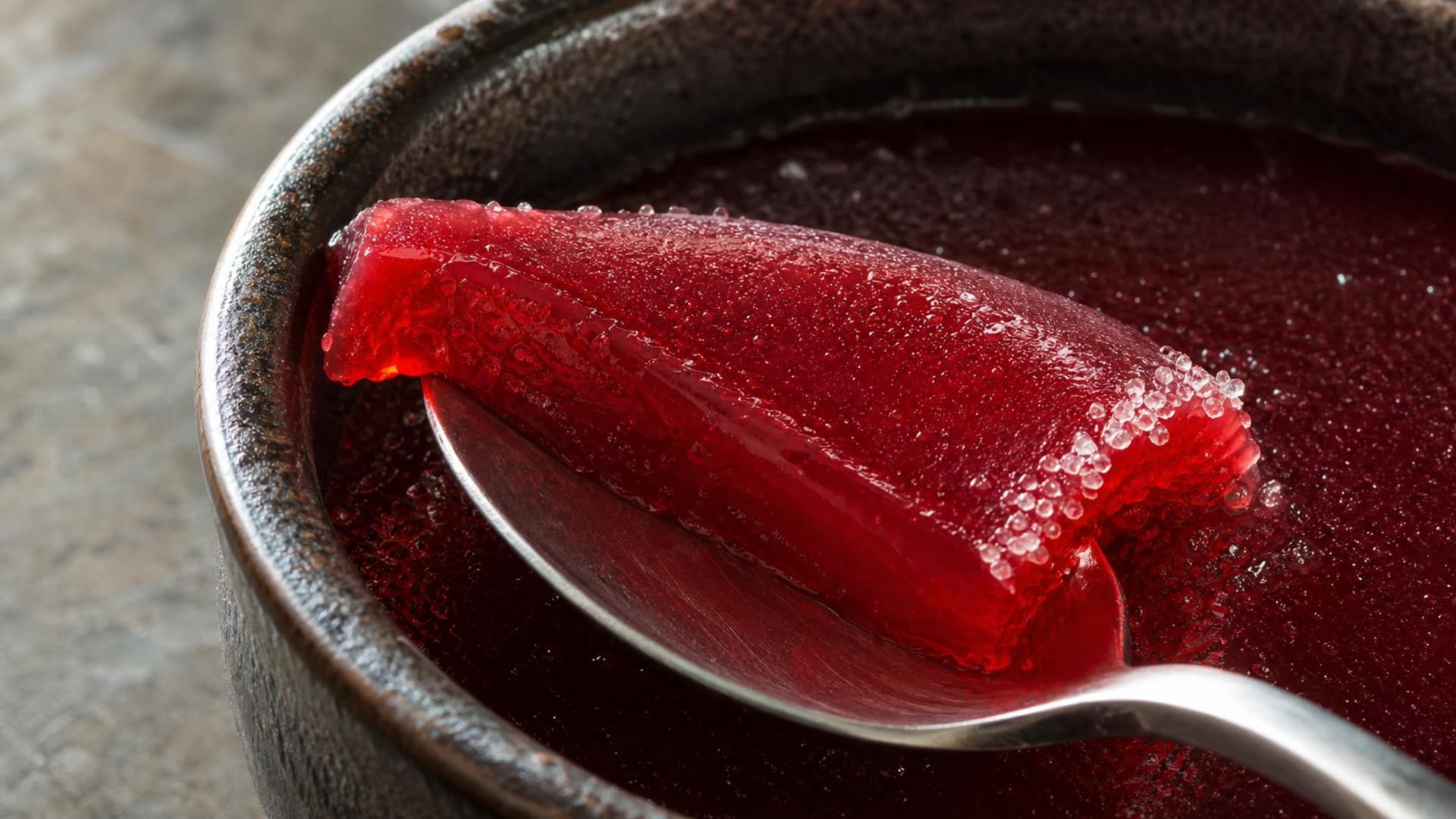
Pectin Gelation: pH, Brix and Dose for a Firm Set
Why an HM pectin gel sets, sets weak or fails: the pH and soluble-solids window, the dose, rapid vs slow set, and how to fix a weak or weeping pâte de fruit.
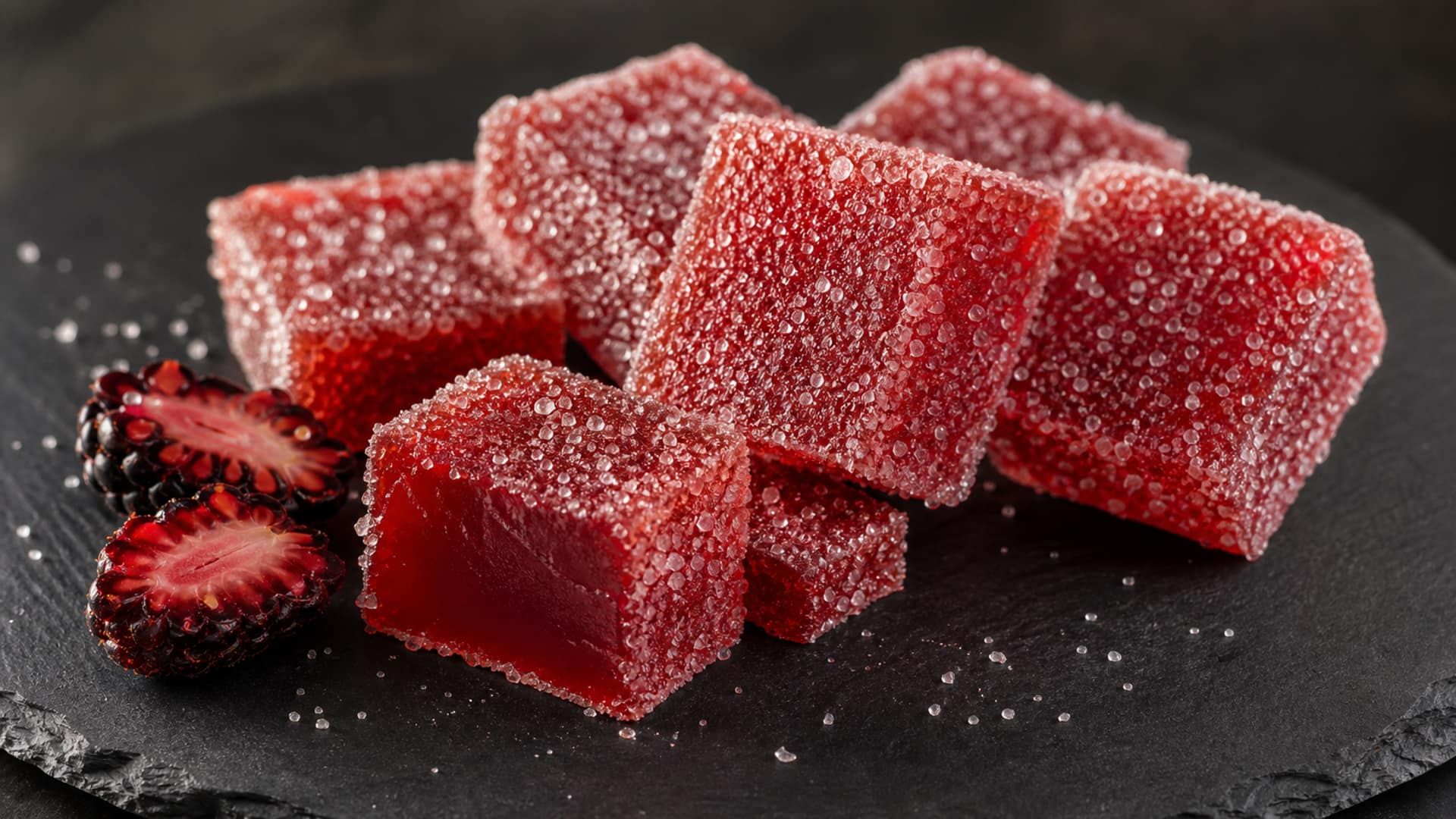
Fruit Jelly Recipe Formulation: Brix, Acid Balance, and Yield
How to formulate any fruit jelly from first principles — choosing the right Brix target, balancing acid for pectin gelation, controlling sugar ratios, and predicting yield before you cook.
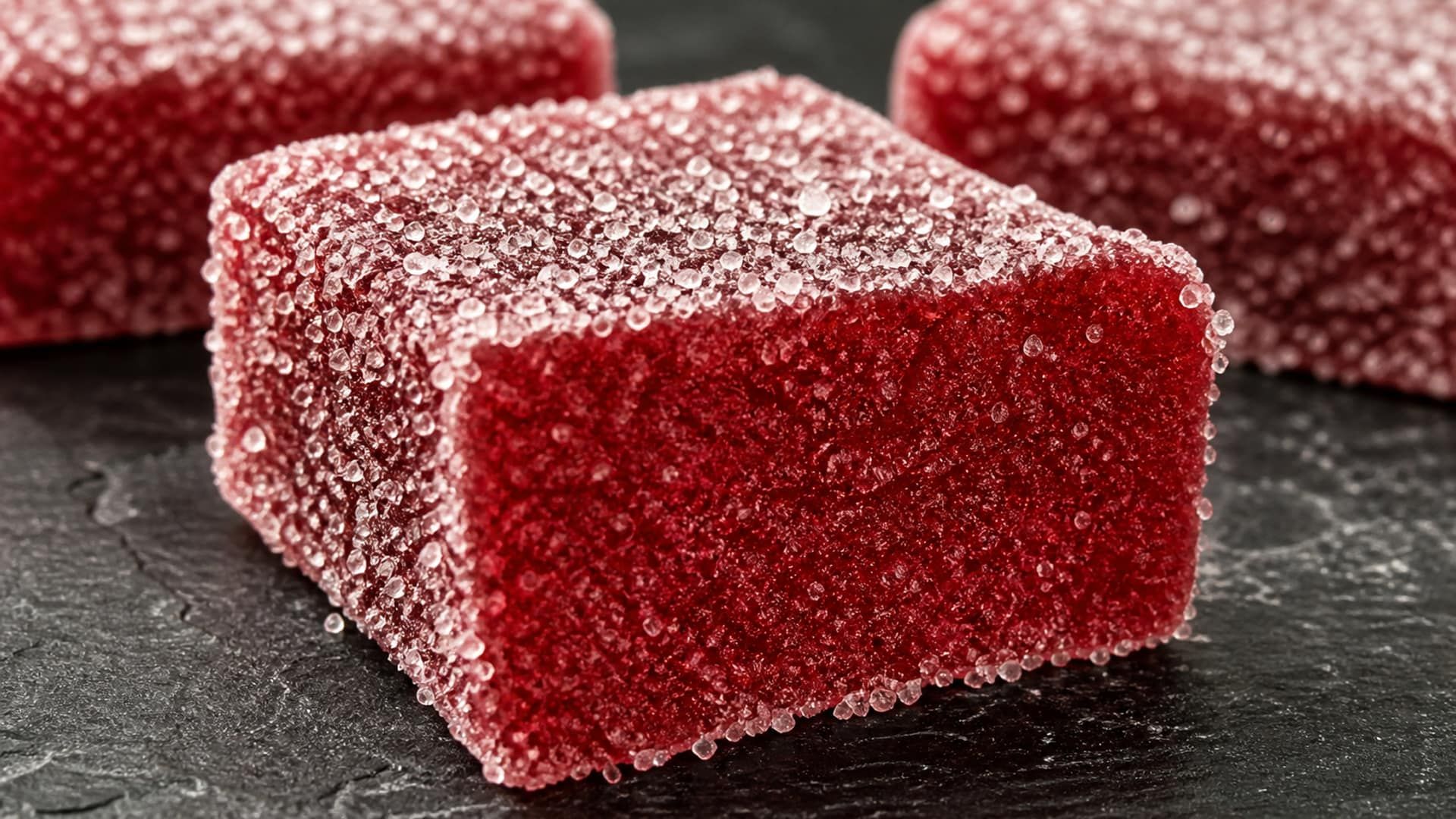
Why is my Pâte de Fruit Grainy?
A sandy or grainy texture in Pâte de Fruit is a common failure. Learn how to prevent sugar crystallization and ensure a smooth, melting texture.