Pectin Selector and Compatibility Checker
Choose the broad HM or LM gelation mechanism, then check whether an exact supplier product supports your fruit gel, glaze, or dairy process.
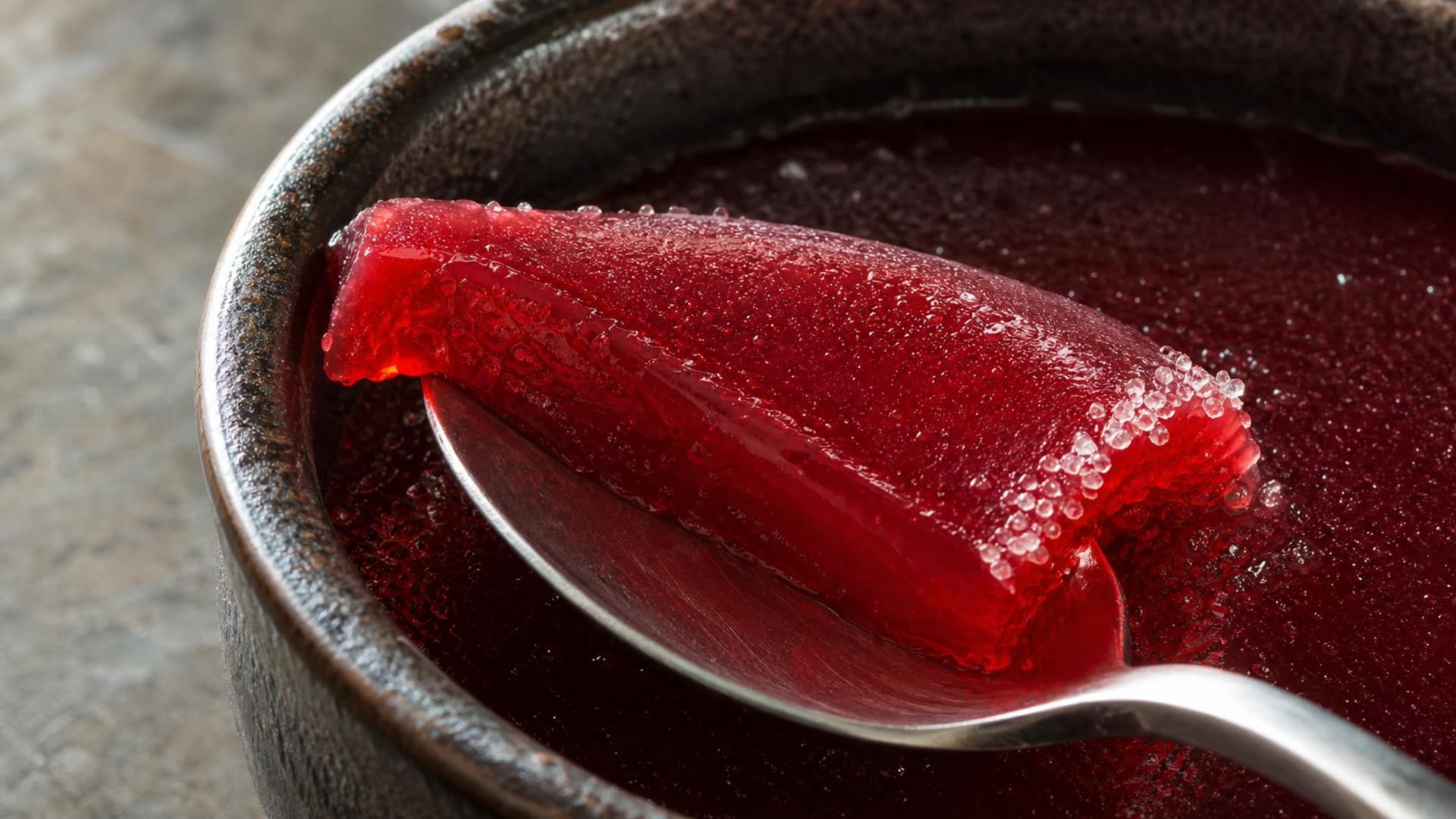
Choosing pectin by a short name can send a formula in the wrong direction. High-methoxyl and low-methoxyl pectins build networks through different mechanisms, while labels such as yellow pectin, pectin NH, and X58 describe products or market conventions rather than one universal family. The useful question is not “Which name sounds closest?” but “Which gelation system does this process require, and does this exact supplier product support it?”
This pectin selector answers those questions in that order. It first identifies a broad HM sugar–acid, LM calcium-mediated, or specialized supplier-validated route. It then checks only the evidence you report from the current technical data sheet. It never invents a family from a trade label, calculates a dose, or guarantees that a batch will gel.
What to enter
- Choose what you’re making — this alone gives a pectin recommendation.
- Pick what the pack says, and whether it names a family (HM/LM).
- Press Check my pectin. If you have the data sheet, open I have the spec sheet in front of me for a sharper answer.
How to Use the Pectin Selector
Begin with the intended process, not the bag already on the shelf. A high-solids acidic fruit confection, a reduced-sugar spread, a reheatable glaze, and a dairy filling can all contain pectin, yet they do not ask the polymer to work in the same way. The first selector turns that process intent into a broad mechanism to investigate.
Define the food system
Choose high-solids acidic fruit gel, reduced-sugar calcium-set fruit gel, thermoreversible glaze, dairy or calcium-rich filling, or mark the process as undefined.
Identify the exact pack
Select the label you see, then match manufacturer, full product code, and current technical-sheet revision. A familiar short name is not enough.
Copy supplier claims without inference
Enter the family, listed application, thermal behavior, and calcium guidance exactly as the sheet states them. Use Unknown when a fact is absent.
Read the status and verify
Treat Aligned as permission to continue checking, not permission to skip the product window, full-formula review, and controlled bench trial.
The sheet answers deliberately include unknown. Unknown is better evidence than a guess: it keeps an unsupported assumption from becoming a production decision. If the exact product document does not state a family or application, request the current technical data from the supplier. Do not borrow a claim from a retailer, another manufacturer, or a similarly named product.
The selector uses “aligned” narrowly. It means the supplied evidence agrees with the selected route. “Conditional” means the broad mechanism is plausible but an application, calcium, or other product-specific condition remains unresolved. “Not aligned” means the sheet explicitly excludes the use or the declared family conflicts with the broad route without a product-specific exception. “Insufficient data” means no responsible comparison can yet be made.
Mechanism first, product second
Select what must cause or control the set before selecting a pectin name. Then require evidence from the exact manufacturer and product code. This prevents a useful description of one product from being transferred to a different powder with a similar label.
HM and LM Pectin Use Different Gelation Systems
HM means high-methoxyl or highly esterified pectin. In a classic HM fruit gel, sufficient soluble solids reduce available water while acid moves the pectin into its working pH region. The chains can then associate into a network. That broad explanation is why HM pectin is investigated for traditional jam, jelly, and high-solids pâte de fruit systems.
It is not a universal recipe. The usable pH, soluble-solids range, buffer system, temperature, acid-addition sequence, and set rate belong to the exact product. Rapid-set, medium-set, and slow-set HM products can behave differently during depositing and cooling. Fruit acidity and minerals can also move a process away from the supplier’s reference formula. The checker therefore recommends a mechanism but does not publish a generic endpoint or dose.
LM means low-methoxyl pectin. Its broad gelation route uses divalent ions, especially calcium, to connect suitable regions of neighboring chains. This makes LM products useful to investigate when a fruit system cannot rely on the high soluble-solids conditions associated with classic HM gelation. But “LM” still does not describe one interchangeable powder. Conventional and amidated LM products can have different calcium reactivity, tolerance, setting behavior, and thermal response.
The complete calcium system matters. Fruit, water, dairy ingredients, fortification salts, and process water may contribute calcium; citrate, phosphate, and other sequestrants may reduce its availability. Some standardized products include calcium or retarding salts, while others expect the formulator to supply and control them. Too little, too much, or poorly distributed available calcium can all change texture. That is why the LM route asks whether the exact sheet provides calcium guidance instead of calculating a universal amount.
| Process question | Broad route to investigate | Evidence still required |
|---|---|---|
| High-solids acidic fruit gel | HM sugar–acid mechanism | Exact pH, soluble-solids, acid sequence, and set-rate window |
| Reduced-sugar fruit gel | LM calcium-mediated mechanism | LM subtype, calcium source or range, sequestration, and application claim |
| Glaze that must melt and reset | Specialized supplier-validated product | Explicit thermoreversibility and activation / reuse instructions |
| Dairy or calcium-rich filling | Specialized supplier-validated product | Exact dairy application, mineral conditions, pH, and thermal process |
Broad pectin mechanisms guide the search; the supplier sheet defines the usable product window
Acid, sugar, and calcium are not independent checkboxes. Changing one can alter the availability or timing of another, while heating and shear affect hydration and dispersion. The selector intentionally stops before formula design. Once a route is chosen, use the exact sheet and a complete recipe calculator to examine ingredient percentages, water, soluble solids, pH targets, and process losses together.
Why Yellow Pectin, NH, and X58 Need Exact Product Checks
Pastry formulas often use compact names because they are convenient in a kitchen. They are poor database keys. A supplier’s yellow pectin may be a standardized HM product designed for a particular acidic, high-solids confectionery window. That does not make every yellow powder identical, and it does not make “yellow” a substitute for manufacturer, code, degree of esterification, set rate, or composition.
Likewise, a product sold as pectin NH may be presented for nappage or glaze and may carry a thermoreversible claim. The claim belongs to that exact product. The letters do not authorize the checker to assign amidation, calcium behavior, melting range, freeze/thaw performance, or dosage to every product using NH in its name.
X58 makes the identity problem especially visible. Current supplier pages can describe exact X58-branded products with their own application, solids, calcium or acid, thermal, and handling conditions. Those documents are useful for their matching packs, not as a global definition of “X58.” Even when two products appear functionally close, the current sheet and formulation instructions must travel with the product code.
The checker therefore handles yellow, NH, and X58 as three separate label-only identities. Selecting one automatically leaves the declared family unknown. You may set the family only after reading it in the matching documentation. This is stricter than a simple product lookup, but it prevents a confident answer built on the wrong supplier’s data.
Do not transfer specifications between trade names
A product name can suggest where to begin searching; it cannot prove family, amidation, calcium reactivity, thermoreversibility, set rate, or process limits. Keep the answer as Unknown until the exact sheet states the fact.
Record the document revision with the trial. Supplier formulations and technical pages can change, distributors can repackage products, and an abbreviated label can outlive the powder it once described. For traceable production, retain the manufacturer, product code, lot where relevant, sheet date or revision, and the conditions used in the successful test.
If the sheet lists your application but its declared broad family differs from the selector’s first-pass route, the result becomes conditional rather than automatically rejected. A formulated pectin system can include standardizing sugars, buffers, calcium, or retarding salts that make the exact product more specific than a family heuristic. In that case the product-specific instructions take priority, followed by a bench trial. The tool never generalizes that exception to another product.
How to Interpret Compatibility and Validate the Process
An aligned result is the strongest screen this basic tool provides. It says that the declared family and application evidence support the route, or that the exact sheet explicitly supports a specialized application and required thermal behavior. It does not say that the formula has enough pectin, that its acid and calcium are balanced, or that the desired firmness, clarity, elasticity, release, and shelf stability will follow.
A conditional result identifies the missing condition in plain language. Resolve it before scaling. For HM, that may be confirmation that the exact product covers the food system and that the formula reaches its stated pH and soluble-solids window. For LM, it may be a missing calcium procedure. For a specialized glaze, it may be an unverified reheat-and-reset claim.
A not aligned result should stop direct substitution. When a current sheet excludes the intended application or thermal behavior, choose another exact product or redesign the process with qualified supplier support. An insufficient data result is also a stop, but the remedy is information: define the process, retrieve the correct sheet, and replace unknown answers with documented facts.
Use the verification checklist as a trial record. Match the pack to the sheet; compare the complete formula with the stated pH, solids, calcium, and temperature conditions; then run a small controlled batch. Record raw-material temperature, dispersion method, hydration time, cook profile, acid timing, measured pH, measured soluble solids, depositing temperature, setting time, and texture after the intended storage period. Change one variable at a time.
For production work, verify more than initial set. A glaze may need repeatable melting and reset, clean application, freeze/thaw stability, and acceptable water migration. A fruit confection may need reliable cutting, coating, flavor release, and stability through its intended shelf life. A dairy system may need protein stability and control of mineral interactions. These outcomes sit outside a family selector and require the full formula, exact process, and appropriate measurements.
No dose and no gel guarantee
The checker does not calculate pectin, acid, calcium, or buffer dosage. It does not predict final texture or shelf life. Follow the current supplier method, assess the complete formula, and validate a small batch before production.
What is the main difference between HM and LM pectin?
Is yellow pectin the same as every HM pectin?
Are pectin NH and pectin X58 interchangeable?
Which pectin should I use for a thermoreversible glaze?
Can this checker calculate how much pectin to add?
Does an aligned result guarantee that my gel will set?
Related Articles
Pectin Gelation: pH, Brix and Dose for a Firm Set
Why an HM pectin gel sets, sets weak or fails: the pH and soluble-solids window, the dose, rapid vs slow set, and how to fix a weak or weeping pâte de fruit.
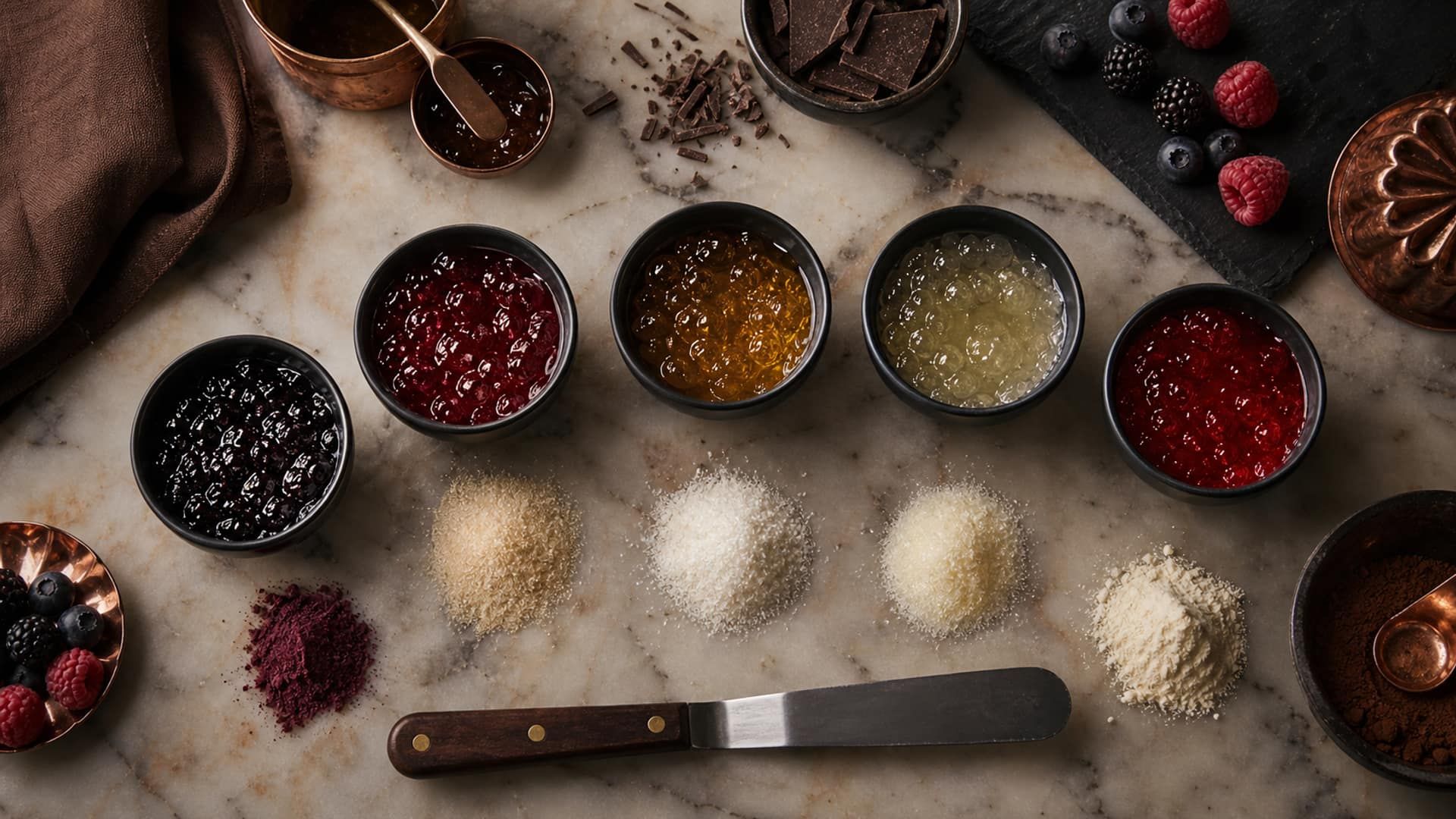
Gelling Agents for Jelly Textures: Selection, Dosage, and Set Temperatures
Pick the gelling agent that delivers the texture you want — melt-in-mouth, firm and sliceable, brittle clean-cut, or warm-serve heat-stable — with dosages, set temperatures, and vegan options for agar, gelatin, pectin, carrageenan, and gellan.
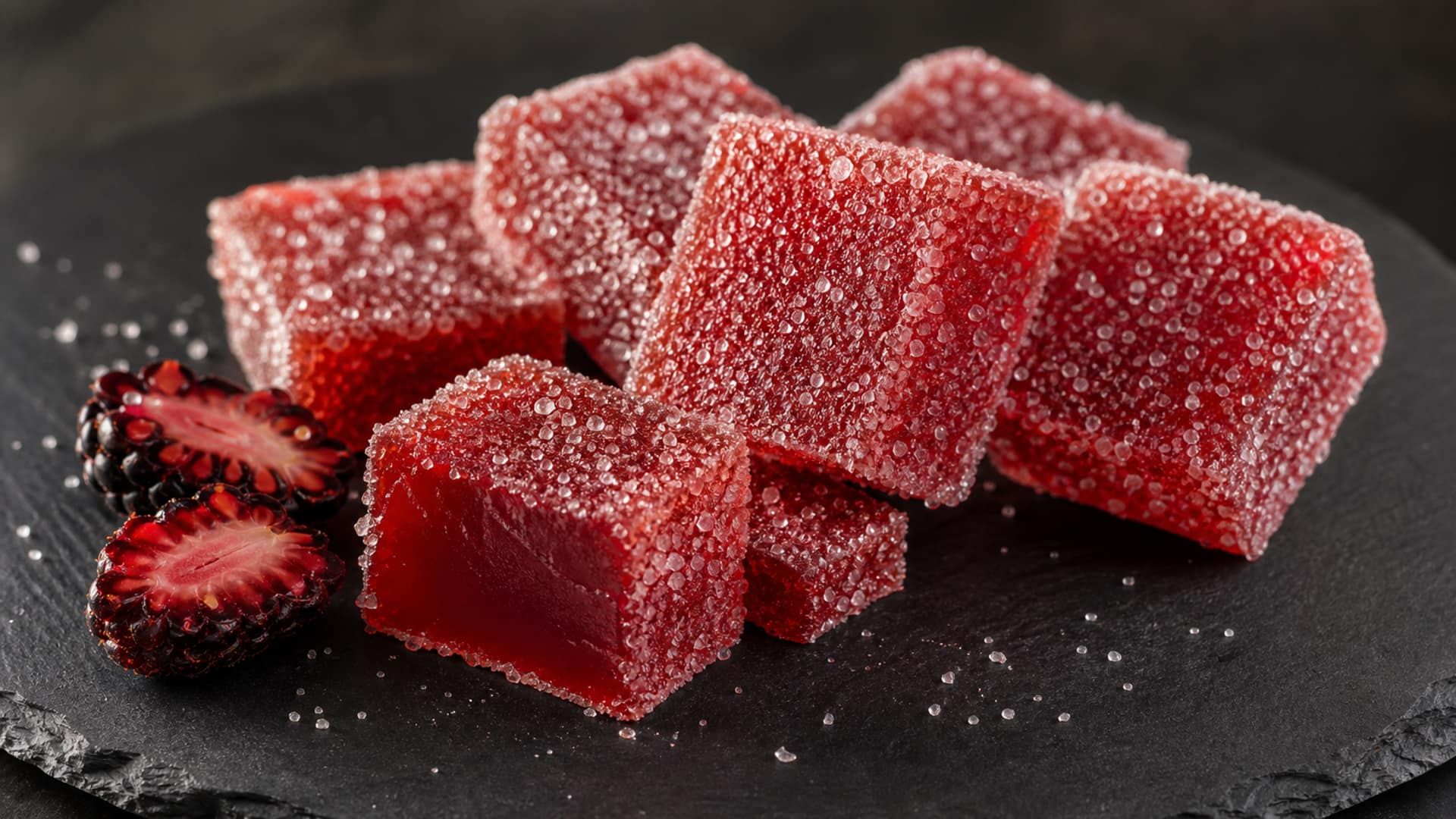
Fruit Jelly Recipe Formulation: Brix, Acid Balance, and Yield
How to formulate any fruit jelly from first principles — choosing the right Brix target, balancing acid for pectin gelation, controlling sugar ratios, and predicting yield before you cook.