Why Protein Bars Harden During Storage: A Practical Diagnosis
A protein bar can become hard even inside a closed wrapper. Separate moisture loss from internal changes, then test the protein, binder and packaging one at a time.
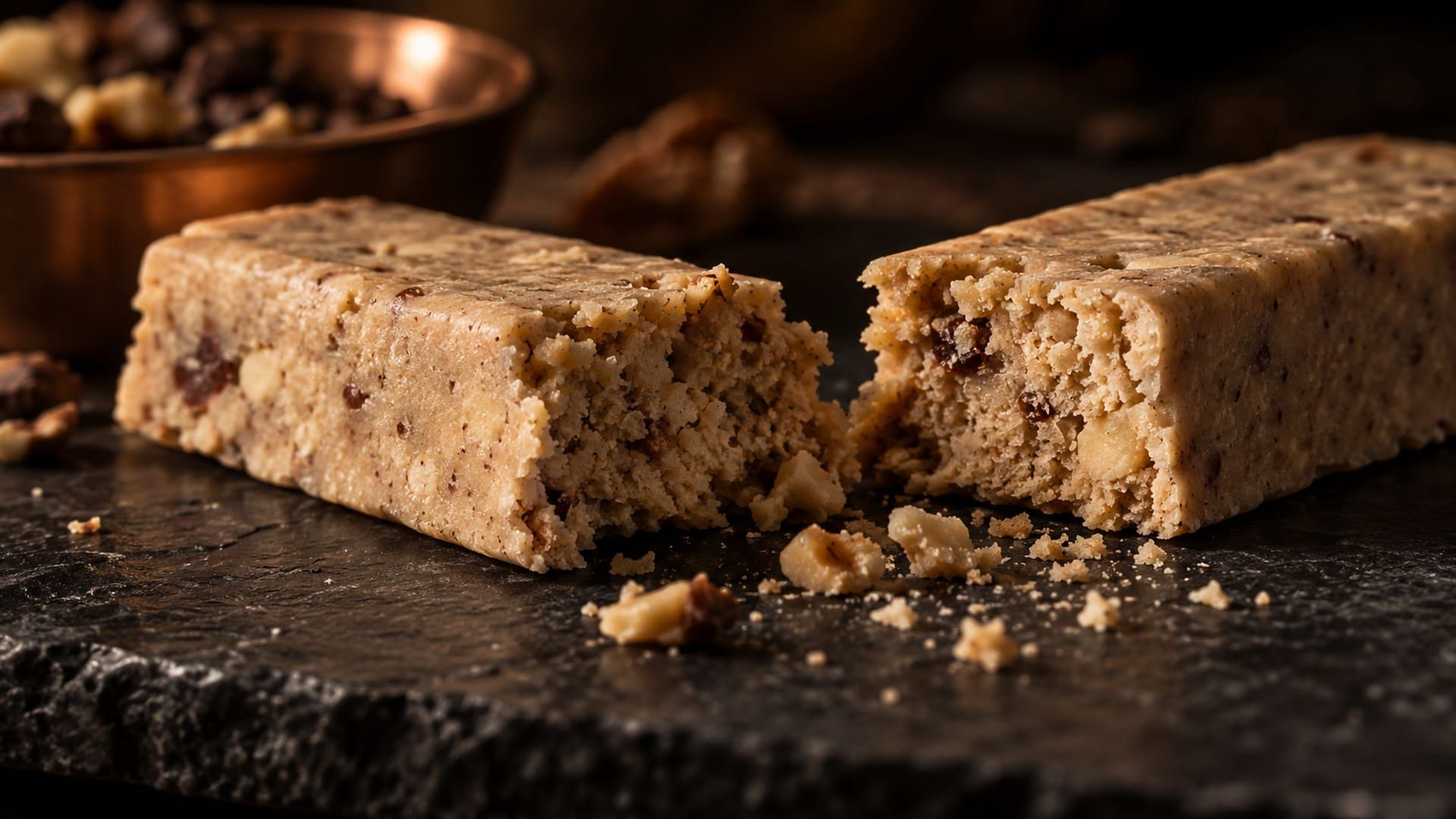
Your protein bar cuts cleanly and tastes soft on the day you make it. Later, the same bar is difficult to bite, even though the wrapper looks intact. Adding more water to the next batch may soften it initially without solving the reason it changes.
Start by locating the failure: was the bar already too firm after production, did it develop a dry outer layer, or did the whole centre become harder during storage? These observations guide the first comparison; none identifies a molecular mechanism on its own.
Separate drying from changes inside the bar
A wrapper limits exchange with the environment, but it does not stop water redistributing between ingredients. Protein-rich regions and the sugar or humectant phase can change during storage without the whole bar losing a large amount of moisture.
Research on model bars has demonstrated water migration and separation into regions with different composition. The result depends on the protein and surrounding formulation: a finding for one whey or caseinate system is not a ranking of every commercial protein powder.
| Observation | Possible direction to investigate | Useful comparison |
|---|---|---|
| Bar is already hard or chalky after production | Initial formulation, powder dispersion and process | The same recipe with a documented protein or mixing change |
| Outside becomes dry before the centre | Moisture exchange, wrapper barrier or seal quality | The same batch in two known packaging conditions |
| Centre hardens despite apparently intact packaging | Internal water redistribution and structural changes | Matched trials changing protein or binder separately |
| Hardening accompanies browning or off-flavours | Chemical changes as well as moisture effects | Storage history, ingredient condition and laboratory assessment |
Weigh retained samples consistently if moisture loss is suspected, but treat weight as supporting evidence. Stable mass does not exclude internal redistribution, and a decrease does not explain every change in the protein matrix.
Water activity and moisture content answer different questions. Neither a single water-activity result nor the moisture percentage tells you whether the bar will stay soft; follow texture through storage as a separate quality measure.
Match the suspected cause to a formulation trial
Protein ingredients differ in functionality as well as protein percentage. Keep the exact grade and supplier information: changing from one powder to another can change the bar even when the declared protein content looks similar.
Protein aggregation, changes in phase structure and sugar crystallization can contribute to firmness. During longer storage, reactions involving proteins and reducing sugars, and oxidation in some systems, can also accompany hardening; do not attribute every early change to the Maillard reaction.
Start with the simplest test that distinguishes your leading explanations. If the formulation worked until a protein supplier changed, compare the old and new ingredients before redesigning the entire binder.
| Variable | What to compare | What else to watch |
|---|---|---|
| Protein ingredient | Two documented grades at a clearly defined substitution basis | Protein content, flavour, dispersibility and initial texture |
| Syrup or binder | One composition change with water and solids accounted for | Sweetness, stickiness, crystallization and measured water activity |
| Fat phase | A small documented change suited to the existing formulation | Oil separation, greasy bite and coating compatibility |
| Packaging | The same formulation with verified seals and a different barrier | Moisture change and exposure to oxygen during storage |
Glycerol and other humectants are not simply water substitutes. They affect the distribution and mobility of water and the eating texture, so “more humectant” is a trial to evaluate rather than a guaranteed anti-hardening fix.
A hydrolysed protein can be worth evaluating with the supplier, but the texture benefit must be checked alongside flavour, including possible bitterness. Similarly, changing the fat phase can help one protein system and fail to help another.
Recheck storage when you change water or binder
Do not add water until the fresh bar feels soft and assume the original shelf life still applies. Any such reformulation needs its own water-activity measurements and appropriate shelf-life assessment; this article does not prescribe a universal moisture target.
A chocolate coating is not a substitute for that work. It adds another component whose behaviour matters, while internal changes in the centre can continue after coating and wrapping.
Run a small comparison you can interpret
Keep one unchanged control and change one main variable per trial. Make the pieces comparable in weight and dimensions, use the same processing sequence, and pack them with the same method unless packaging is the variable under test.
Only taste samples assessed as suitable for consumption under the product’s safety plan. If their safety is uncertain, use non-tasting measurements and obtain appropriate laboratory advice; appearance and smell do not establish microbiological safety. This also applies to samples from accelerated warm-storage trials.
Describe the target before tasting: a bar that bends before breaking, a clean bite with limited chew resistance, or another specific texture suited to your product. “Softer” alone is not enough if the new bar also becomes sticky, greasy or difficult to cut.
Write the starting record
Record ingredient grades and weights, mixing order, process temperatures, finished yield, dimensions and packaging. Note when the current bar first becomes unacceptable.
Choose one testable explanation
Pick the strongest clue, such as a changed protein powder or a dry outer layer. Choose a comparison that can distinguish it from an alternative explanation.
Prepare the control and trial together
Use matched batches and label retained units individually. Keep separate units for each inspection so repeatedly opening one wrapper does not change the test.
Check across the failure window
Assess the fresh product, early storage, the time when the original defect appears, and later points relevant to the intended shelf life. Keep storage conditions recorded and consistent.
Compare at the same temperature
Bring samples to a common evaluation temperature within the product's handling requirements. Record firmness, stickiness, crumbling, colour and odour; use the same cutting or compression method each time.
Confirm the best candidate
Repeat the promising formulation in another batch and in the intended packaging. Establish storage suitability before production; an improved early result does not establish an expiry date.
If you use an instrument, keep sample geometry and test settings fixed. A hand-cut comparison is useful for screening, but do not turn its result into a precise force value or compare it directly with a published instrumental measurement.
Accelerated warm storage can help reveal differences between candidates. It does not supply a universal conversion from test days to months on the shelf, because changing temperature can alter the balance of the mechanisms involved.
Keep the acceptance criteria you chose before reviewing the results. If the target was a bar that cuts and packs easily, do not select an excessively sticky trial simply because it is softer than the control on the last inspection day.
Decide what to keep and what to change next
Select a trial for its behaviour over time, not the softest fresh bite. Reject a texture improvement that creates an unacceptable flavour, oily surface or processing problem, and record those tradeoffs so you do not repeat the same trial later.
If packaging improves the surface but the centre still hardens, investigate the formulation next. If changing protein helps while packaging stays constant, keep that grade documented and repeat the comparison before treating it as a production solution.
Use your recipe record to keep ingredient quantities and process notes together. Physical storage trials remain the authority for this defect: a general recipe calculation does not predict protein-bar hardening or validate a shelf life.
Why can a protein bar harden in a sealed wrapper?
Will switching from whey to plant protein prevent hardening?
Can I rescue a hardened production batch by adding water?
Does a softer bar automatically have a shorter shelf life?
Related Topics
Related Articles
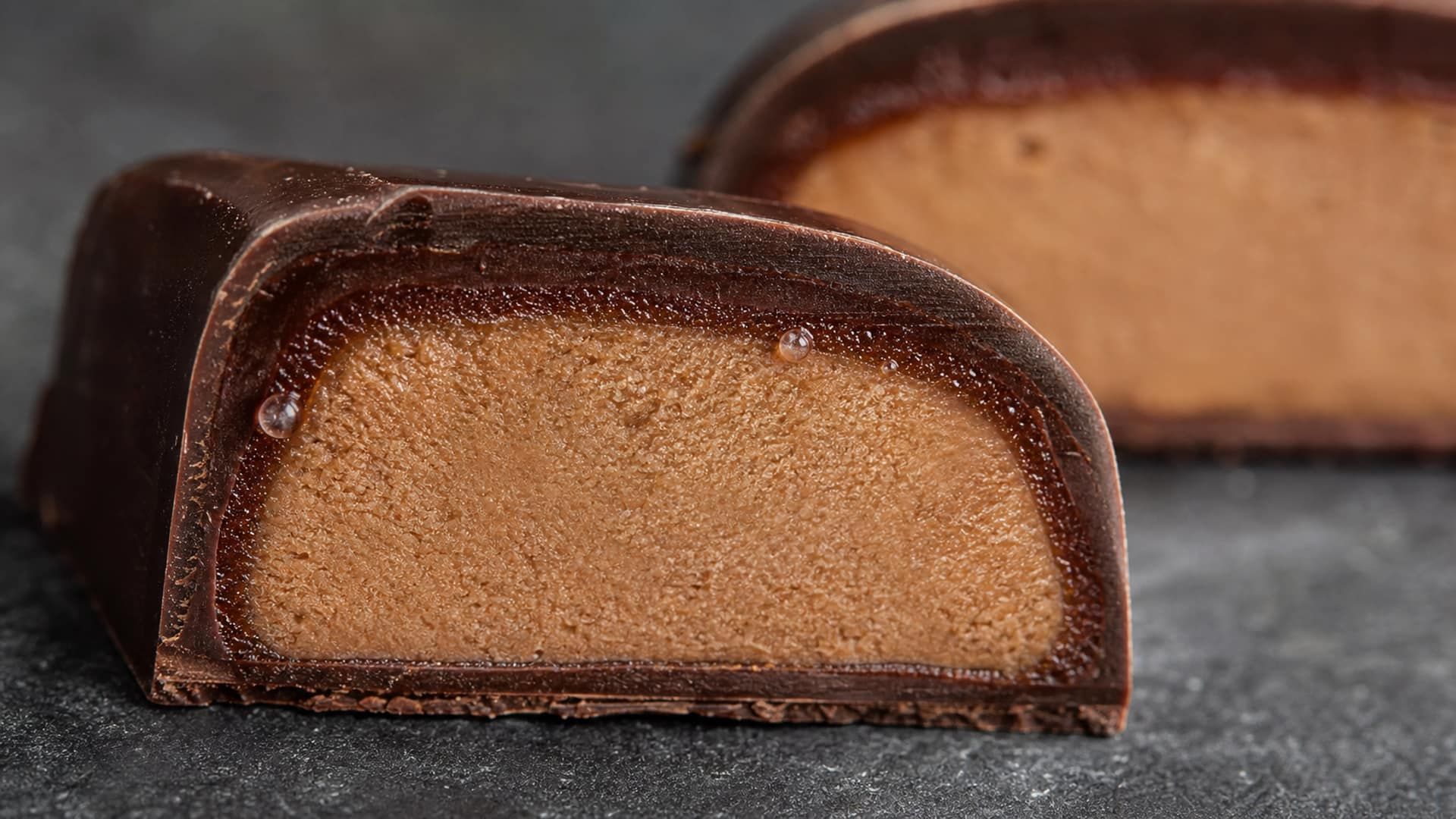
Moisture Migration: Water Activity, Fick's Law, and Packaging
Predict moisture movement by separating its water-activity driving force from diffusion rate, and compare packaging only with WVTR units and test conditions attached.
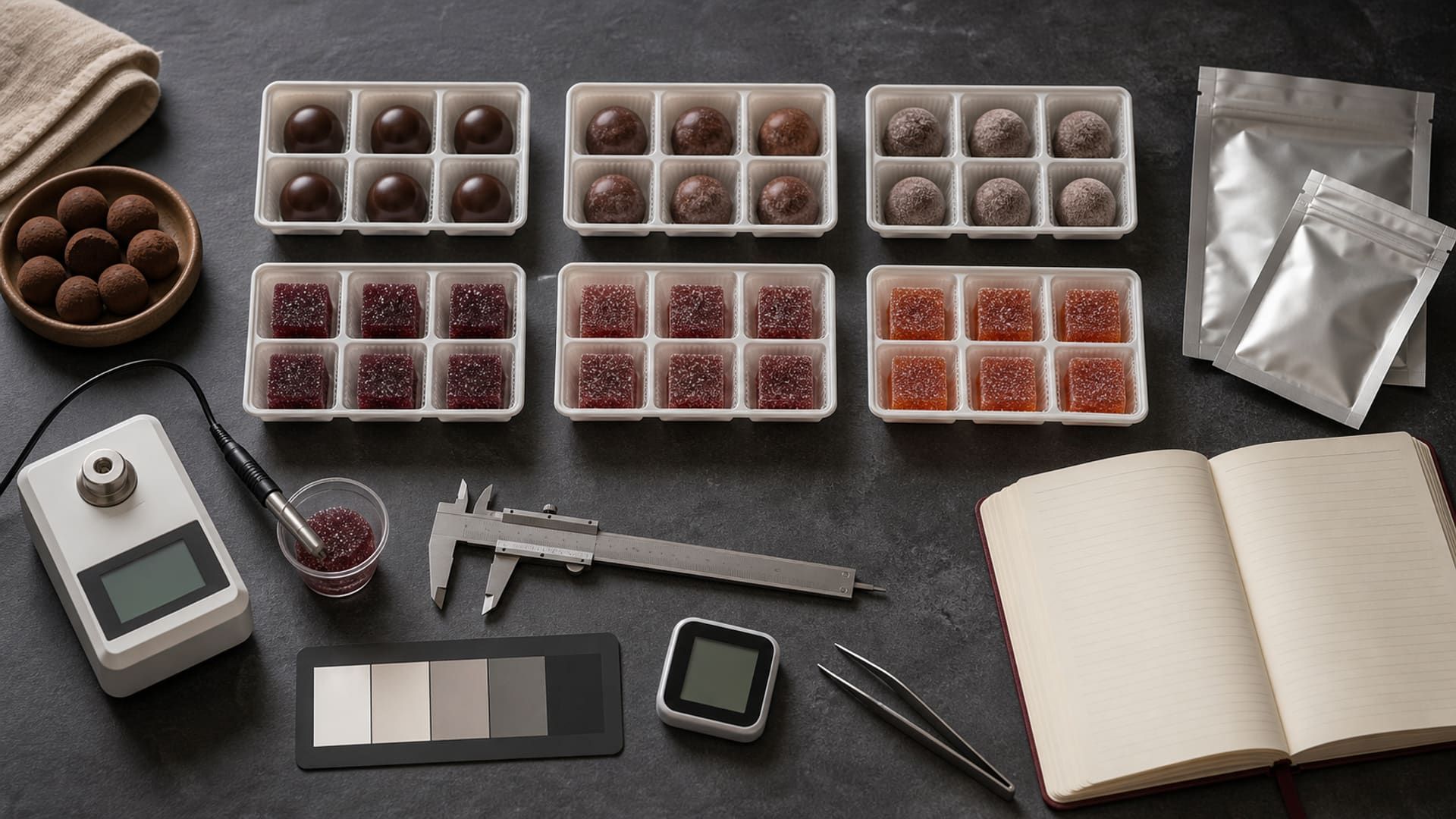
Confectionery Shelf-Life Testing: Plan Your First Study
Build a retention-sample plan for a filled chocolate: choose checkpoints, calculate the packs needed, and record results without confusing a trial target with a validated date.
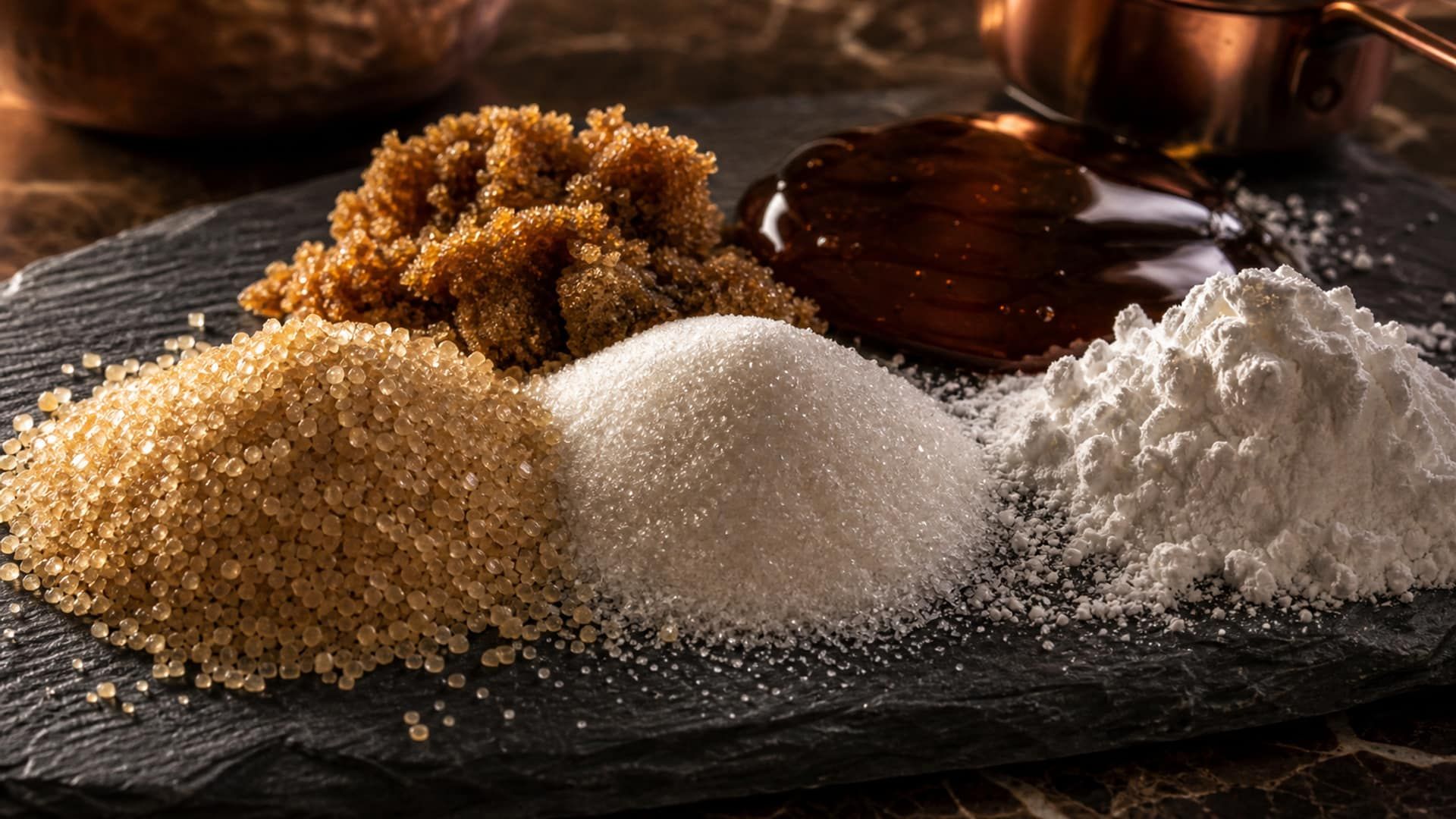
Sugar Types in Confectionery: Which Sugar Does What
Sucrose, glucose syrup, dextrose, fructose, invert sugar, lactose and trehalose compared: which sugar to use in caramel, ganache, fondant, pâte de fruit, ice cream, panning and nougat, and why.