Sugar Types in Confectionery: Which Sugar Does What
Sucrose, glucose syrup, dextrose, fructose, invert sugar, lactose and trehalose compared: which sugar to use in caramel, ganache, fondant, pâte de fruit, ice cream, panning and nougat, and why.
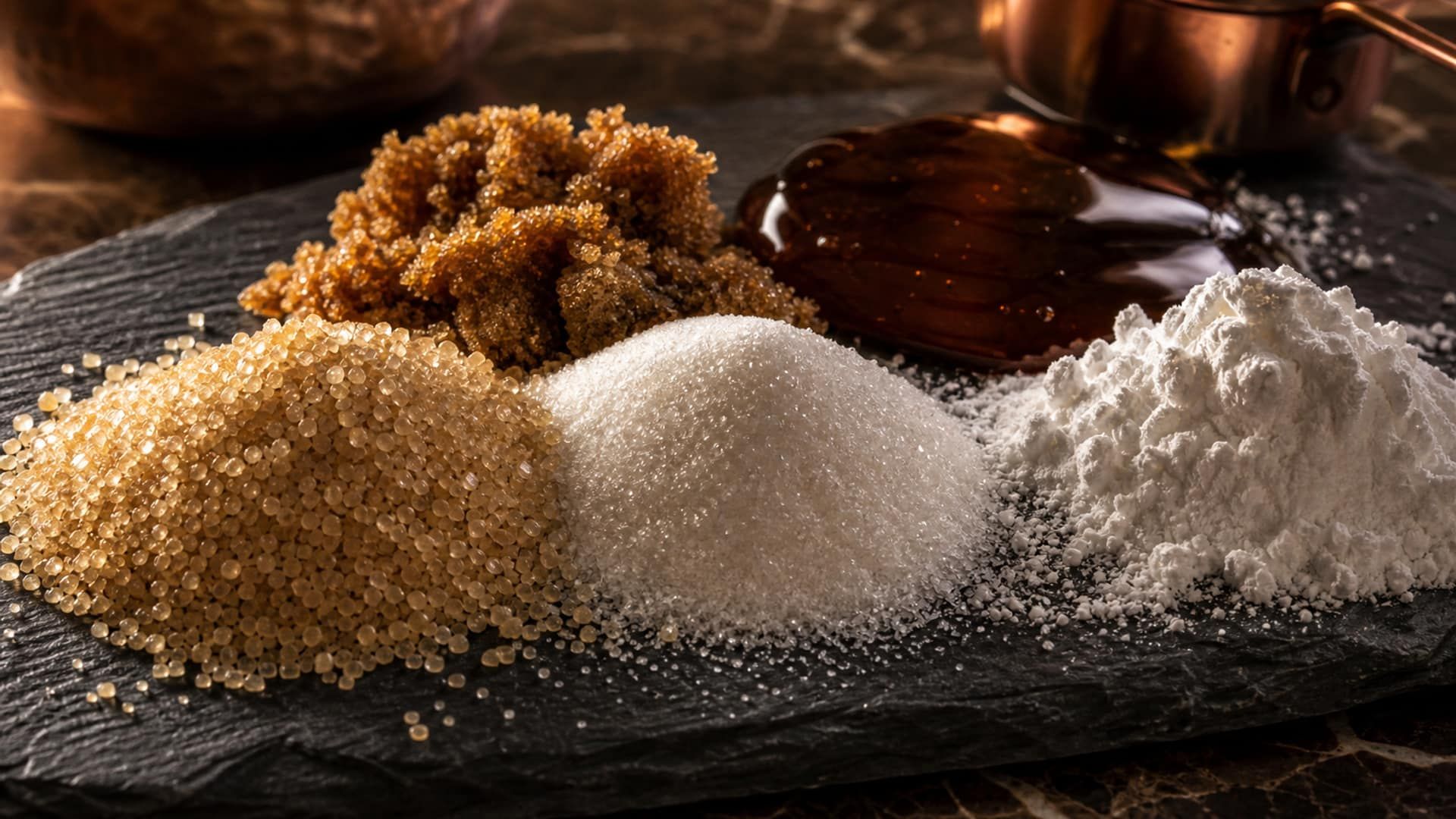
Confectionery sugars do more than sweeten. They decide whether a syrup crystallizes, how fast a caramel browns, how soft a ganache stays, and how hard an ice cream sets. A sound recipe gives each sugar a job instead of treating “100 g sugar” as one interchangeable unit. Start with the table below, then read why each sugar behaves as it does.
Choose sugars by function
Sucrose builds structure and crystallizes. Glucose syrup and invert sugar stop it from crystallizing. Monosaccharides soften, lower water activity and brown faster. Lactose and trehalose add solids with little sweetness. Most recipes combine two or three of these jobs.
Which sugar for which product
| Product | Main sugar | Supporting sugars | What the supporting sugars do |
|---|---|---|---|
| Caramel | Sucrose | Glucose syrup; lactose from milk; a little invert sugar or honey | Glucose syrup blocks sucrose crystallization; reducing sugars and milk proteins drive colour and flavour |
| Ganache | Sucrose, mostly from the chocolate | Invert sugar, glucose syrup, dextrose, sorbitol | Invert sugar, dextrose and sorbitol lower water activity for longer shelf life; glucose syrup adds body |
| Fondant | Sucrose | Glucose syrup or invert sugar | Keep the sucrose crystals fine, so the fondant is smooth and creamy |
| Pâte de fruit | Sucrose | Glucose syrup; the fruit's own glucose and fructose | Reach the high soluble solids pectin needs without sucrose crystallizing |
| Ice cream | Sucrose | Dextrose, invert sugar, glucose syrup, trehalose; lactose from milk | Dextrose and invert soften; glucose syrup and trehalose add solids with little sweetness |
| Hard panning (dragée) | Sucrose | Little or none | Crystallizing sucrose syrup builds a crisp, white shell layer by layer |
| Soft panning | Sucrose | Glucose syrup | Glucose syrup keeps the coat soft and non-crystalline |
| Nougat | Sucrose | Glucose syrup, honey | Glucose syrup controls crystallization and chew; honey adds flavour but also stickiness |
A starting point for each product. Doses depend on the recipe; check them in the calculator for that product.
Caramel. Sucrose is the body of a caramel, and on its own it tends to recrystallize into a grainy mass. Glucose syrup prevents that by mixing in molecules of different shapes and sizes. Milk brings lactose and proteins, and together with any reducing sugar they drive the Maillard browning that gives milk caramel its colour and flavour. Extra invert sugar or honey makes the caramel softer and more sensitive to humid air.
Ganache. Most of the sugar in a ganache comes from the chocolate as sucrose. Confectioners add invert sugar, dextrose or sorbitol to the cream phase mainly to lower water activity: their molecules are about half the size of sucrose, so per gram they lower it more. Glucose syrup works differently: DE 42 solids are on average heavier than sucrose, so it adds body rather than lowering water activity, and it slows sucrose from crystallizing out of a firm ganache.
Fondant. Fondant is the one product where sucrose crystallization is the goal. A cooked sucrose syrup is cooled and worked until it forms a mass of very fine crystals in a little syrup. Glucose syrup or invert sugar limits how large those crystals grow, which is the difference between a smooth fondant and a gritty one.
Pâte de fruit. High-methoxyl pectin only sets at high soluble solids and low pH. Reaching those solids with sucrose alone risks crystals in storage, so part of the sugar comes in as glucose syrup, and the fruit adds its own glucose and fructose.
Ice cream. Here the sugars control softness as much as sweetness. Dextrose and invert sugar lower the freezing point more than sucrose and make the ice cream softer; glucose syrup and trehalose add solids and body with less sweetness. Lactose from milk adds solids too, but too much of it crystallizes and turns the texture sandy.
Panning. Hard panning builds a crisp shell from thin layers of sucrose syrup that crystallize as they dry. Soft panning alternates glucose syrup with fine sugar to make a softer coat, as on jelly beans.
Nougat. Nougat combines sucrose, glucose syrup and often honey with a whipped egg-white foam. Glucose syrup controls crystallization and chew. Honey is rich in fructose and glucose, so it softens the nougat but also makes it sticky in humid air.
The molecular distinctions that matter
Sucrose is a disaccharide made from glucose and fructose linked through both anomeric carbons. Because the bond ties up the reactive ends, intact sucrose is non-reducing. Acid, heat or the enzyme invertase hydrolyze it into one glucose and one fructose molecule, producing invert sugar.
Glucose and fructose are monosaccharides with the same formula, C₆H₁₂O₆, and the same molar mass, about 180.16 g/mol. They differ in structure (glucose is an aldose, fructose a ketose) and therefore differ in sweetness, crystallization and reaction pathways. Their identical molar mass means that pure anhydrous glucose and fructose put the same number of molecules into solution per gram.
Sucrose has formula C₁₂H₂₂O₁₁ and molar mass about 342.30 g/mol. One gram of a 180.16 g/mol monosaccharide contains about 342.30 / 180.16 = 1.90 times as many molecules as one gram of sucrose. That ratio is why monosaccharides lower the freezing point and water activity more than sucrose at the same mass.
| Sugar | Class | Approximate molar mass | Reducing? | Key implication |
|---|---|---|---|---|
| Sucrose | Disaccharide | 342.30 g/mol | No | Crystallizes readily; reference sweetener |
| Glucose / dextrose, anhydrous | Monosaccharide | 180.16 g/mol | Yes | High molar effect per gram; takes part in Maillard browning |
| Fructose | Monosaccharide | 180.16 g/mol | Yes | Same molar effect as glucose; sweeter and more hygroscopic |
| Dextrose monohydrate | Glucose + crystal water | 198.17 g/mol | Yes | About 9.1% water of crystallization; less sugar per gram as sold |
| Lactose | Disaccharide | 342.30 g/mol anhydrous | Yes | Low sweetness; limited solubility can cause sandiness |
| Maltose | Disaccharide | 342.30 g/mol anhydrous | Yes | Moderate crystallization and browning behaviour |
| Trehalose | Disaccharide | 342.30 g/mol anhydrous | No | Low sweetness; high dry-state glass transition |
Commercial materials may be hydrates or syrups, so the as-sold mass is not always the dry sugar mass.
Glucose syrup is not pure glucose. It is a mixture of glucose, maltose, longer saccharides and water made by hydrolyzing starch. Dextrose equivalent (DE) expresses reducing power relative to dextrose on a dry basis; it does not fix sweetness, viscosity or average molecular size. Two syrups with similar DE can have different sugar profiles.
The reducing column predicts browning. Reducing sugars react with amino groups in the Maillard reaction, so glucose, fructose, lactose and maltose brown a milk caramel faster than sucrose, which reacts only once heat or acid splits it. Swapping sucrose for invert sugar therefore changes colour as well as sweetness.
Sweetness, freezing point, water activity and glass transition
Each of these properties has its own page with the full numbers. In short:
- Sweetness (POD). Sucrose is 100. Dextrose sits near 70–75, invert sugar near 120–130 and lactose near 15–20. Fructose ranges from 120 to 180 depending on temperature and concentration.
- Freezing point (PAC). It follows molar mass: anhydrous glucose, fructose and invert solids are about 190 against 100 for sucrose, lactose and maltose.
- Water activity. At equal mass, lighter molecules lower water activity more, but concentrated sugar mixtures are non-ideal, so measure the finished product when shelf life matters.
- Glass transition. Hard candy and caramel texture depend on the glass-transition temperature of the sugar mix, and water lowers it sharply.
POD and PAC Values for Ice Cream Sugars, with Calculator
Sweetness and anti-freezing coefficients for every common sugar and polyol.
Crystallization and hygroscopicity shape texture
Sucrose crystallizes readily when a concentrated solution becomes supersaturated and nuclei are present. That is desirable in fondant, where fine crystals create an opaque, creamy texture, and undesirable in a clear caramel or a smooth ganache, where coarse crystals feel gritty.
Glucose syrup and invert sugar interfere with orderly sucrose crystal growth by adding molecules of different shapes and making the mixture more complex. There is no simple rule that a higher DE always prevents more crystallization. Syrups rich in longer saccharides add viscosity, while glucose and fructose change solubility and crystal-lattice matching. Process history still decides the outcome: how the sugar was dissolved, stirred, cooled and stored, and whether stray crystals got into the batch.
Fructose and invert sugar are more hygroscopic than sucrose. They keep a product soft in dry air but make it sticky when the room is humid. Dissolved or amorphous glucose is also more hygroscopic than sucrose, though fructose-rich ingredients such as honey and invert are the stronger humectants in practice.
Trehalose needs its hydration state stated. Trehalose dihydrate takes up little water over much of the humidity range, while anhydrous trehalose readily absorbs water to form the dihydrate. Calling every form “very low hygroscopicity” hides this transition.
Select sugars with a balance sheet
For every sugar source in a recipe, record:
- as-sold mass and dry solids;
- individual sugar profile and hydration state;
- sweetness table and serving temperature;
- reducing-sugar content;
- expected crystallization and hygroscopicity;
- effect on water activity, confirmed by measurement where shelf life matters;
- labelling and dietary constraints.
Then calculate water, total dry solids, relative sweetness and the colligative contribution separately. Pilot the cook, measure endpoint solids and water activity, let the product equilibrate, and repeat texture and tasting checks at the real storage humidity.
Frequently asked questions
Which sugar stops caramel and fondant from crystallizing?
How much sweeter is fructose than sucrose?
Can invert-sugar sweetness be averaged from glucose and fructose?
Why does dextrose monohydrate count as less sugar than anhydrous dextrose?
Is glucose syrup the same as glucose?
Why can a less sweet sugar make a product stickier?
Related Topics
Related Articles
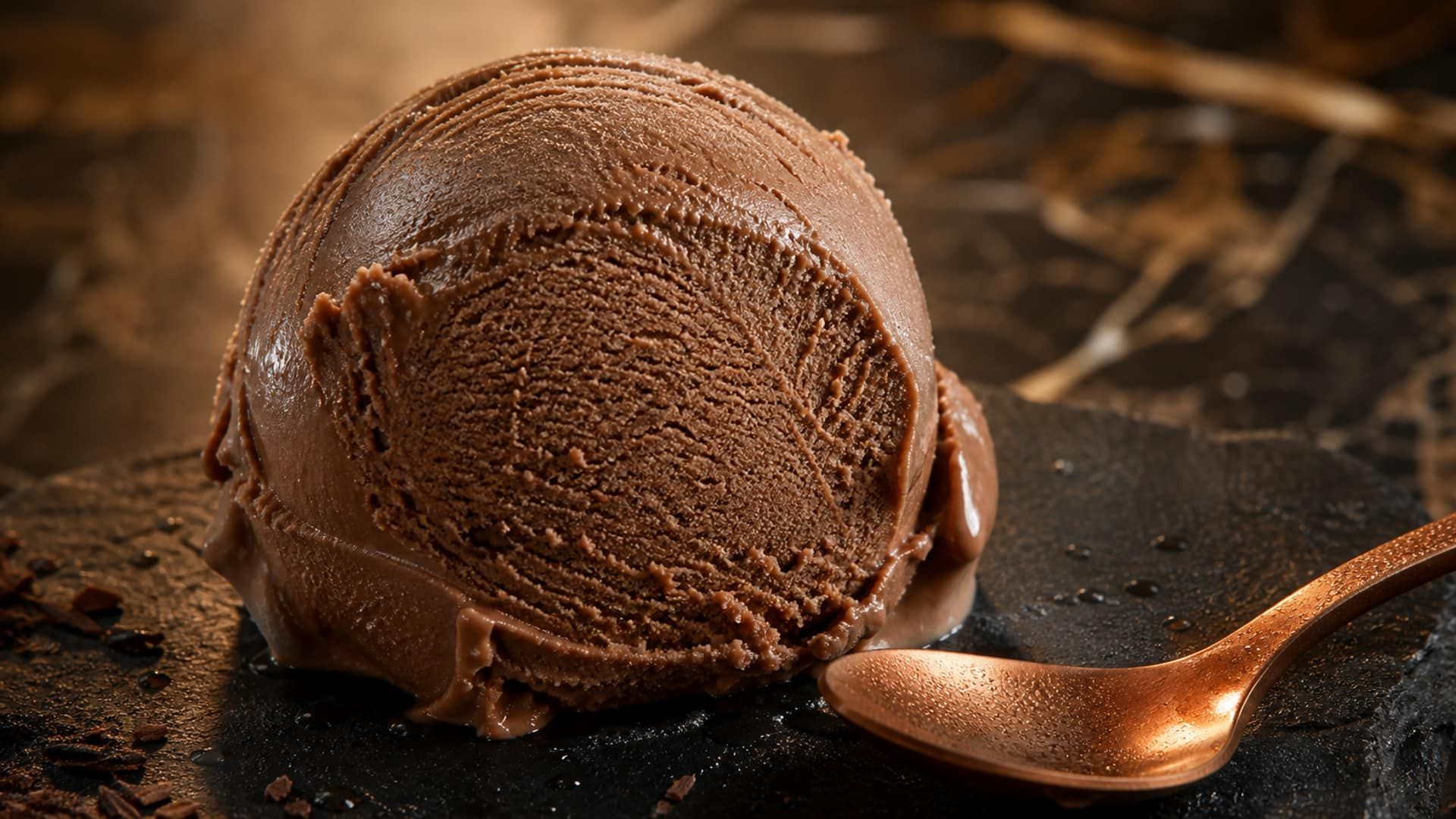
POD and PAC Values for Ice Cream Sugars, with Calculator
POD and PAC values for sucrose, dextrose, fructose, invert sugar, lactose, glucose syrup and polyols, a free sugar-balance calculator, and how to read the totals.
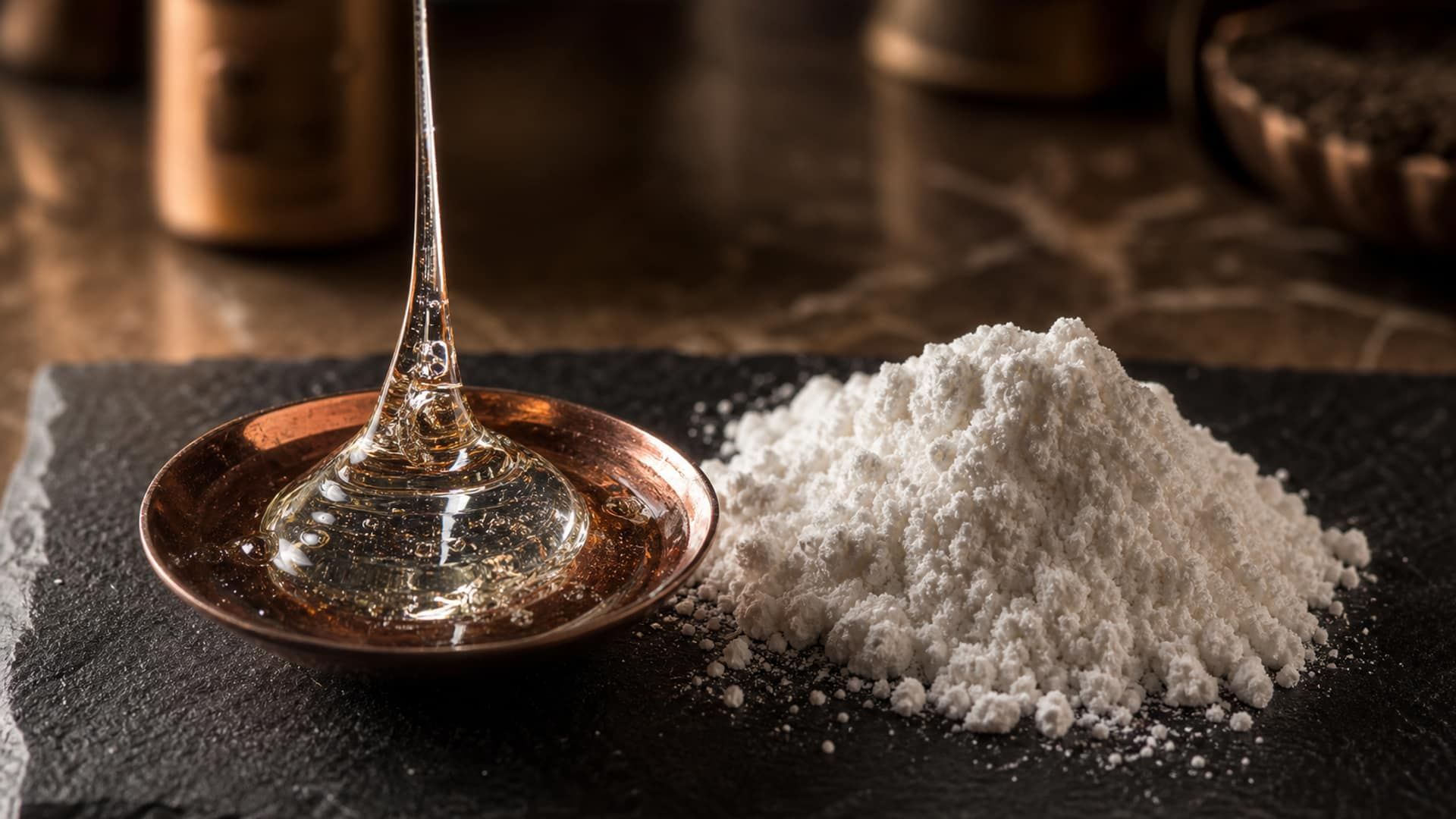
Glucose Syrups and Dextrose Equivalent Explained
Comprehensive analysis of glucose syrups, Dextrose Equivalent (DE) impact on confectionery formulations, and the functional differences between syrup and powder forms.
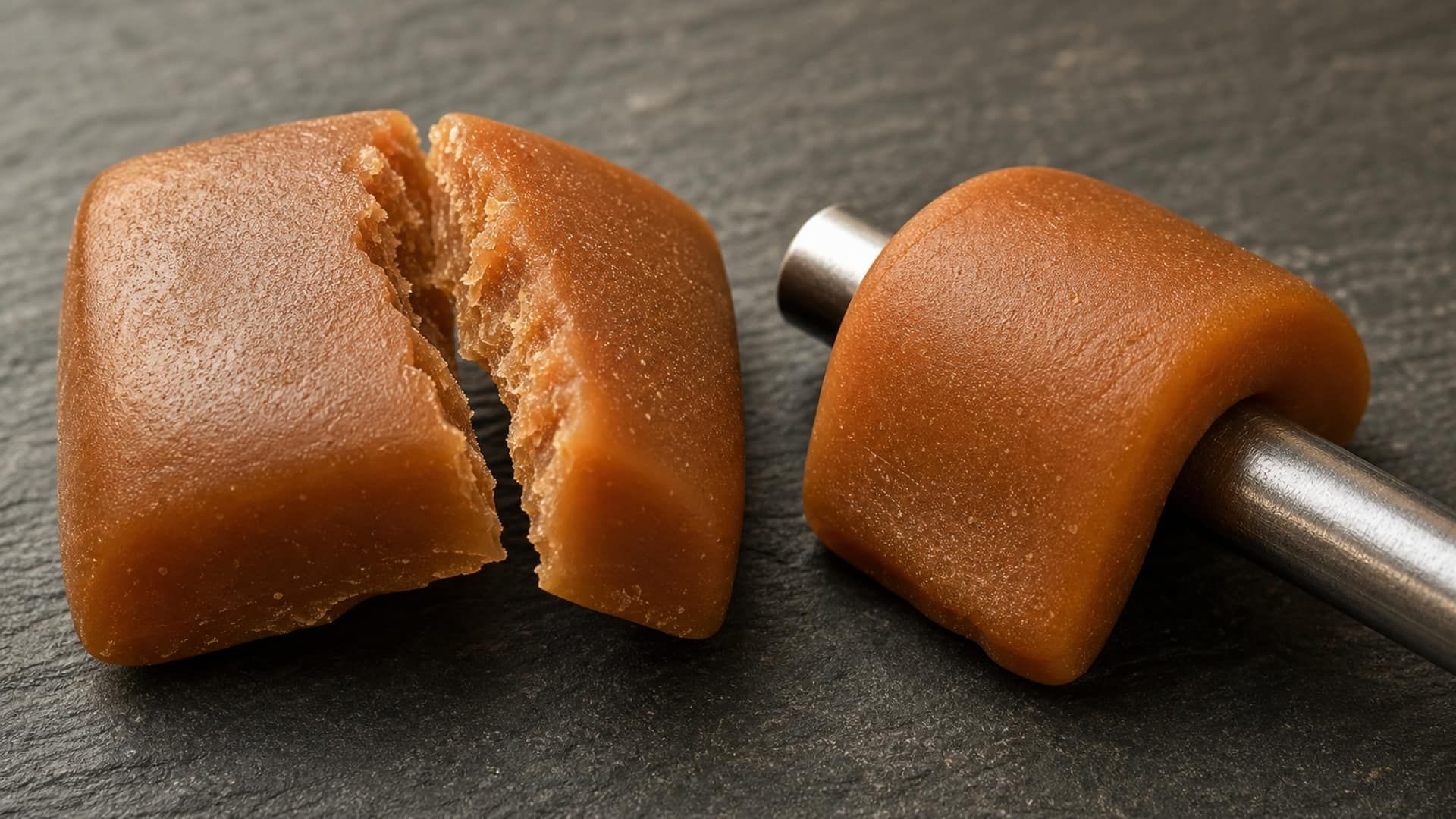
Caramel Glass Transition: How Moisture Sets Texture
Why a few points of water move a caramel from hard crack to chewy: the glass transition, a Gordon–Taylor table you can recompute, and the water left at each cooking stage.