Cake Pricing Calculator
Work out what to charge for a cake: ingredients, your time, kitchen costs and profit, with the price per cake, per serving and per kg.
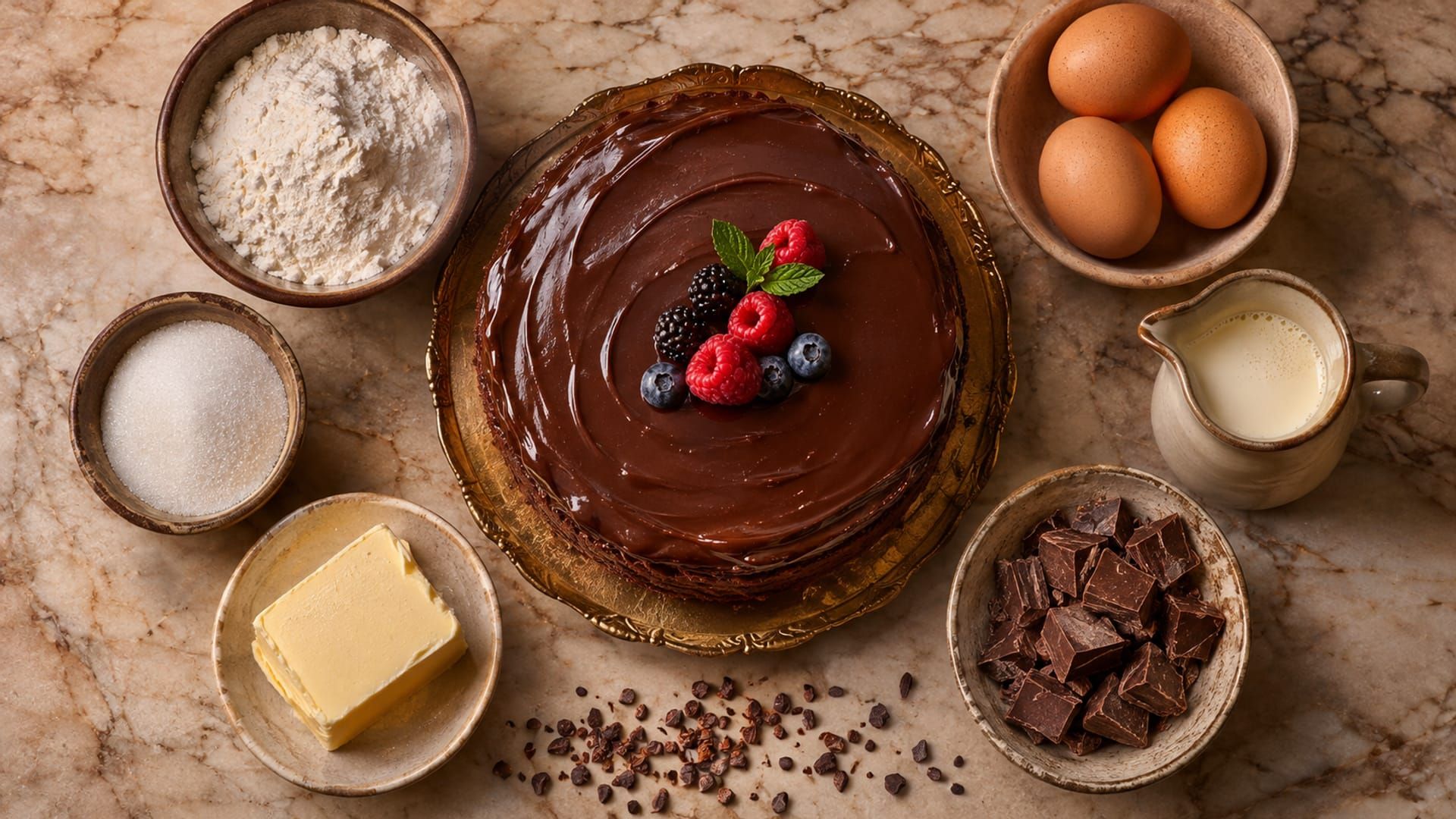
Price a cake as its cost divided by one minus your margin: price = cost ÷ (1 − margin). A cake with $28 of ingredients, a $6 box, 4 hours at $20 and $2 an hour of kitchen costs costs $122, so at a 30 % margin you charge $122 ÷ 0.7 ≈ $174. Enter your own numbers below to get the price per cake, per serving and per kg, and add what you charge today to see what you really earn an hour.
What to enter
- Ingredients: what this one cake uses, priced by weight, not the whole packs you bought.
- Your time: every hour on this cake, from baking to washing up, and what you want to pay yourself for it.
- Kitchen costs per hour: power, equipment and your share of rent, spread over the hours you bake.
- Optional: servings, weight, and the price you charge now.
How the Price Is Worked Out
The calculator adds up the cost of the cake, then sets the price so that the margin you choose is left over as profit.
Your pay is part of the cost, the same as butter. The box covers the board, box, topper and anything else that leaves with the cake.
The margin is the share of the price that is profit. Sales tax, if you charge it, is added on top of this price.
Take the example the calculator opens with. The cake uses $28 of ingredients and a $6 box. It takes 4 hours, you pay yourself $20 an hour, and your kitchen costs $2 an hour to run. The cost is 28 + 80 + 8 + 6 = $122. At a 30 % margin the price is 122 ÷ 0.7 = $174.29, so you would charge about $174. If the cake serves 24, that is $7.26 a serving; if it weighs 2.6 kg, $67 a kg.
This is the same sum that costing in Formul.io uses to suggest a price, so a cake priced here and the same cake costed in the app arrive at the same number. Costing in the app is part of Formul.io Pro: it keeps the price of every ingredient, so each recipe’s cost updates when a price changes.
Margin Is Not Markup
A margin is the share of the price that is profit. A markup is what you add on top of the cost. They are easy to mix up, and the difference is real money.
| Margin | Price = cost × | Profit on a $100 cost |
|---|---|---|
| 20 % | 1.25 | $25 |
| 30 % | 1.43 | $43 |
| 40 % | 1.67 | $67 |
| 50 % | 2 | $100 |
Price and profit for each margin, from a cost of $100.
A 30 % markup on a $100 cost gives a price of $130, which is only a 23 % margin. If you were told to aim for a 30 % margin and add 30 % to your costs, you are short by $13 on every $100 of cost. The chips in the calculator show the multiplier next to each margin so you can check this at a glance.
Why Your Time Is a Cost
Home bakers often price a cake from its ingredients and keep what is left as their pay. The calculator turns that around. Your hours are paid out of the price like any other cost, and the margin is profit on top: money for slow weeks, new tins, and the cake that goes wrong.
The What you charge now field shows what that habit is worth. In the example, charging $90 for the cake leaves 90 − 28 − 6 − 8 = $48 after ingredients, box and kitchen. Spread over 4 hours, that is $12 an hour for your time and any profit together. The calculator compares that with the rate you set for your time and tells you the price that pays both.
Count all the hours. Shopping, baking, cooling, filling, crumb coating, decorating, packing, the customer’s messages and the washing up all belong to the cake. If you bake several cakes in one session, divide the shared hours between them.
Price decoration through its hours, not as a guess added at the end. Sugar flowers that take two extra hours add two hours at your rate and at your kitchen cost, and the margin applies to them as well. Round the final price up to a number you are happy to say out loud; rounding down quietly gives away part of the margin you just set.
The calculator does not know your market
It gives the price that covers your costs and leaves the margin you chose. Whether customers in your area pay it is a separate question. If the price is well above what others charge, look at the hours and the design before you cut the margin.
Costing the Ingredients
Price each ingredient by weight. Divide what you paid by the weight of the pack, then multiply by what the cake uses. Butter at $5 for 454 g costs $0.011 a gram, so the 250 g in a buttercream costs $2.75. Do the same for chocolate, cream, eggs, flour and sugar, and add the decorations: fresh fruit, flowers, sprinkles, gold leaf.
For kitchen costs per hour, add up a month of the costs that come with baking: the extra power and gas, wear on the mixer and oven, insurance, the share of rent if you rent a kitchen, and fees for the card reader or your website. Divide by the hours you bake in a month. $120 a month over 60 hours of baking is $2 an hour.
Whether you must charge sales tax or VAT depends on where you sell and how much you sell; check your local rules. If you do, open Sales tax in the calculator: it adds the tax on top of the price and works out your hourly pay from the price before tax.
Per Serving and per Kilogram
Customers ask in different ways. Wedding cakes are usually quoted per serving, and many European bakers price celebration cakes per kilogram. Enter the servings and the weight, and the calculator shows both next to the price of the whole cake. Work out the servings with the cake servings calculator and the cream and sponge with the frosting and filling calculator.
How do I price a cake?
What profit margin should a home baker use?
What is the difference between margin and markup?
How much do I earn an hour at my current price?
How do I price a cake per serving?
Should I include the cost of the box and board?
Related Topics
Related Articles
From Ingredient Prices to Selling Price: Costing and Margins in Formul.io
Save what you actually pay for each ingredient, add work, overhead and packaging, then read the margin a price really earns — a private costing layer that sits on top of the recipes you already keep in Formul.io.
Cake Servings and Pan Size Calculator
How many servings a round, square, or sheet cake gives, a serving chart for every common size, and how to convert a recipe to a bigger or smaller pan.
Cake Frosting and Filling Calculator
How much buttercream, ganache or cream cheese frosting a layer cake needs for filling, crumb coat and final coat, and how much sponge to bake.