Why Gummies Turn Sticky, Hard or Wet During Storage
Use the timing and location of a gummy defect to distinguish moisture uptake, drying, condensation, syneresis and crystallization, then choose the next trial.
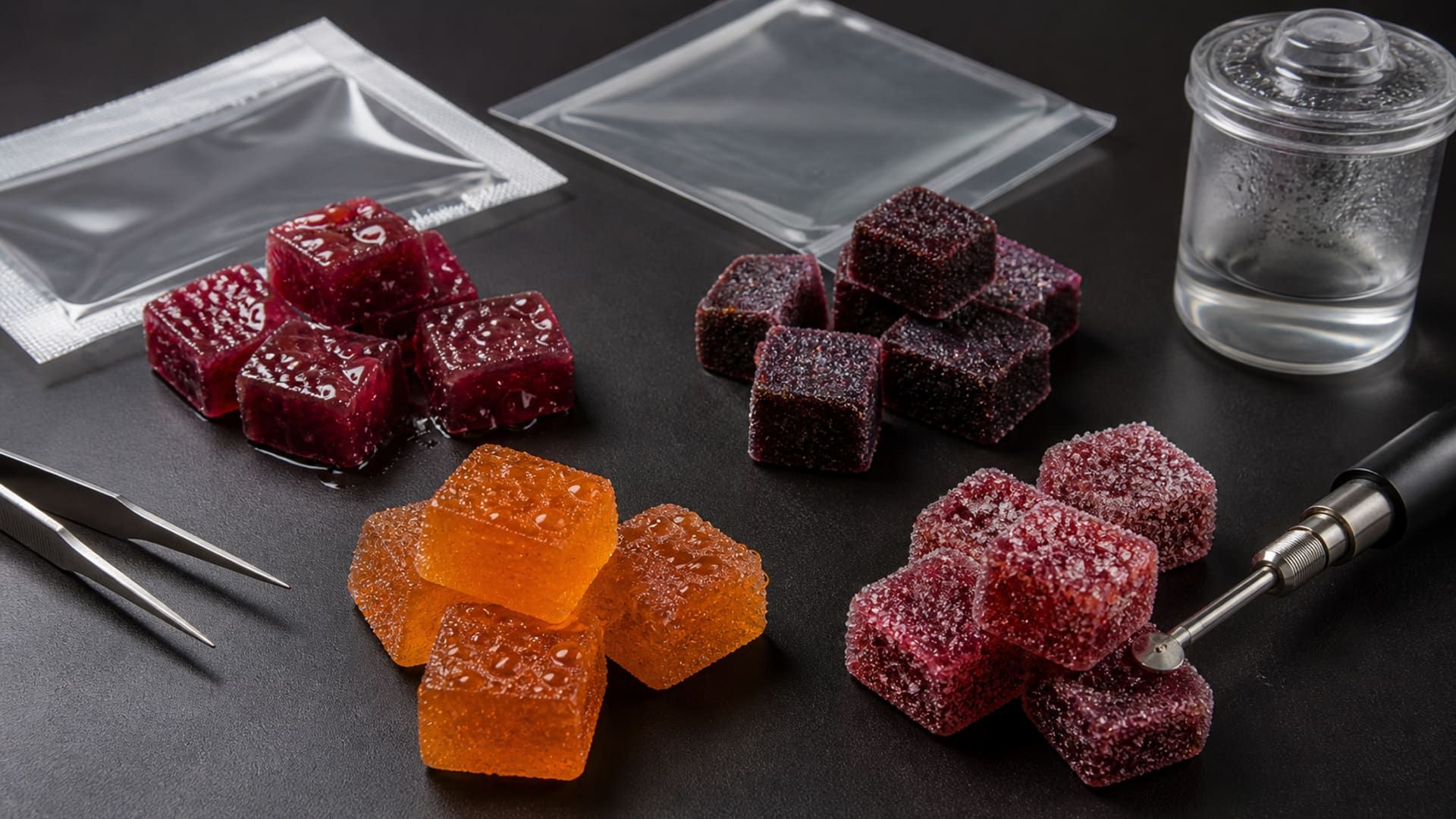
A gummy that changes after packing is telling you something about the combination of recipe, process and package. Before adding gelatin or pectin, determine whether the defect was already present after setting or developed during storage.
Take one affected unopened pack and a comparable control. Record the lot, storage history, seal and surface before opening it. That small habit preserves clues that disappear when the candies are tipped out and handled.
Start With the Symptom and Its Timing
A sticky surface, a hard centre and liquid droplets are different observations. Write down where the defect appears: only against the film, around a seam, across every surface, or through the centre of the piece.
Check when the product last looked normal. A gummy that never set properly points toward the initial gel or process; one that was acceptable for a week and then changed needs a storage investigation as well.
| Observation | First comparison | Next action |
|---|---|---|
| Sticky surface after packing | Same batch in another sound package; conditioning before packing | Check moisture exposure and the packaging process before changing the gel dose |
| Hardening with shrinkage | Recorded mass loss and drying/storage history | Check drying endpoint and moisture loss through film or seal |
| Droplets after moving from cold to warm | Timing and location of condensation on pack and product | Reproduce the temperature transition with retained development samples |
| Liquid released from the gel | Continued liquid release without a new temperature transition | Review gel selection, acid/ion balance and processing sequence |
| Gritty or crystalline texture | When particles first appeared; dissolved solids and syrup specification | Separate undissolved material from crystals formed during storage |
Each row selects a check; it does not establish a cause on appearance alone.
If only one packaging lane or one seam pattern is affected, inspect that part of the operation first. If all package formats from a single cook behave alike, review the batch record and ingredients. Neither pattern proves the cause, but both help choose a useful comparison.
A single bite cannot distinguish moisture loss from a changed gel network. Compare the same sample dimensions and product temperature, and keep a written description of the control’s texture.
Distinguish Water Movement From Gel Failure
Water activity and moisture content are different measurements. Moisture describes how much water is present; aw describes its thermodynamic availability. For troubleshooting, combine aw with mass or moisture data rather than interpreting either alone.
Use the same measurement procedure and sample temperature for fresh and stored pieces. Do not compare a reading from a whole fresh gummy with a finely chopped stored sample without checking whether the method permits that comparison.
Case 1: tackiness follows the package. If comparable unopened packs gain mass and the surface becomes sticky, moisture entering through the film or seal is a plausible cause. Check the empty-package behaviour and weighing conditions too: mass gain alone does not identify which layer absorbed the water.
For the next development comparison, keep one gummy batch and change only the packaging condition you suspect. Label film and seal settings, keep storage conditions the same, and inspect at the same checkpoints. If the effect follows the package repeatedly, you have more useful evidence than a single failed bag.
Case 2: the pack mass is stable but droplets appear. Water may have redistributed within the package. A cold-to-warm transition can produce condensation; liquid expelled by a contracting gel is syneresis. Record where the liquid starts and whether it continues after the temperature has stabilized.
Do not define syneresis as something that can only happen without temperature changes. Temperature can affect the gel as well. The distinction is the mechanism of liquid release, not a rule that any temperature excursion proves condensation.
Case 3: the centre becomes hard or gritty. Look for mass loss, shrinkage and the timing of crystal formation. Review the actual syrup solids, whether all ingredients dissolved, and the final yield. A temperature reading during cooking is not a direct measurement of the stored gummy’s water content.
Choose One Next-Batch Correction
Separate the affected product’s disposition from the development experiment. Suspect commercial product must be held and assessed through the relevant safety procedure. Do not taste visibly spoiled or otherwise unsafe samples, or make them saleable by simply recoating or drying them.
For a quality investigation, the next trial should answer the leading question. More gelling agent can make the fresh candy harder without improving an inadequate moisture barrier. Longer drying can reduce tackiness at first while making the centre unacceptably tough.
Record the control
Keep recipe, ingredient specifications, finished mass, gel preparation, acid timing, setting, conditioning and package details together.
Select the suspected variable
Choose the film/seal, conditioning time, finished endpoint or gel process supported by the observed pattern.
Make a matched trial
Change that variable while keeping the remaining conditions comparable. Record unavoidable process differences.
Inspect both fresh and stored pieces
Use the same sample temperature, dimensions and measurement method. Check the intended pack as well as the gummy.
Adopt only a repeatable correction
Confirm the result in another appropriate batch and complete the required safety assessment before routine release.
In gelatin systems, review hydration, dissolution and hot contact with acid. In pectin systems, identify the actual product and gel mechanism before changing calcium, soluble solids or acid. “Pectin” on its own is not a sufficient formulation specification.
For a pectin fruit confection, the Formul.io Pâte de Fruit Calculator can help compare the recipe balance. It is not a universal gummy model: a gelatin, starch or mixed-gel candy needs a method suited to that system.
An appearance fix is not a release test
Washing, oiling or drying can change how a gummy looks without establishing why it failed. Keep safety decisions with the product’s responsible person and use controlled development samples to test the correction.
Keep a Short Storage Record
Record the first acceptable and first unacceptable checkpoints. “Sticky after a month” is less useful than a dated comparison showing that tackiness began between two observations under known humidity and temperature conditions.
A practical record contains the lot, package, date, mass, aw method and temperature, appearance, texture description and action. Photograph the same views with the same lighting and a scale reference. Save individual observations rather than only an average score.
Research on one gummy formulation should not become a universal shelf-life rule. Vojvodić Cebin and colleagues compared different sweetener/prebiotic combinations over storage and found that their stability differed. That supports testing the actual formula; it does not establish a storage period for your recipe.
Why are gummies sticky inside a sealed bag?
How do I tell condensation from syneresis?
Should I increase gelatin when gummies harden?
Does a sugar-free gummy keep like the original?
References: Hartel, von Elbe and Hofberger, Confectionery Science and Technology (2018). Vojvodić Cebin et al., Physicochemical and Sensory Stability Evaluation of Gummy Candies Fortified with Mountain Germander Extract and Prebiotics, Polymers 16(2), 259 (2024), DOI: 10.3390/polym16020259. The diagnostic cases above are investigation patterns, not claimed Formul.io production trials.
Related Topics
Related Articles
Gelling Agents for Jelly Textures: Selection, Dosage, and Set Temperatures
Pick the gelling agent that delivers the texture you want — melt-in-mouth, firm and sliceable, brittle clean-cut, or warm-serve heat-stable — with dosages, set temperatures, and vegan options for agar, gelatin, pectin, carrageenan, and gellan.
Moisture Migration: Water Activity, Fick's Law, and Packaging
Predict moisture movement by separating its water-activity driving force from diffusion rate, and compare packaging only with WVTR units and test conditions attached.
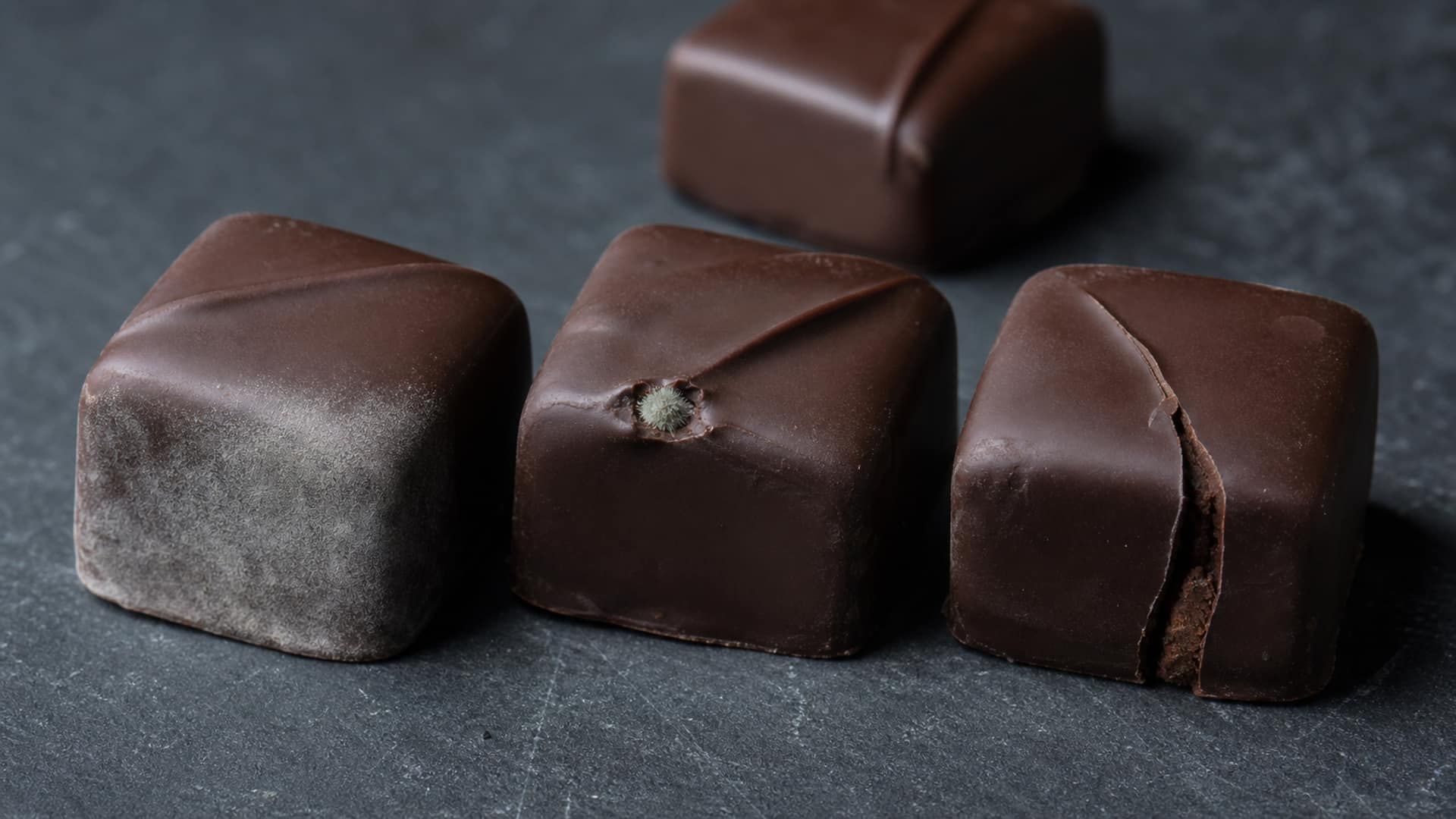
My Confectionery Spoils Too Quickly: Diagnosis & Solutions
Product failing before expected shelf life? This troubleshooting guide helps you identify the cause—whether mold, crystallization, texture loss, or rancidity—and provides targeted solutions for each spoilage type.