Why Ganache Splits After Cooling
Your ganache looked perfect, but after refrigeration it's oily and broken. Here's why it happens and how to prevent it.
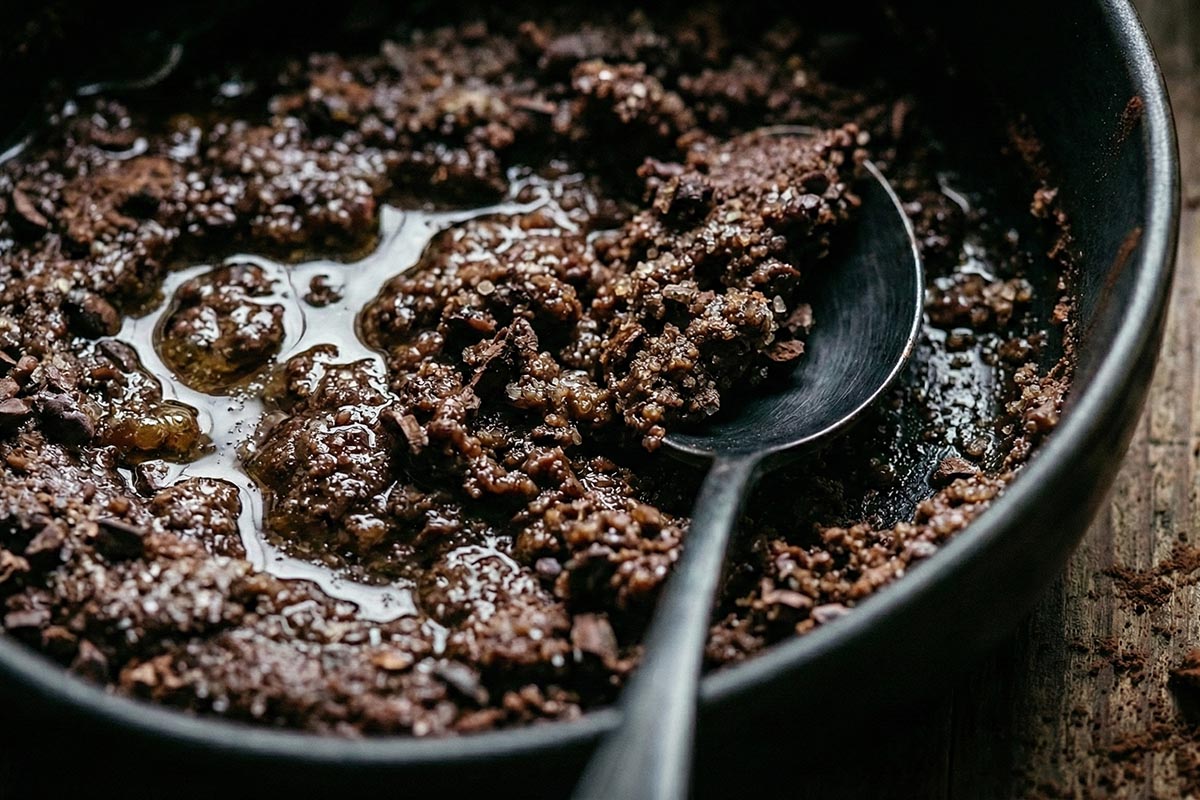
You've made what seemed like a perfect ganache. Smooth, glossy, and beautifully emulsified. Then you put it in the fridge. Hours later, you find an oily, grainy mess. The fat has separated, and your ganache is broken.
This is one of the most common problems in confectionery production, and it's entirely preventable once you understand the science behind it.
Why Does Ganache Split?
The Science
Ganache is an emulsion - a stable mixture of fat (cocoa butter) and water (from cream). When the emulsion breaks, these phases separate.
The primary causes of ganache splitting after cooling are:
- Improper fat-to-water ratio (too much fat for the available water)
- Temperature shock during cooling
- Insufficient emulsification during mixing
- Butter or cream added at incorrect temperature — above 40°C prevents proper fat emulsification
- Using chocolate with incompatible cocoa butter crystals
The Fat-to-Water Ratio Problem
Every ganache has a critical balance between fat and water. When there's too much fat relative to water, the emulsion becomes unstable. During cooling, cocoa butter crystalizes, and without enough water-based phase to hold it in suspension, the fat separates.
Temperature Shock
Rapid temperature changes cause cocoa butter crystals to form unevenly. When you put a warm ganache directly into a cold refrigerator, the outer layer cools faster than the center, creating stress in the emulsion.
Pro Tip
Always let ganache cool to room temperature (20–22°C) before refrigerating. Then refrigerate gradually - 15°C for 2 hours, then full refrigeration.
How to Fix Split Ganache
Warm the broken ganache
Heat gently to 35–40°C until the fat melts but doesn't separate further.
Add warm cream
Add 1–2 tablespoons of warm (not hot) cream at 35°C.
Re-emulsify with immersion blender
Blend starting from the center, gradually incorporating the outer edges.
Cool properly this time
Let it set at room temperature before refrigerating.
Prevention with Formul.io
The easiest way to prevent ganache splitting is to calculate your formulation before you make it. Formul.io's Ganache Calculator analyzes your recipe's water activity, fat ratio, and emulsion stability before you touch any ingredients.
| Factor | Manual Approach | With Formul.io |
|---|---|---|
| Fat ratio check | After the fact | Before mixing |
| Water activity | Unknown | Predicted to ±0.02 |
| Shelf life estimate | Guesswork | Days/weeks forecast |
| Adjustment suggestions | Trial and error | Automatic alternatives |
Comparison: Manual vs. Calculated Approach
Try the Ganache Calculator
Calculate water activity, fat ratios, and shelf life for your ganache recipes.
Related Problems
Water Activity in Ganache: The Science
Why your ganache won't set and how to fix it
Maximising Confectionery Shelf Life
Understanding shelf life and water activity
Related Topics
Related Articles
My Confectionery Spoils Too Quickly: Diagnosis & Solutions
Product failing before expected shelf life? This troubleshooting guide helps you identify the cause—whether mold, crystallization, texture loss, or rancidity—and provides targeted solutions for each spoilage type.
Can You Add Fruit Puree to Ganache?
Adding fruit to ganache isn't as simple as stirring it in. Learn how to replace cream with puree without breaking your emulsion or ruining shelf life.
My Caramel Crystallized During Storage
Grainy, sandy, or white caramel that crystallized after production? Learn the five root causes of sucrose graining and how to prevent each one.